



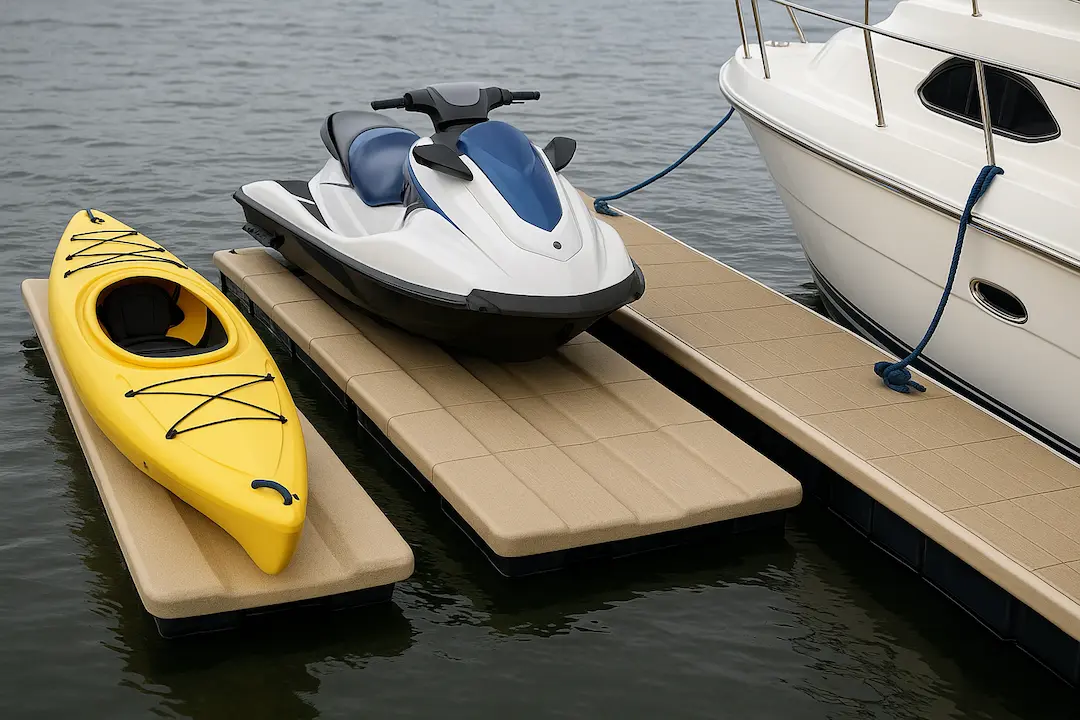
When planning a floating dock, one of the most critical—but often overlooked—design decisions is selecting the right freeboard height. Freeboard is the vertical distance between the waterline and the dock surface. It directly affects safety, comfort, and functionality for anyone using the dock.
At MAADI Group, we’ve developed a Floating Dock Freeboard Calculator that helps owners, marinas, and developers select the right dock height for their activities and vessels. Here’s why freeboard matters on floating docks, the typical ranges for different watercraft, and how our calculator simplifies the process. As you can understand the advantage of floating docks is to keep the same freeboard all year long despite the tides, surge and water fluctuation.
Why Freeboard Height Matters
Choosing the correct freeboard is not just a technical detail—it determines how users interact with the dock and their boats.
- Accessibility: A dock that’s too high or too low can make boarding kayaks, PWCs, or yachts awkward or even impossible.
- Safety: Proper freeboard reduces the risk of slips, falls, or difficulty tying off lines.
- Stability: Balanced freeboard ensures dock stability, especially in marinas with mixed vessel types.
- Durability: Lower freeboards may expose materials to splash zones, accelerating wear.
Typical Freeboard Ranges by Vessel Type
1. Kayaks and Canoes
- Ideal freeboard: 150–200 mm (6–8 inches)
- Low-profile docks make it easy for paddlers to launch without tipping and to stabilize canoes alongside.

2. Personal Watercraft (PWCs – Jet Skis, Sea-Doos)
- Ideal freeboard: 250–350 mm (10–14 inches)
- Provides a safe step height to mount or dismount while staying close to the waterline.

3. Cabin Cruisers, Sport Boats, and Fishing Boats up to 40 ft
- Ideal freeboard: 400–500 mm (16–20 inches)
- Balances easy boarding with secure tie-off clearance.

4. Yachts and Sailboats
- Ideal freeboard: 500–800 mm (20–32 inches)
- Higher freeboard accommodates larger vessels and aligns with deck heights for comfortable boarding.

How MAADI Group Determines the Right Freeboard
At MAADI Group, our engineers apply a proven methodology to identify the ideal freeboard for each floating dock project. We factor in:
- Dock dimensions – length, width, float type, and capacity
- Live loads – people, carts, furniture, or special event use
- Environmental conditions – tides, waves, currents, and site location
- Intended use – kayak launches, PWC slips, yacht berths, or multipurpose marinas
By analyzing these parameters, our team provides a tailored dock configuration that ensures the perfect balance of comfort, safety, durability, and compliance with engineering standards.
One Dock, Multiple Uses
Many marinas must serve diverse users. The most efficient solution is often a modular floating dock system with zones of varying freeboard:
- A dedicated low freeboard launch for kayaks, canoes, and paddleboards
- A mid-height section for PWCs
- A higher berth zone for yachts and sailboats
This modular approach ensures every user has safe, comfortable access without sacrificing dock stability or visual harmony.

Freeboard vs. Live Load: The Engineering Connection
Freeboard height and live load capacity are closely linked. Live load includes the variable weight on a dock—people, gear, and equipment. The more load a dock supports, the lower it will sit in the water, reducing freeboard.
Understanding buoyancy is key:
- Saltwater weighs ~64 lb/ft³.
- Each additional 5 lb/ft² of load will sink a dock by roughly 1 inch.
That’s why simply specifying a freeboard number isn’t enough. It must be backed by a calculation of flotation area and reserve buoyancy to ensure docks remain safe and functional even under heavy use.
Final Thoughts
Freeboard is more than a measurement—it defines user experience, safety, and dock performance over time. Whether you’re building a private kayak dock or a full-scale marina with yachts and PWCs, choosing the right height is essential.
At MAADI Group, our in-house Floating Dock Freeboard Calculator makes this process simple, precise, and code-compliant. Contact us to explore how the right freeboard solution can elevate your waterfront project.


