

Start your Aluminum Structure Project
Products
Our Aluminum Structures
Custom marinas, boat docks, pedestrian bridges, bridge decking, work platforms and other aluminum structures. Designed and built in Canada by our engineers.
2 results
Aluminum Pedestrian Bridges
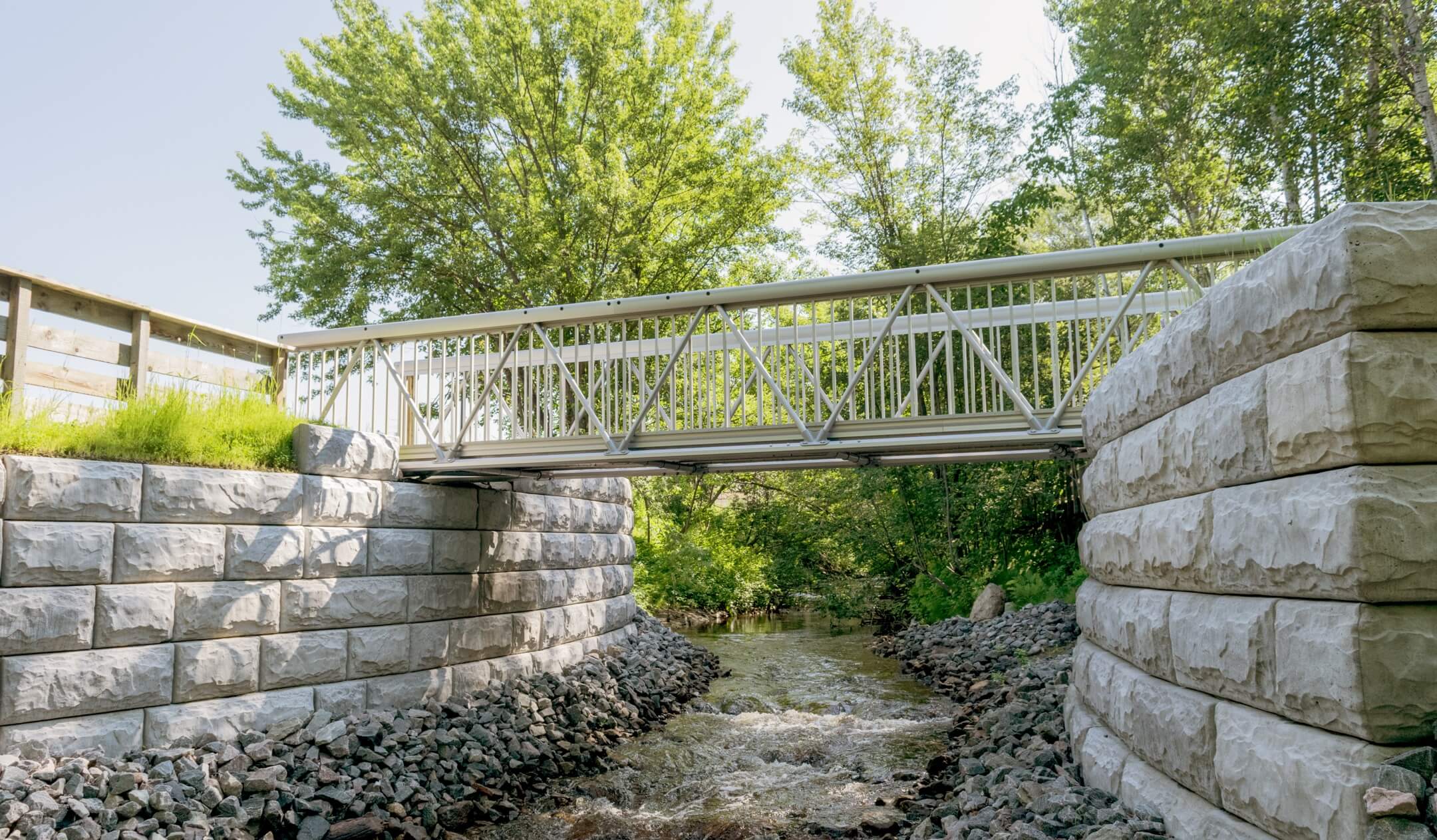
Our custom aluminum pedestrian bridges do more than carry foot and bike traffic, they enrich the landscape and last for decades with almost no maintenance. We design, engineer and build every footbridge in-house, from weld-free MakeABridge® bridge kits that assemble in hours to fully custom spans engineered to AASHTO LRFD and CAN/CSA S6 bridge codes. Every structure is sealed by our in-house Professional Engineers and built from marine-grade aluminum that needs no paint and no rust protection.
About Our Aluminum Pedestrian Bridges
Aluminum Pedestrian Bridges That Enrich the Landscape
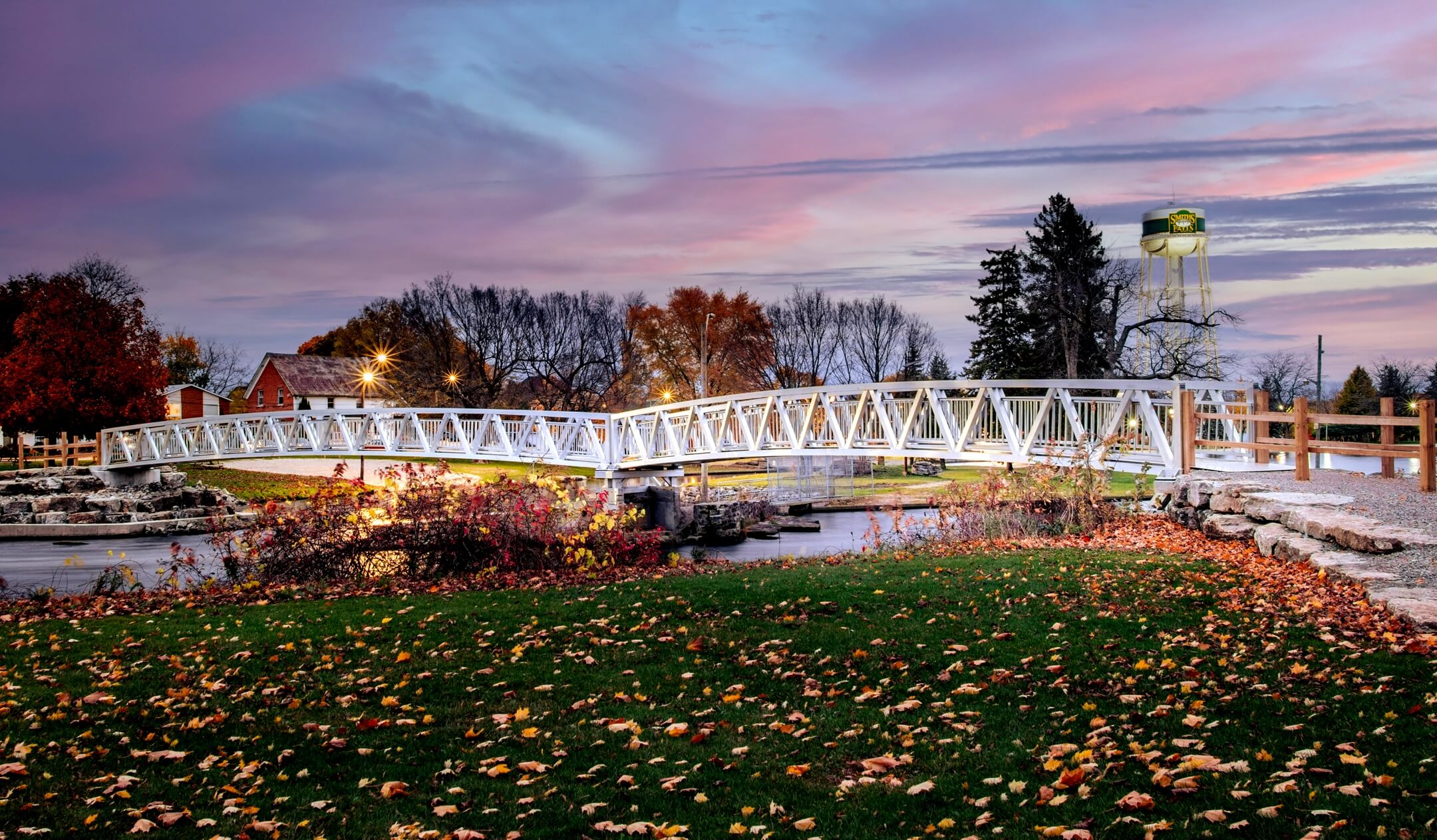
We design fully customizable aluminum pedestrian bridges that serve their purpose and blend into their surroundings, whether spanning a river in a public park, a roadway, a railway or a private trail. Seven distinctive footbridge styles, from pony truss to bowstring, let you match the structure to the setting, with custom guardrails, decking, lighting and finishes engineered into a single coordinated design.
Footbridges Ready to Ship and Assemble Fast
MAADI Group's weld-free MakeABridge® aluminum pedestrian bridge system can be delivered up to four times faster than conventional welded bridge solutions. The patented design utilizes high-strength cast aluminum nodes connected to architecturally refined hollow structural members, eliminating field welding while providing exceptional strength, durability, and aesthetic appeal.
Bridge components are shipped in compact LTL crates, arrive clear anodized for superior long-term corrosion resistance, and are ready for rapid assembly in both remote and urban locations. A typical 30-foot pedestrian bridge can be assembled and installed on-site in as little as five hours using standard hand tools, with no specialized equipment or welding required.
To further enhance safety and visual appeal, MakeABridge® incorporates an integrated programmable LED lighting system seamlessly embedded within the bridge structure. This unique feature improves nighttime visibility while creating an attractive architectural landmark for parks, trails, campuses, municipalities, and public spaces.
Aluminum Bridge Experts Since 2005
We have specialized in structural aluminum design and build since 2005, handling your pedestrian bridge from engineering through fabrication and installation. Every structure is engineered by our in-house Professional Engineers, supported by a Certified Welding Engineer and proprietary Welding Procedure Specifications (WPS) developed for structural aluminum, and backed by three Extrusion Technology Foundation Design Competition Awards in the structural category.
Low-Maintenance Bridges, Lower Total Cost
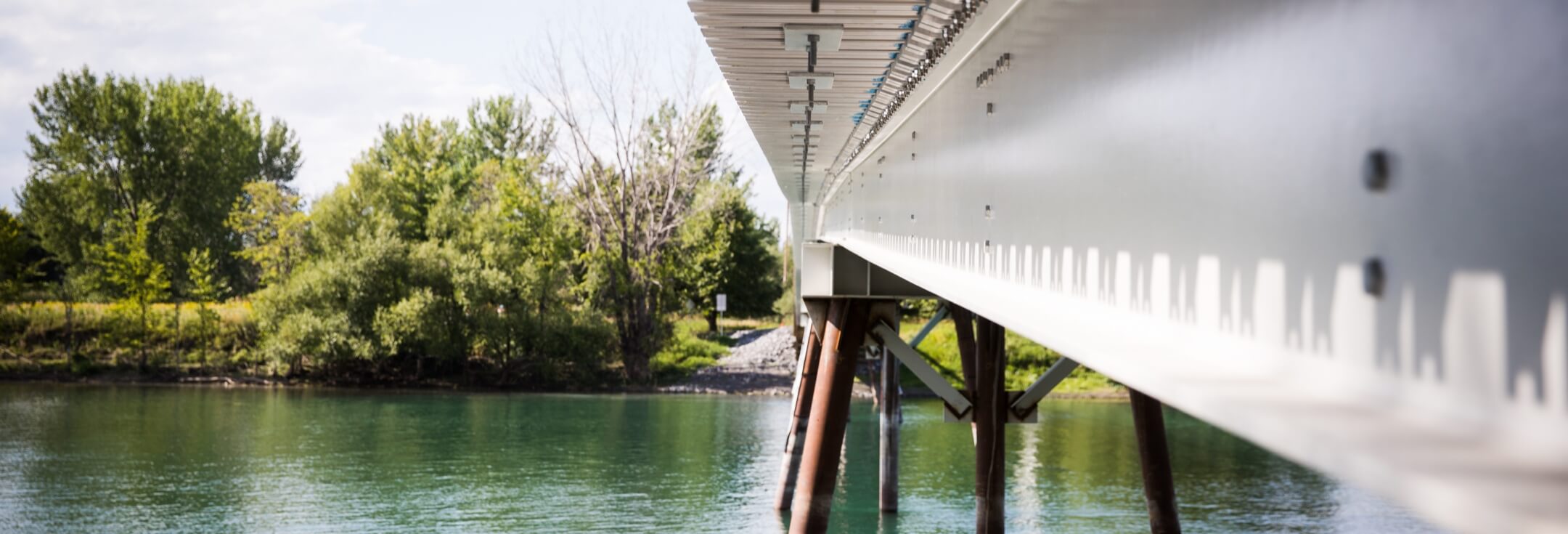
Our aluminum pedestrian bridges are virtually maintenance-free and highly cost-effective against steel once total cost of ownership is considered. Marine-grade 6000-series aluminum resists corrosion without coatings or paint, graffiti brushes or sands off bare metal with ease, and a well-engineered aluminum structure delivers a service life measured in decades (why aluminum).
Aluminum Pedestrian Bridge FAQs
What is an aluminum pedestrian bridge?
An aluminum pedestrian bridge is a footbridge built from high-strength extruded aluminum, engineered to carry pedestrians, cyclists, equestrian riders and light maintenance vehicles across rivers, roadways, railways and trails. Aluminum offers a strength-to-weight ratio greater than steel, which allows longer clear spans, smaller foundations and faster installation while resisting corrosion without coatings. MAADI Group designs and builds custom aluminum pedestrian bridges engineered to the AASHTO LRFD Guide Specifications for the Design of Pedestrian Bridges and the CAN/CSA S6 Canadian Highway Bridge Design Code, with structural calculations sealed by our in-house Professional Engineers.
What styles of pedestrian bridge does MAADI Group offer?
MAADI Group offers seven distinctive pedestrian bridge styles, including pony truss, arched pony truss, modular pony truss, H-section truss and bowstring truss designs, plus cantilevered bridge-widening systems. Bridge families span the St. Lawrence™, Glacier™, Tremblant™, Yukon™, Mackenzie™, Jasper™ and Banff™ ranges. Each is engineered to match its setting and span requirement while meeting the full structural, guardrail and deflection criteria of the governing bridge code.
To what codes and standards do you engineer pedestrian bridges?
We engineer aluminum pedestrian bridges to the governing North American and international design standards, including the AASHTO LRFD Guide Specifications for the Design of Pedestrian Bridges, the AASHTO LRFD Bridge Design Specifications, and the CAN/CSA S6 Canadian Highway Bridge Design Code, which includes a dedicated chapter for aluminum structures. Aluminum strength design and welding follow CAN/CSA S157 (Strength Design in Aluminum), CAN/CSA W59.2 (Welded Aluminum Construction) and AWS D1.2. Code compliance is the starting point, not the finish line: every design is supported by detailed structural calculations and sealed drawings prepared by our in-house Professional Engineers and, where required, reviewed and stamped by licensed engineering partners within the project's jurisdiction.
How fast can an aluminum footbridge be installed?
Our weld-free MakeABridge® bridge kits are manufactured 4 times faster than conventional welded bridges. Components are pre-engineered and clear anodized, ship in crates or bundles on standard trailers, and assemble on-site with hand tools, no welding equipment or specialized crew required. A typical 30 ft footbridge assembles in about 5 hours, which lowers labor, equipment and site-disruption costs on projects over roadways, railways and waterways where access is constrained.
What options and finishes can I choose for a pedestrian bridge?
Every aluminum pedestrian bridge is configured to the project. Decking options include Ipe hardwood, composite, hemlock and ribbed aluminum. Guardrail systems can incorporate vertical pickets, horizontal rails, cable infill, custom architectural panels, integrated handrails and kick plates, all meeting U.S. and Canadian bridge code spacing requirements. Optional built-in or RGBW programmable LED lighting can be engineered directly into the structure for safety and nighttime aesthetics. Architectural finishes are available in mill finish, clear anodized, color anodized or powder coating in a wide range of colors.
Can you widen an existing road bridge for pedestrians and cyclists?
Yes. Our Jasper™ prefabricated cantilevered system and GuarDECK™ aluminum bridge decking widen an existing roadway bridge to add a dedicated, safe lane for foot and bicycle traffic, with no need to tear down the existing structure. Because aluminum bridge decking can be 70 to 80 percent lighter than concrete, it adds capacity and width without overloading the existing bridge elements, which makes it a cost-saving alternative to full reconstruction.
Why choose aluminum over steel for a pedestrian bridge?
Aluminum has a superior strength-to-weight ratio, which means longer clear spans, smaller foundations and easier installation than steel. Marine-grade 6000-series aluminum resists corrosion naturally without protective coatings or paint, making it ideal for coastal, freshwater and road-salt environments, and it delivers a service life measured in decades with minimal maintenance. MAADI's own aluminum-versus-steel total-cost-of-ownership analysis shows that the right structure has a greater impact on long-term project economics than the lowest upfront price. Our engineering team also brings cross-disciplinary experience from pedestrian bridges, tactical and modular military bridge systems, industrial port infrastructure and offshore access structures, applying advanced structural engineering to every footbridge we deliver.