


Start your Aluminum Structure Project
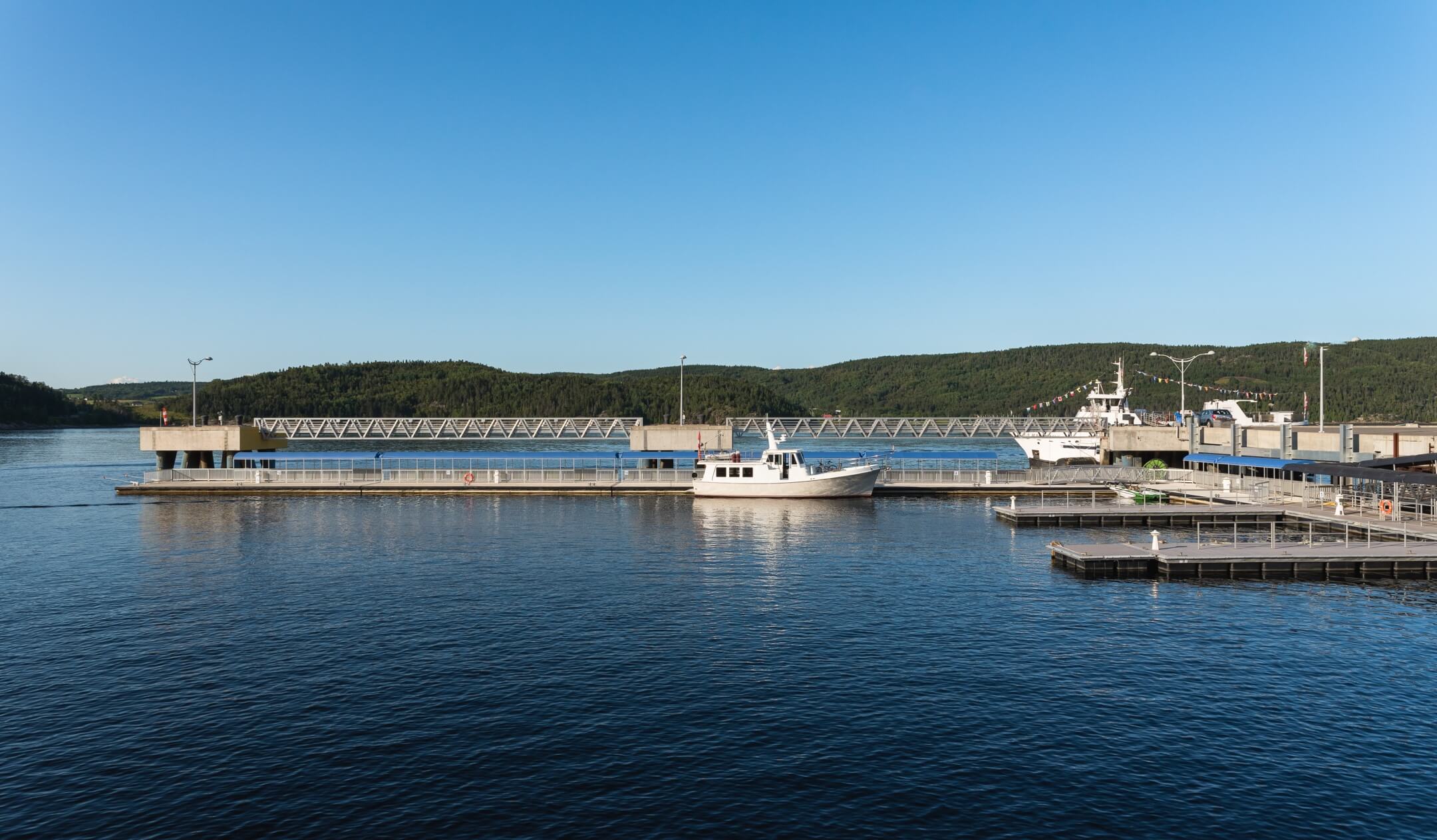

Custom aluminum ferry landings engineered for ferries, passenger shuttles and water taxis, each structure designed around the vessel, passenger flow, tidal range and site-specific waterfront conditions.
MAADI integrates engineering, fabrication and installation supervision in-house, maintaining engineering intent from the initial load cases and vessel-to-landing interface through fabrication and final installation. Built from marine-grade structural aluminum for corrosion resistance and reduced maintenance, each ferry landing is engineered specifically for its site and operating requirements.
Every ferry landing starts with the vessel, the water levels and the site.
Get Your Ferry Landing Quoted
Tell us the vessel, the site and the passenger volume. We come back with a landing engineered to those numbers, not to a catalogue.
Turnkey Passenger Transfer Structures
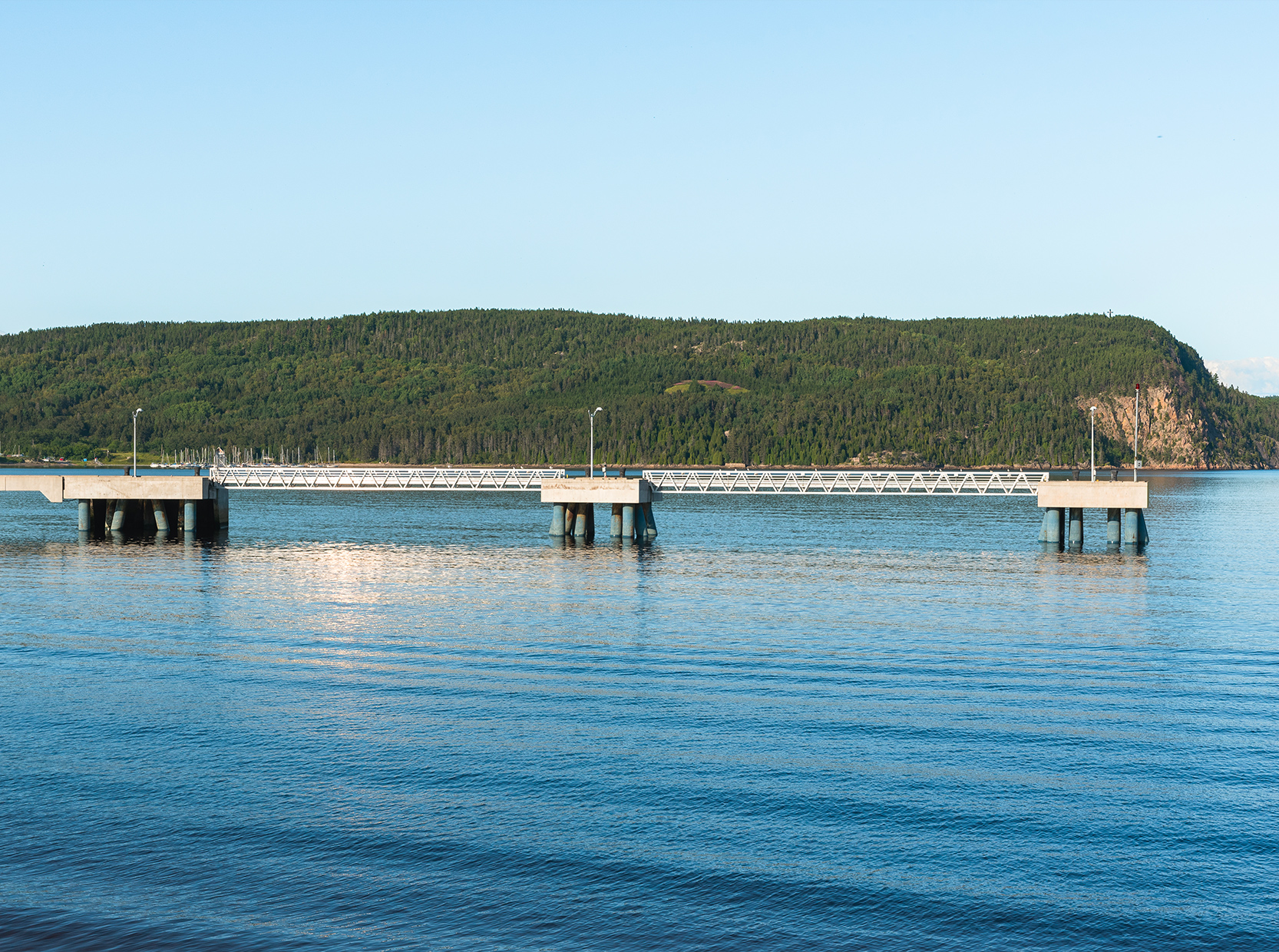
MAADI provides a single-source approach to custom passenger transfer structures, from preliminary engineering and site integration through fabrication and installation support.
Our in-house team coordinates structural engineering, vessel-to-landing interface design, fabrication, installation planning and final inspection, with Professional Engineers involved throughout the project to maintain design intent, safety and applicable code requirements.
For complex ferry terminals, the complete system can be engineered around passenger flow, vessel geometry, water-level variations, accessibility requirements and site-specific operating conditions.
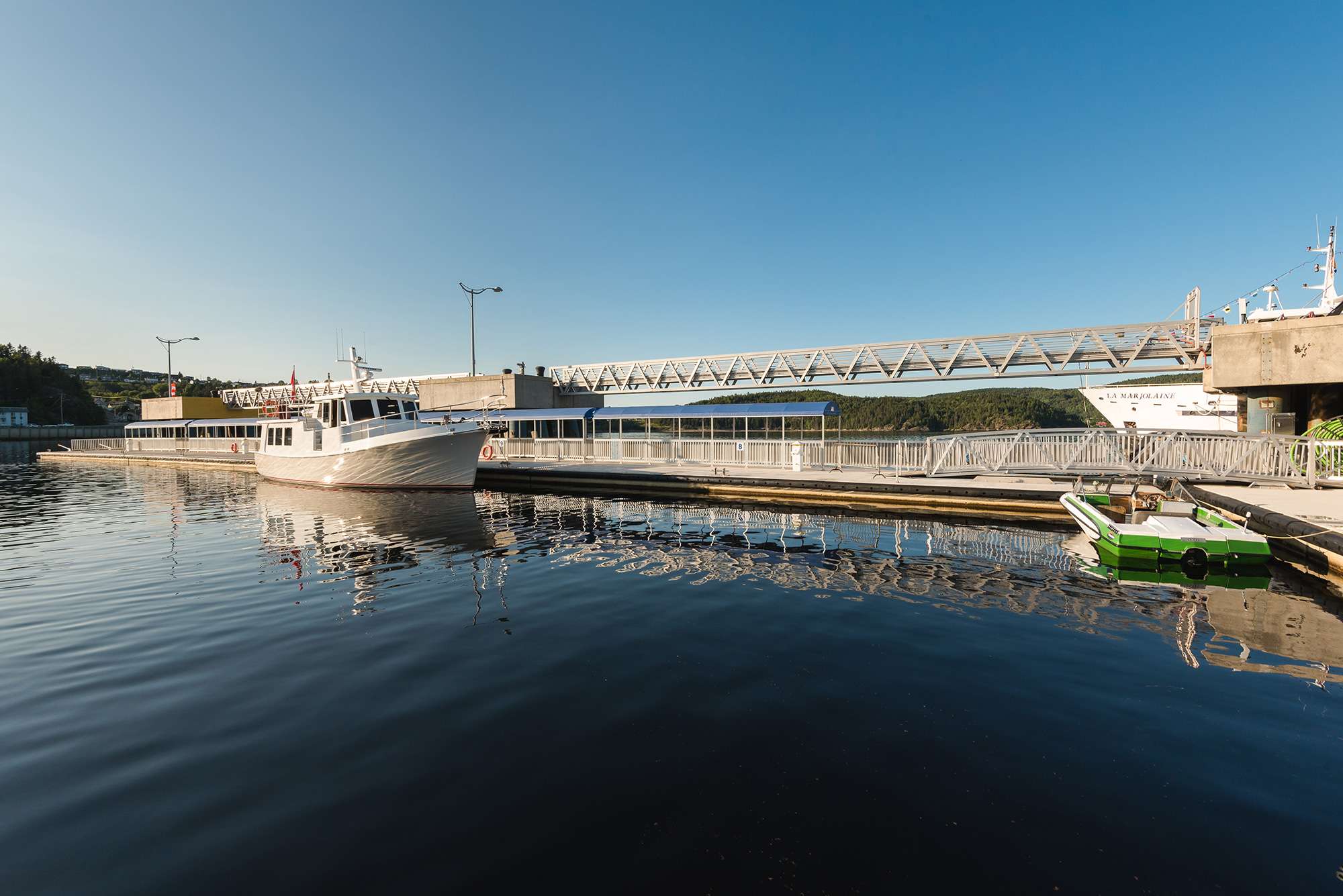
Watch the MAADI-Designed and Built Aluminum Ferry Landing in La Baie, Quebec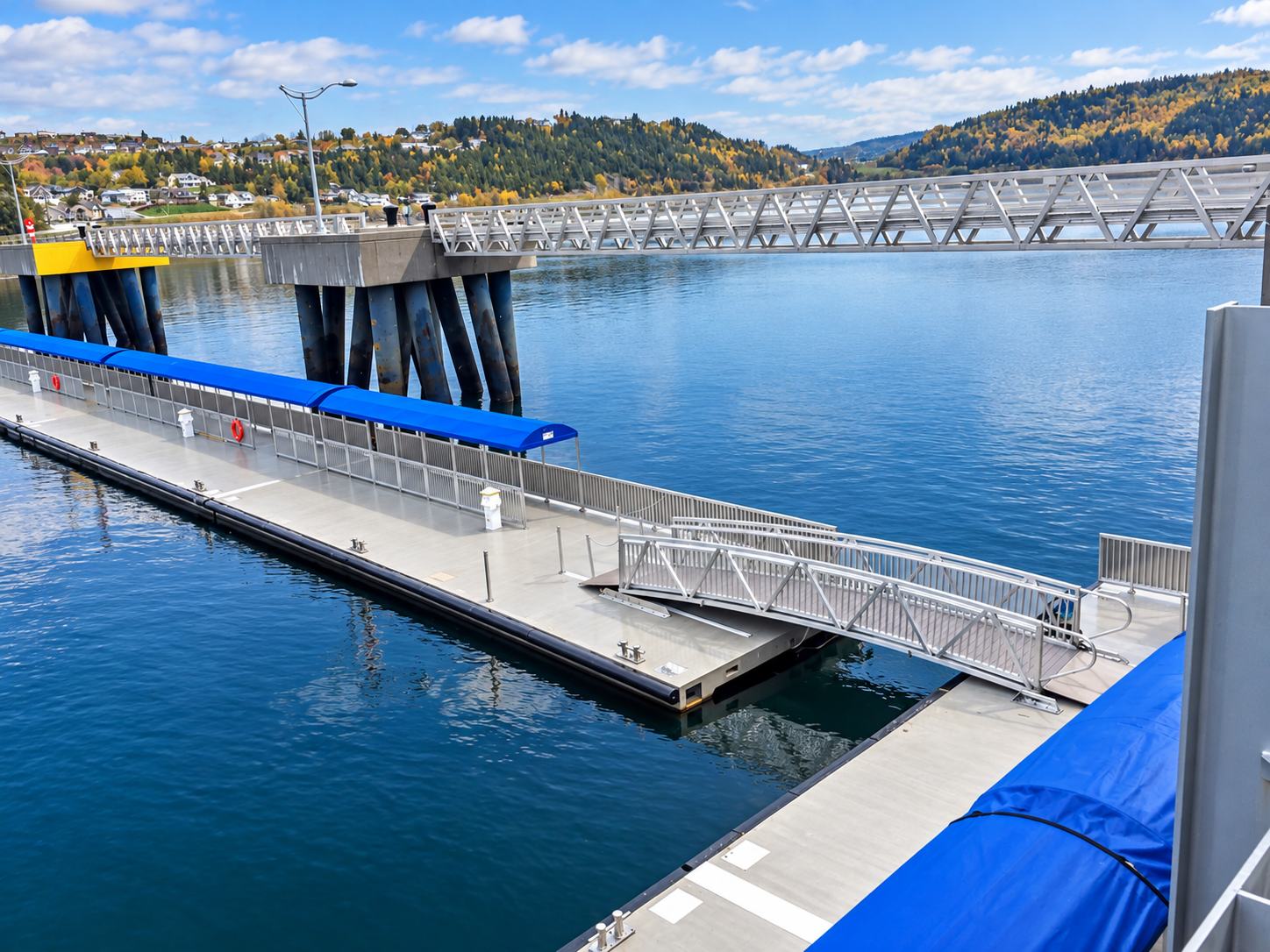
Strong and Durable Aluminum Landings
Marine-grade structural aluminum provides inherent corrosion resistance in marine environments without requiring the protective coating systems typically associated with carbon steel. This reduces long-term maintenance requirements for ferry landings exposed to water, salt and changing weather conditions. When properly engineered, fabricated and maintained for its exposure conditions, an aluminum ferry landing can provide decades of service.
At approximately one-third the density of steel, aluminum also reduces the dead load transferred to supporting structures, foundations and waterfront infrastructure—an important consideration when integrating a new passenger landing into an existing site.
At the end of its service life, the aluminum structure is fully recyclable, supporting material recovery and reuse.
Cost-Effective Ferry Docks
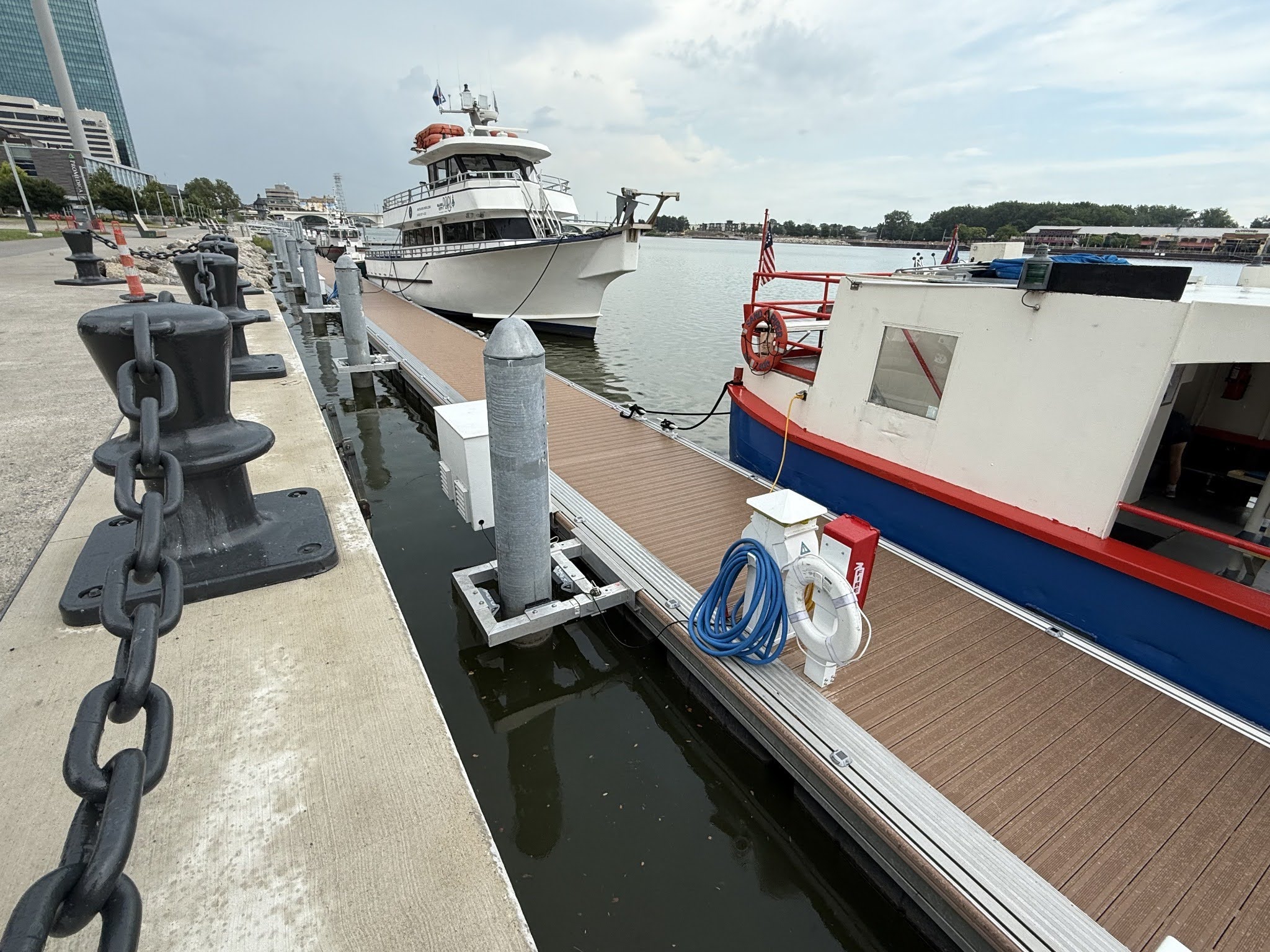
Structural aluminum does not require the recurring sandblasting, repainting and protective coating maintenance typically associated with carbon-steel waterfront structures. For ferry operators, this can reduce both long-term maintenance costs and the operational downtime required to perform that work.
Lower structural weight can also simplify transportation, handling and installation, while the inherent corrosion resistance of aluminum helps preserve the structure in demanding waterfront environments.
For infrastructure that must remain available day after day, life-cycle cost and operational reliability matter as much as initial construction cost.
A ferry landing runs on a schedule. It has to work at 6 a.m. in February.
Tailored Landing Design for Your Vessel
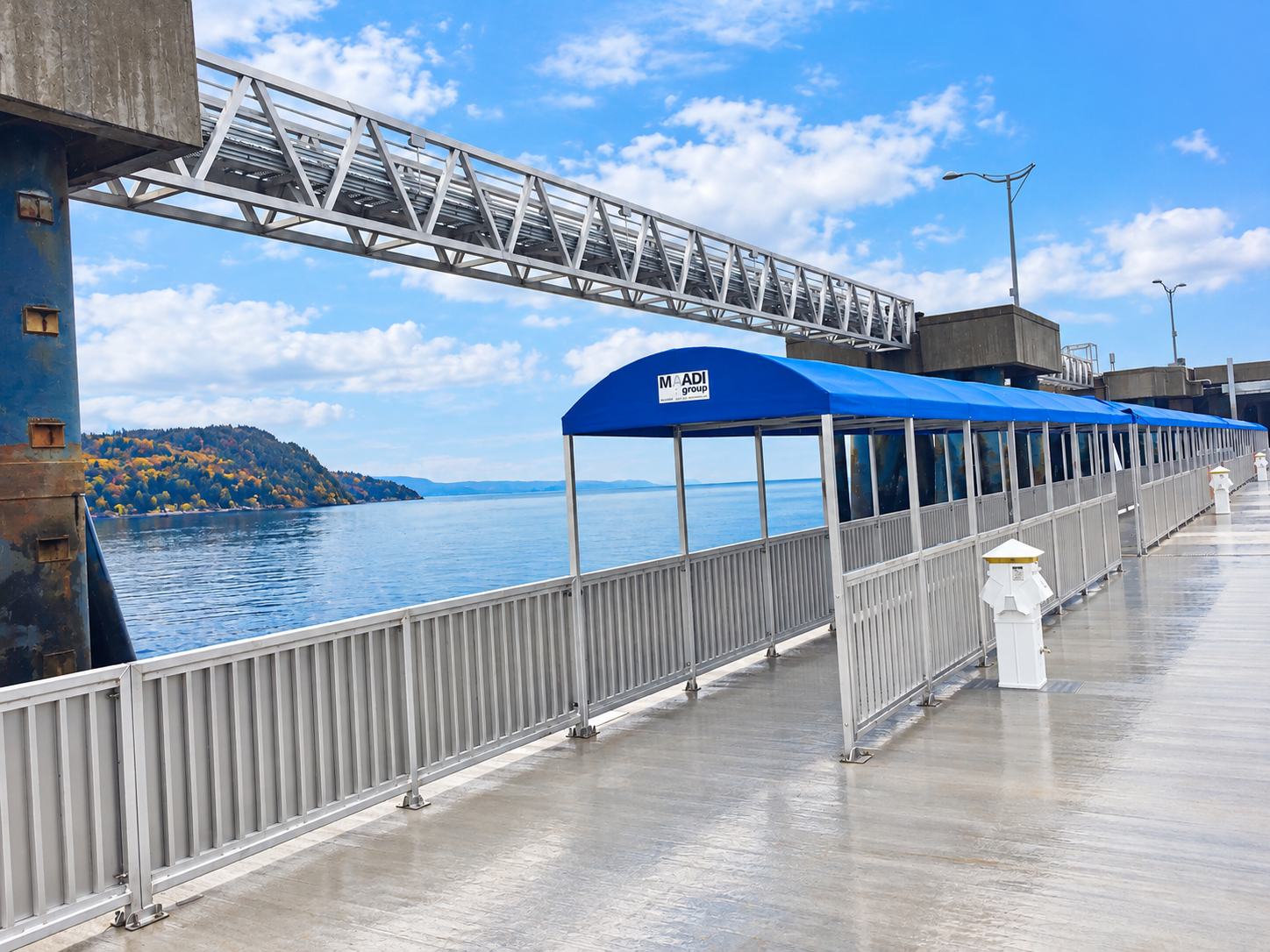
Each ferry landing is engineered around the vessel that will use it, the waterfront site and the expected passenger flow. Vessel geometry, boarding elevations, water-level variations, landing configuration and site constraints are considered together to develop a passenger transfer system suited to its operating environment.
Rather than adapting a standard platform to the site, MAADI engineers the vessel-to-shore interface as a complete system, integrating the landing structure with gangways, access platforms and supporting infrastructure as required.
Every vessel is different. Every waterfront is different. The landing should be too.
What We Need to Quote Your Landing
The fastest way to develop a project-specific quotation is to provide the information that drives the landing design. Four inputs are particularly important:
-
The vessel
Vessel type, dimensions, boarding configuration and how it approaches and berths at the landing.
-
The site
Project location, water-level range, available site information and the infrastructure the landing must connect to on shore.
-
The passenger volume
Expected passenger flow, peak loading and whether the landing must also accommodate service carts or vehicles.
-
The required scope
Engineering and supply only, supply with installation supervision, or a complete turnkey solution.
If all of this information is not yet available, send us what you have. Our engineering team will identify the remaining information required to define the landing and prepare the quotation.
Aluminum Ferry Landing Engineering Expertise
Marine Aluminum Engineering Since 2005
MAADI has engineered aluminum marine structures since 2005, with projects delivered in more than 30 countries. Our experience spans passenger transfer structures, gangways, floating structures and other custom aluminum structures for demanding waterfront environments.
Approximately 65% of our clients are engineering firms, reflecting MAADI’s role as a specialized aluminum engineering and fabrication partner on technically demanding projects.
In-House Engineering and Code Compliance
MAADI brings Professional Engineers (P.Eng./PE), Naval Architects and International Welding Engineer (IWE) expertise together within the same organization, integrating structural, marine and welding engineering throughout the project.
Each ferry landing is engineered to the codes and standards applicable to the project location and intended use. Applicable design requirements are established at the beginning of the project and carried through engineering, fabrication and final documentation.
Guaranteed quality
Backed by 12-year limited warranty on aluminum against material failure, defects, and corrosion
Sector
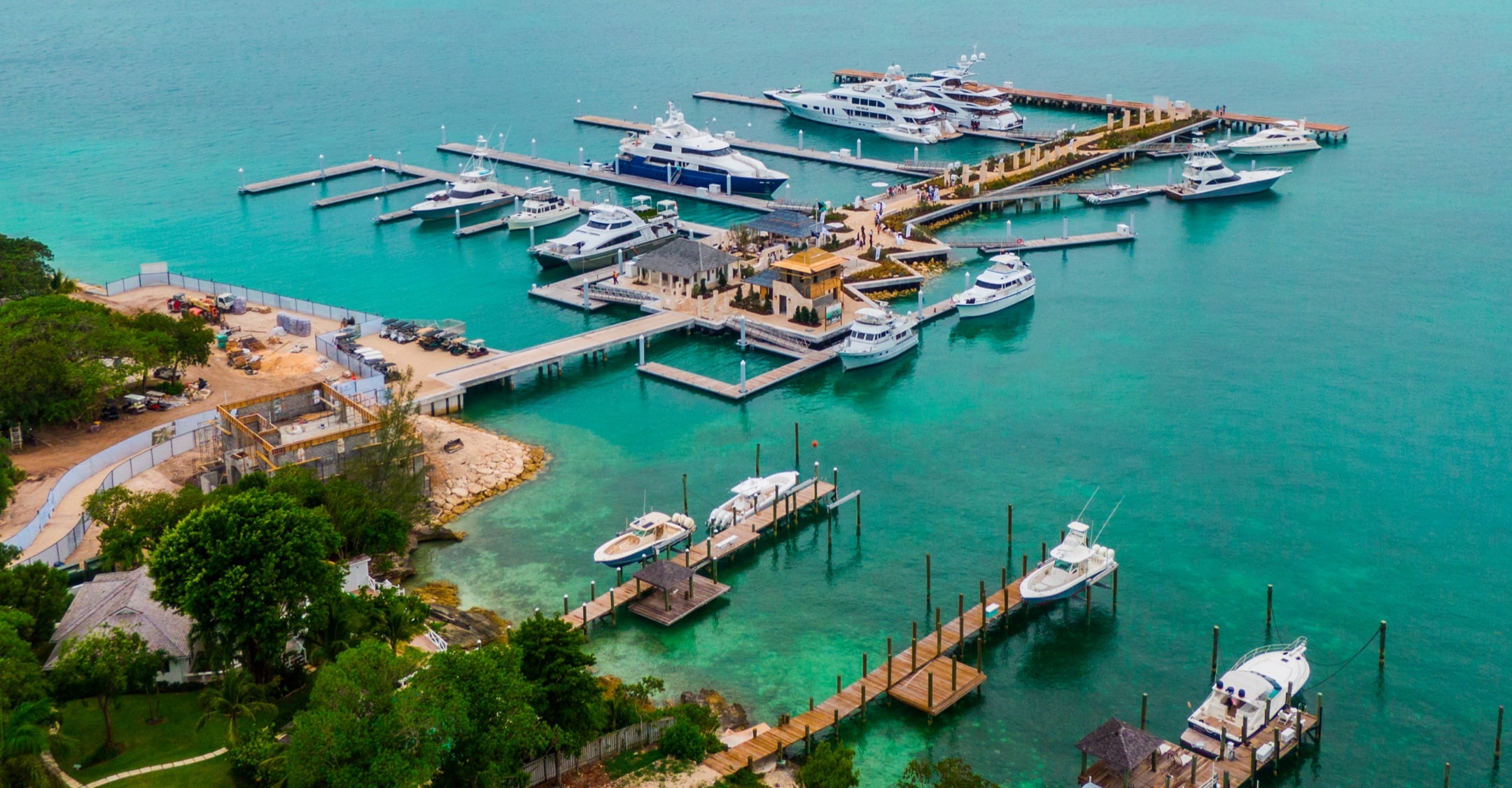
Marine Constructions
We’re your partner for a job well done, no matter how much (or how little) of our expertise you need. Our services include full engineering, technical support and manufacture, planning, and installation.
Our Services
Documentation
Want more details? Download our technical information about our products. And feel free to contact us with any questions!



Other Products
See all
Durable design with refined custom features to beautify your waterfront.
Landings, Gangways and Floating Docks
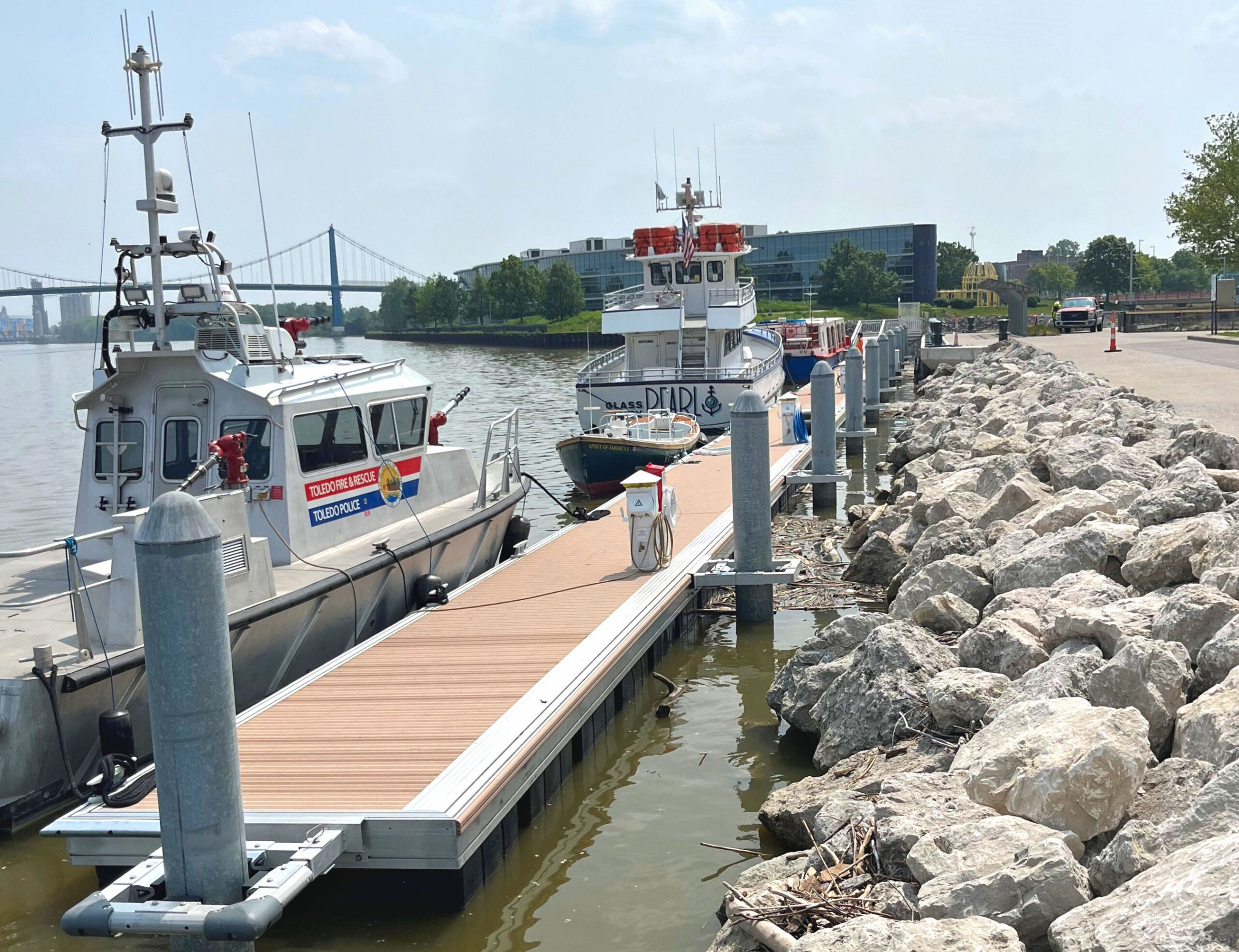
A ferry landing rarely operates as a standalone structure. Gangways, floating docks and wave attenuation systems may all form part of the same passenger transfer and berthing environment.
Marine aluminum gangways
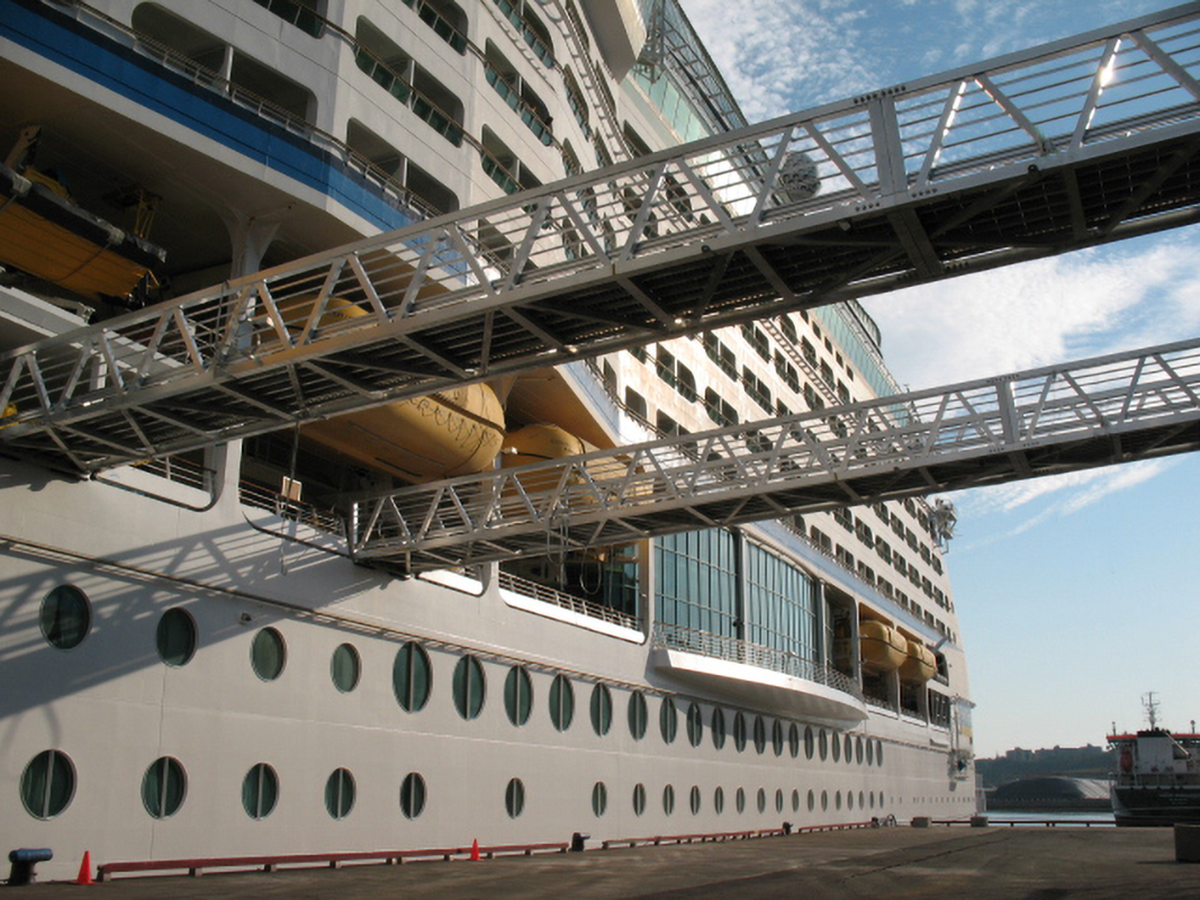
Provide passenger access between fixed and floating or moving structures.
Aluminum floating docks
Provide berthing and passenger circulation at water level.
Floating wave attenuators
Help reduce wave action within exposed basins and passenger boarding areas.
When a ferry terminal requires more than one of these structures, MAADI can engineer and coordinate the components as an integrated waterfront system rather than as separate packages. The same approach is applied to our custom aluminum marina systems.
We engineer to the site and deliver to the site.
Ferry Landing FAQ
What is a ferry landing?
A ferry landing is a waterfront structure designed to provide a safe interface between the shore and a passenger vessel. Depending on the configuration, it may incorporate fixed or floating platforms, gangways, boarding areas, fendering and other components required to accommodate vessel movements, changing water levels and passenger circulation.
Unlike a conventional recreational dock, a ferry landing is engineered around repeated commercial operations, passenger loading and the vessel-to-shore interface.
How long does an aluminum ferry landing last?
Marine-grade structural aluminum provides excellent corrosion resistance in waterfront environments and does not require the protective coating systems typically associated with carbon steel. When properly engineered, fabricated and maintained for its exposure conditions, an aluminum ferry landing can provide decades of service.
MAADI also provides a 12-year limited warranty against material failure, defects and corrosion, subject to the terms and conditions of the applicable warranty.
Why aluminum instead of steel or concrete for a ferry landing?
At approximately one-third the density of steel, aluminum can significantly reduce structural dead load, which is particularly valuable when a landing must connect to existing waterfront infrastructure.
Aluminum also provides inherent corrosion resistance without requiring a protective paint or galvanizing system, helping reduce long-term maintenance requirements. At the end of its service life, the aluminum structure is fully recyclable.
Can a ferry landing carry vehicles as well as passengers?
MAADI ferry landings are primarily engineered for passenger transfer for ferries, shuttles and water taxis. Vehicle transfer introduces different loading, geometry and vessel-interface requirements and may require a linkspan, transfer bridge or other purpose-designed structure.
If vehicles, maintenance equipment or service carts will use the landing, this should be identified at the beginning of the project so the appropriate loading and configuration can be incorporated into the design.
Are your ferry landings accessible?
Yes. Accessibility requirements are incorporated into the design based on the applicable codes, project location and intended use. Gangway slope is an important consideration, but allowable geometry depends on the governing accessibility requirements and the overall passenger transfer configuration.
Because water levels can change significantly, the design must consider the relationship between gangway length, boarding elevations, water-level range and resulting operating slope throughout the required operating envelope.
How much does a ferry landing cost?
The cost of a custom ferry landing depends primarily on the vessel, site conditions and water-level range, passenger loading, landing configuration and required project scope.
A landing for a small water taxi at a sheltered site and a terminal serving a scheduled passenger ferry across a wide tidal range can require very different structures. Send us your vessel information, site conditions, expected passenger volume and required scope, and MAADI can develop the appropriate configuration and provide a project-specific quotation.