





Start your Aluminum Structure Project

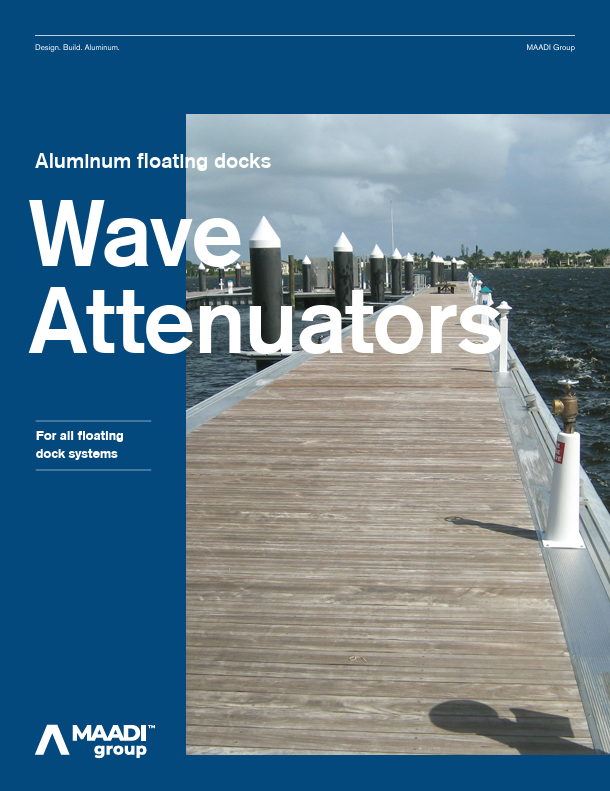
Floating Wave Attenuators, Engineered to Tame the Sea.
We design, engineer and build custom aluminum floating wave attenuators that dissipate wave energy and protect marinas, docks and harbors, without the massive footprint or ecological harm of stone, concrete or tire breakwaters. Each system is engineered in-house to your site’s wave climate, then built from marine-grade aluminum that resists corrosion for decades.
Innovative Floating Breakwater Design
- Our breakthrough floating breakwater system works with nature to dissipate waves and protect marine life
- Aluminum floating wave attenuators suit both new construction and renovation projects
- Engineered around your site’s wave height, fetch, water depth and mooring needs (why aluminum)
Tough Aluminum Wave Attenuators
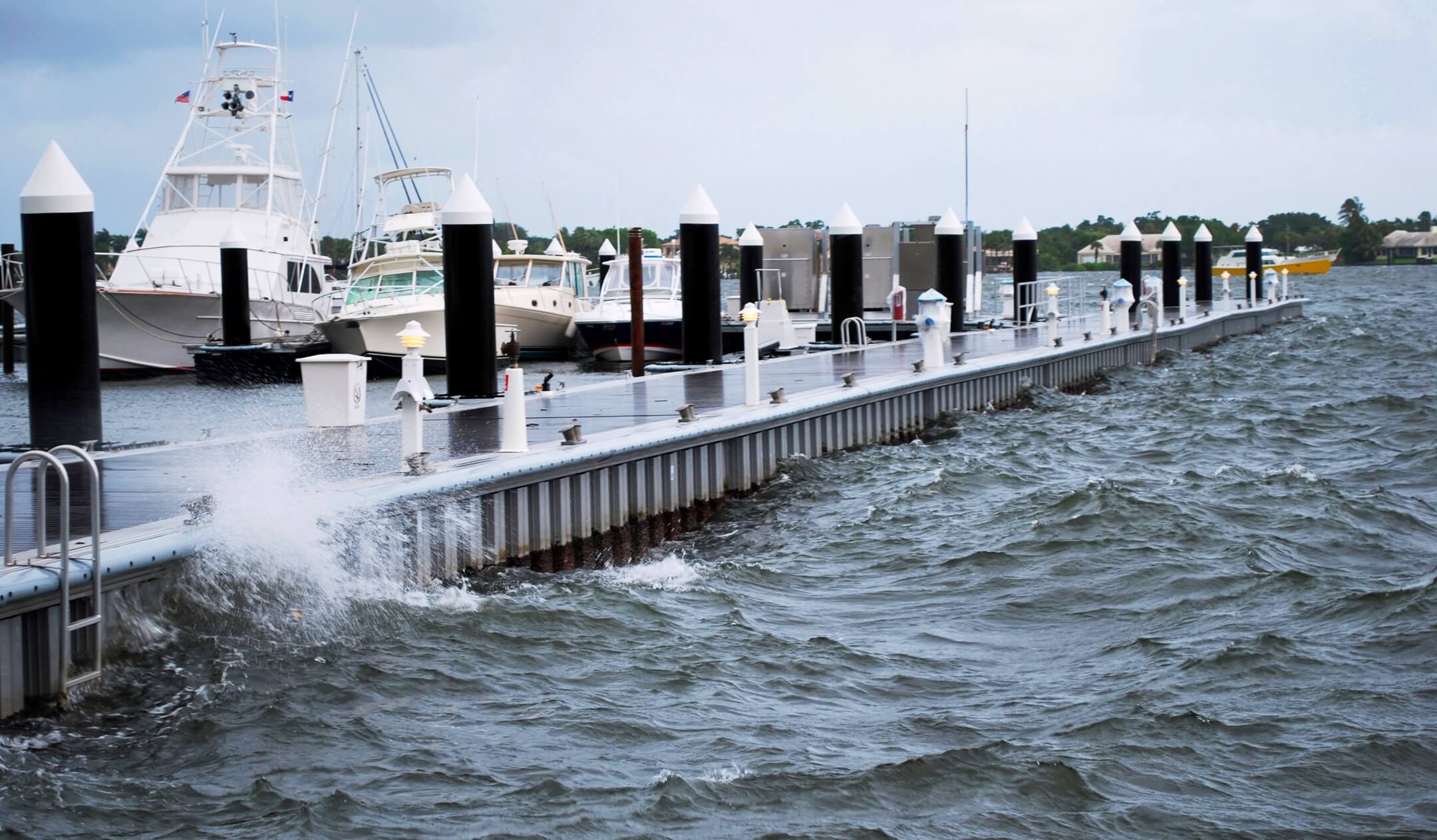
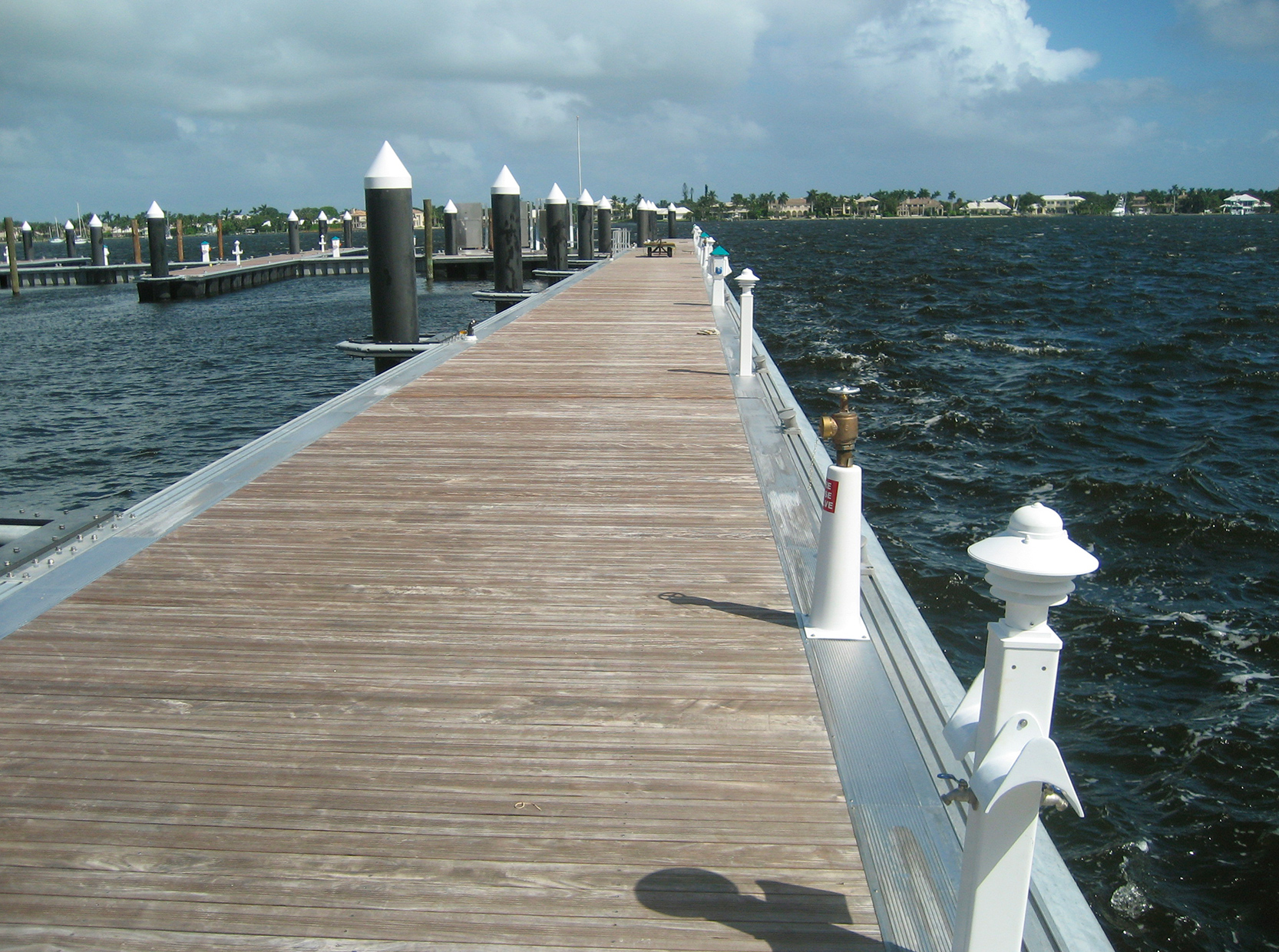
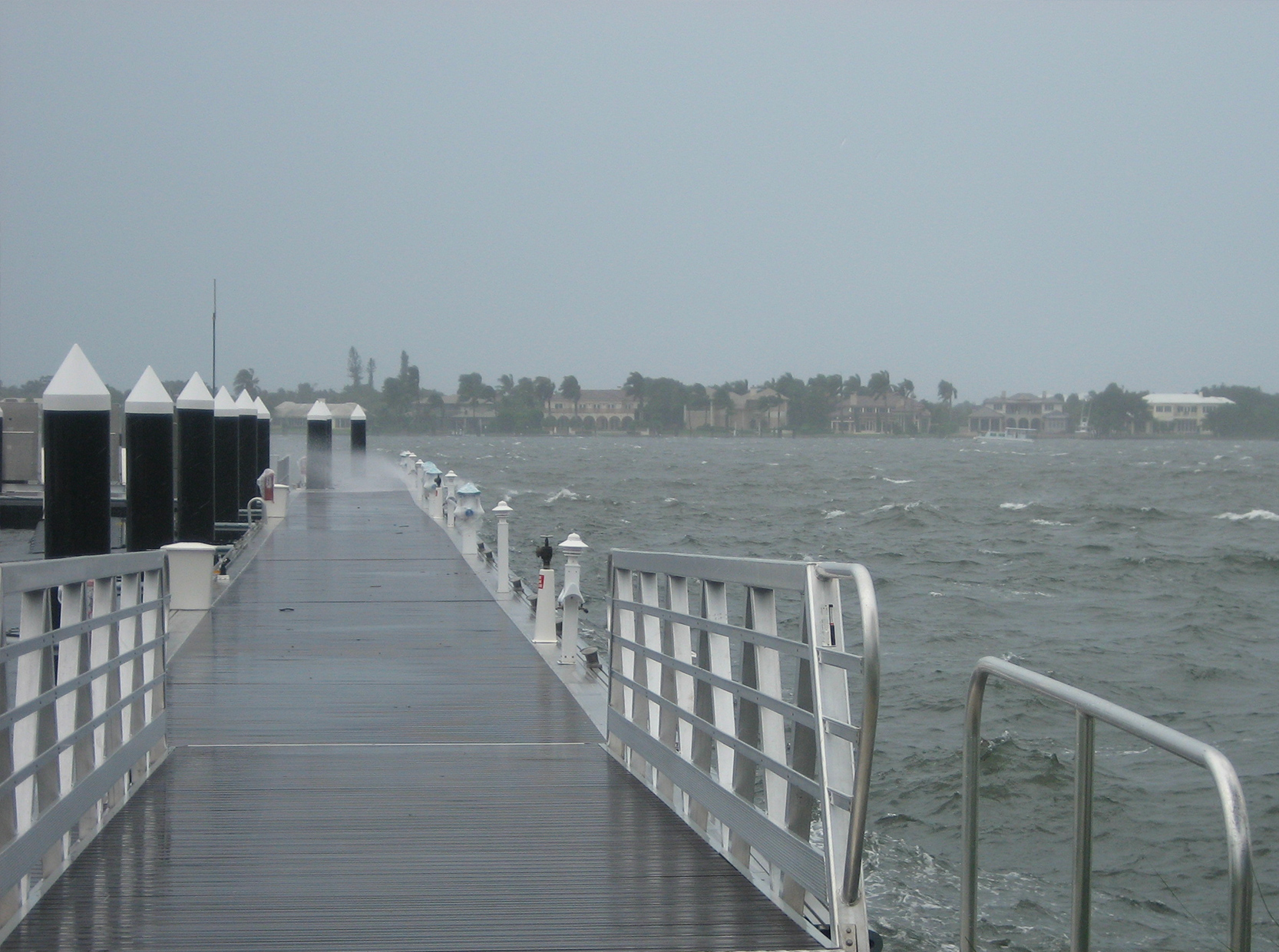
- Built for climate change using sustainable aluminum, withstanding winds up to 74 mph and waves up to 3 ft
- The ultimate in durability and corrosion resistance, using strong marine grade aluminum alloys 5086-H32 and 5083-H321 submerged frame and vinyl panels
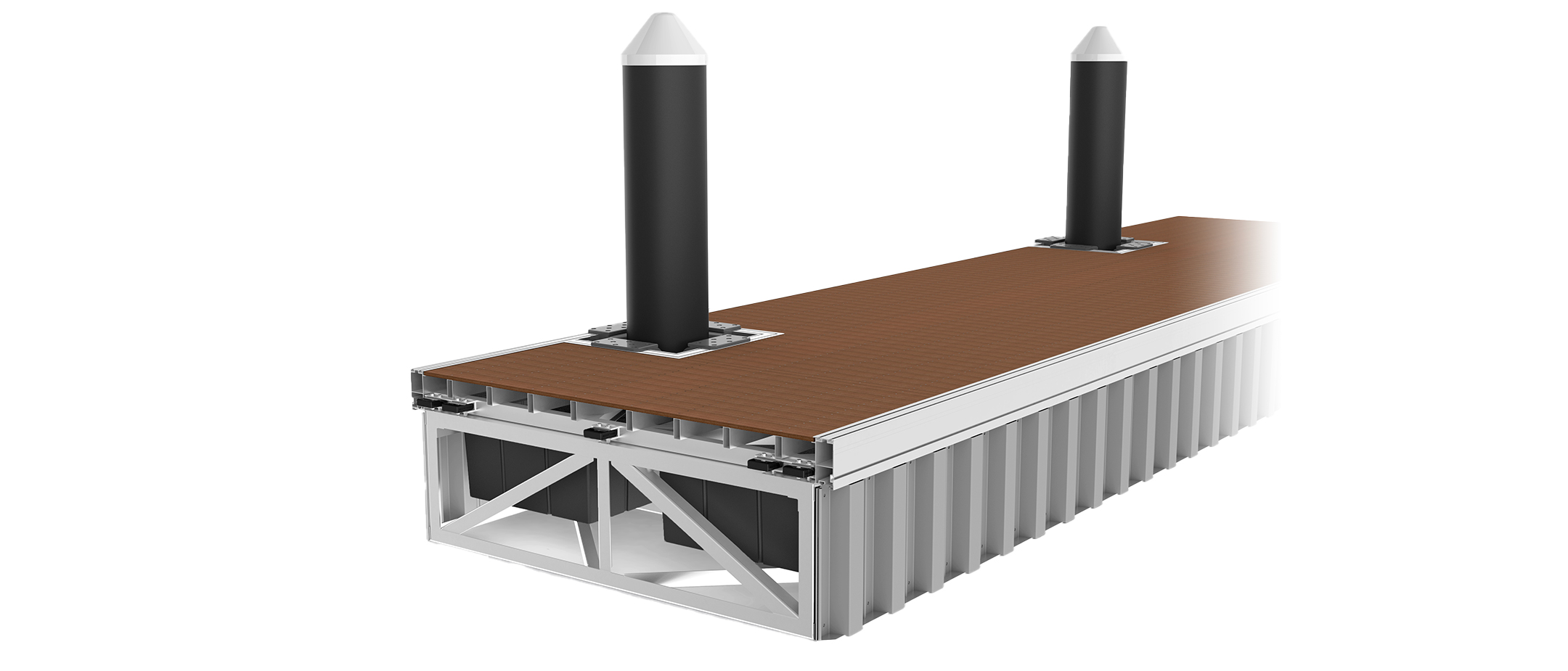
- Custom hollow extrusions combine internal links with high torsional rigidity and section modulus for greater stability and stiffness.
Eco-Friendly Floating Wave Attenuators
- Our floating wave attenuators do not obstruct water circulation or fish migration
- They do not trap debris or cause biofouling buildup, unlike rubble-mound, concrete-slope or rubber-tire breakwaters
- A non-invasive footprint that protects valuable coastline and vessels without compromising the environment
Efficient features
Our aluminum floating wave attenuators deliver high performance thanks to their expertly designed features.
Connectors
Anchoring
Extrusions
Vinyl panels
Track system
Decking materials
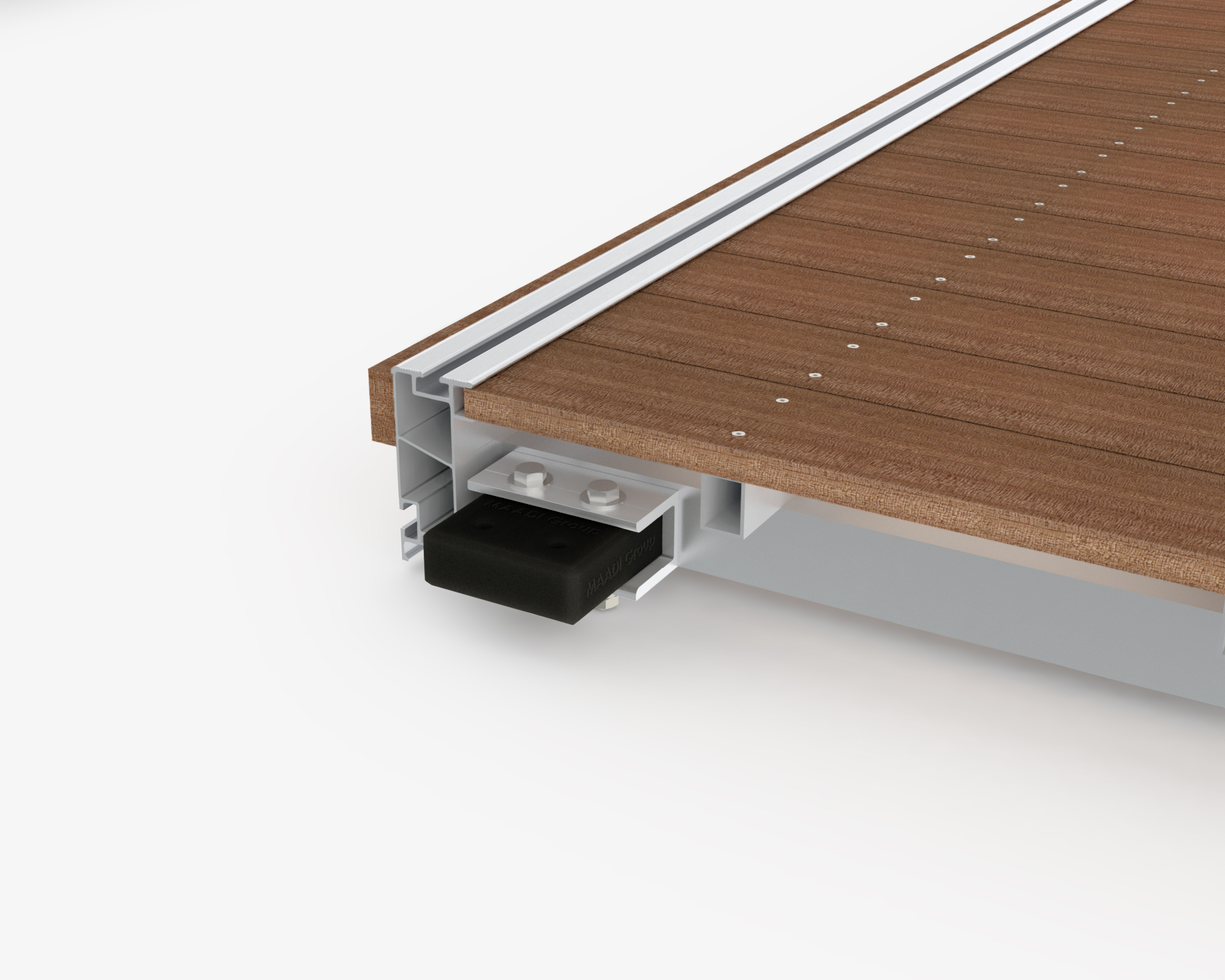
Flexible connectors
Flexible connectors between modules allow for hogging and sagging movement, releasing tension.
Download Wave Attenuators brochure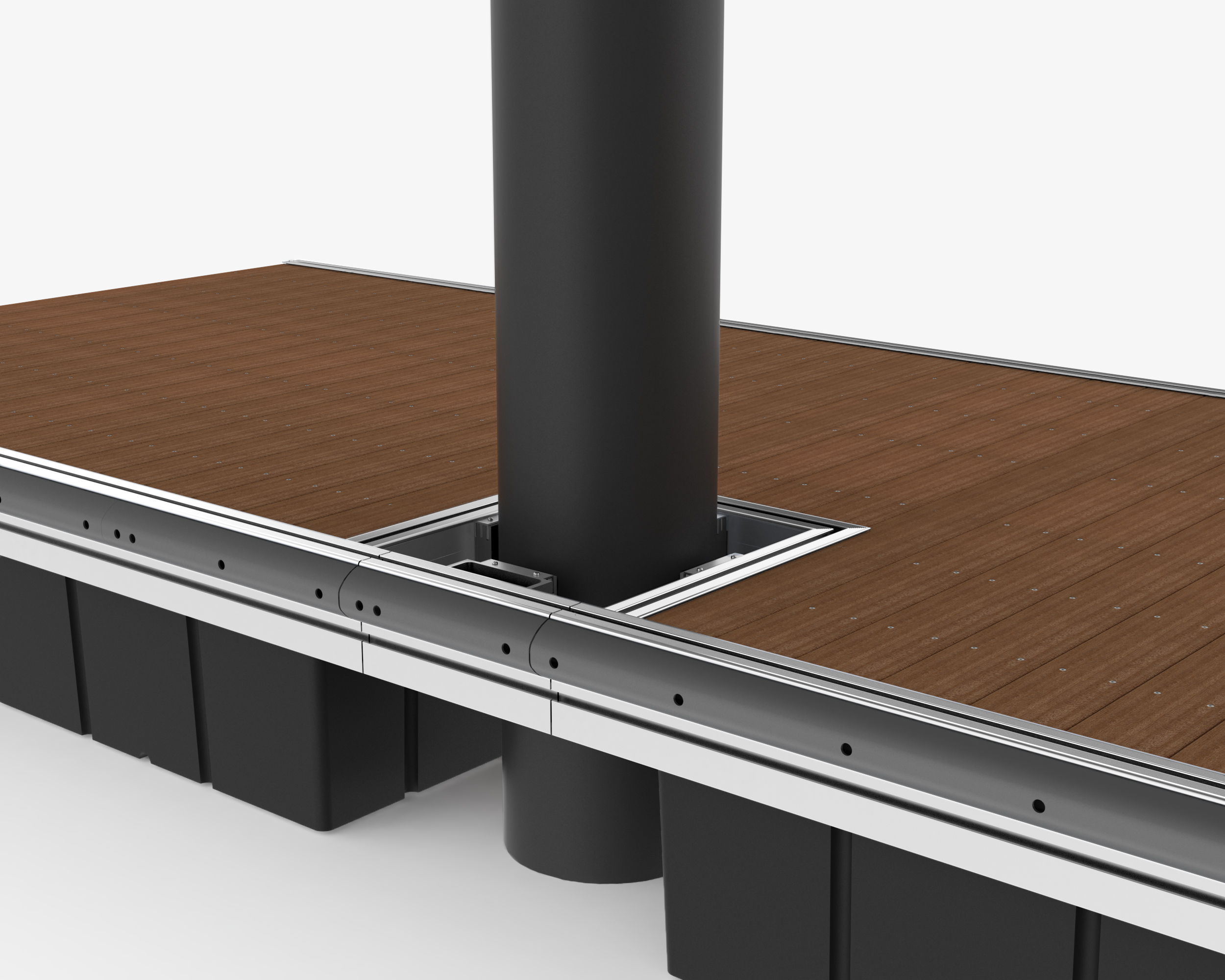
Anchoring
Piles
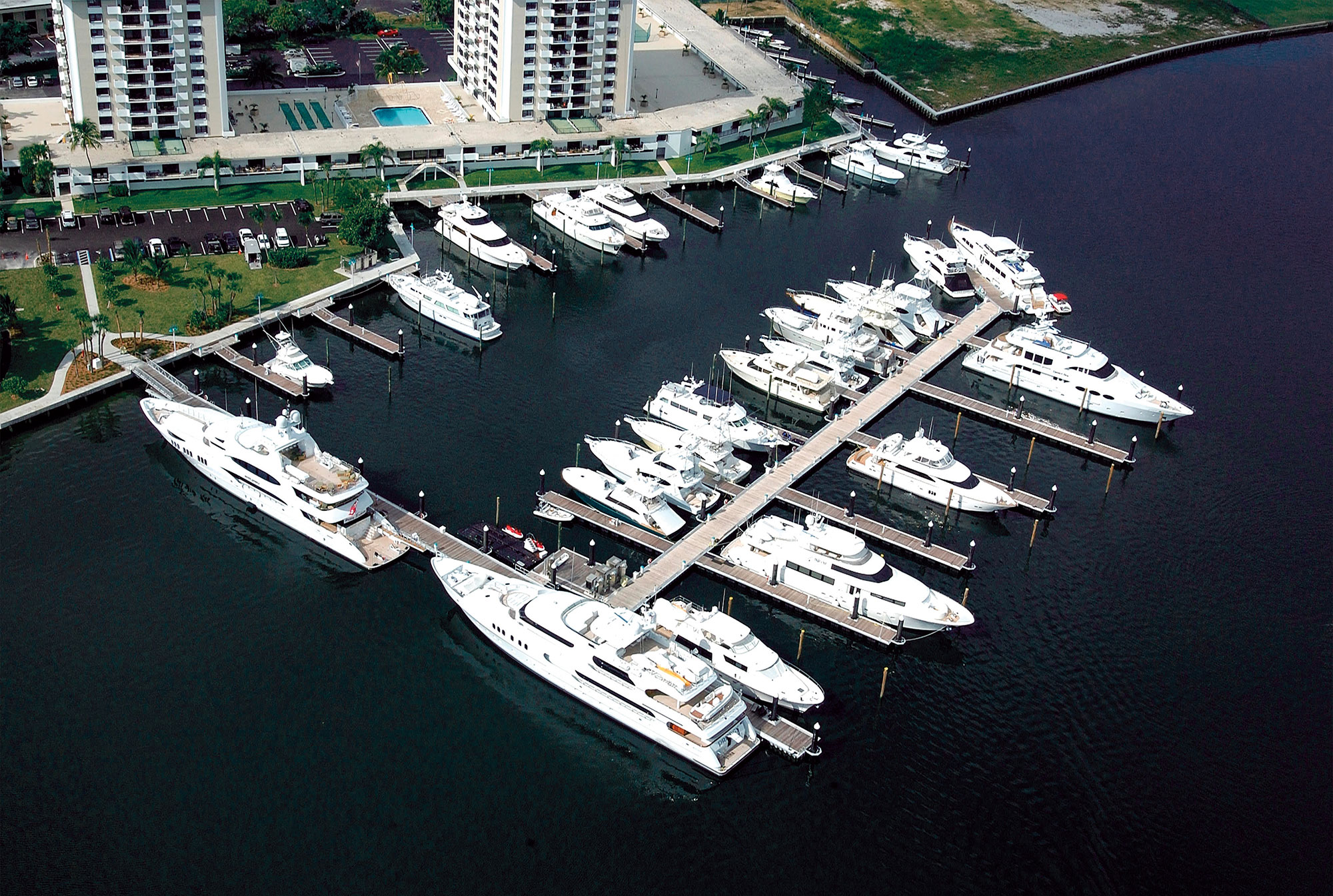
The use of piles instead of chains provides greater performance and creates additional boat slips and dockage areas.
Download Anchoring Systems brochure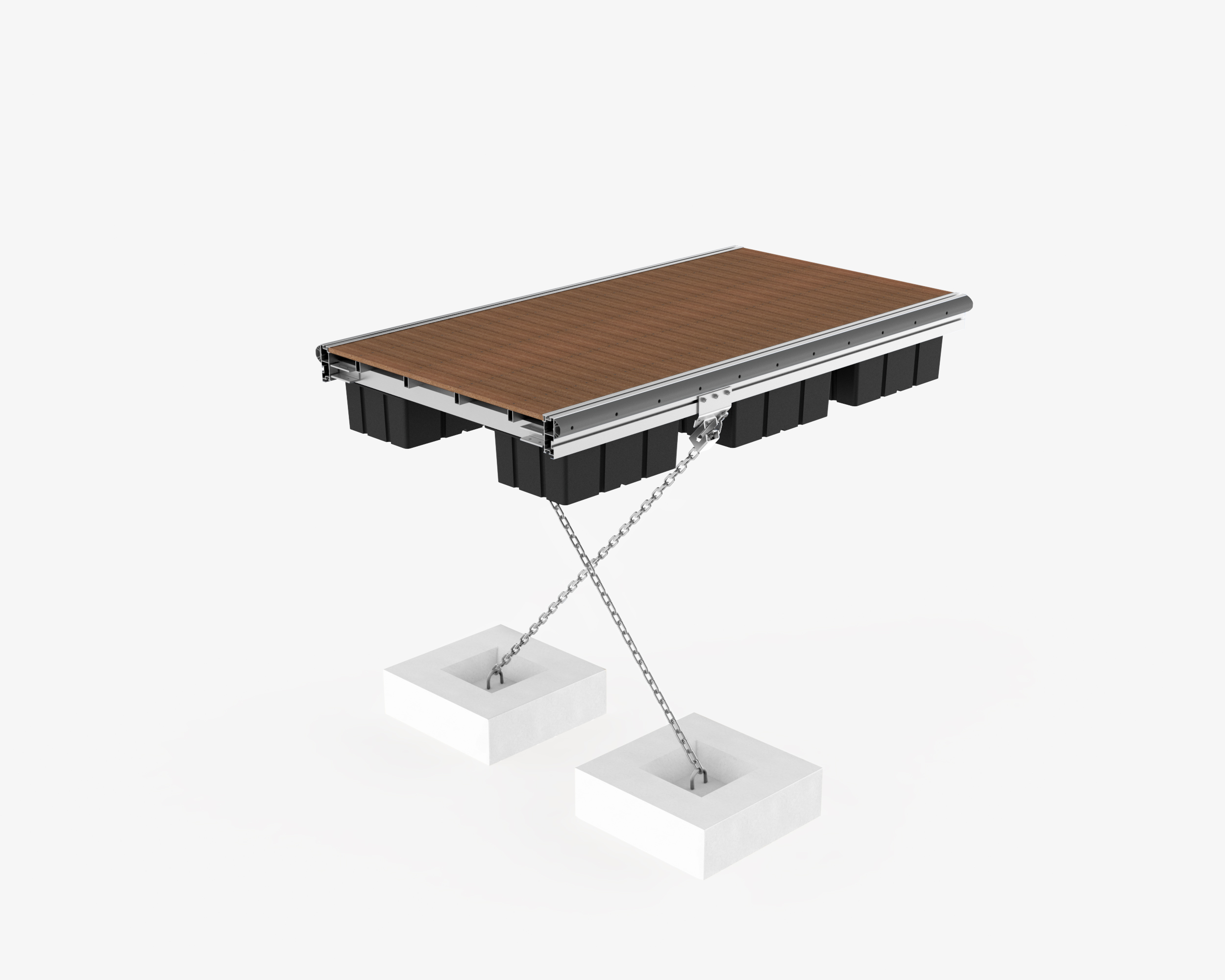
Anchoring
Deadman
This method of anchoring is generally used in deep waters.
Download Anchoring Systems brochure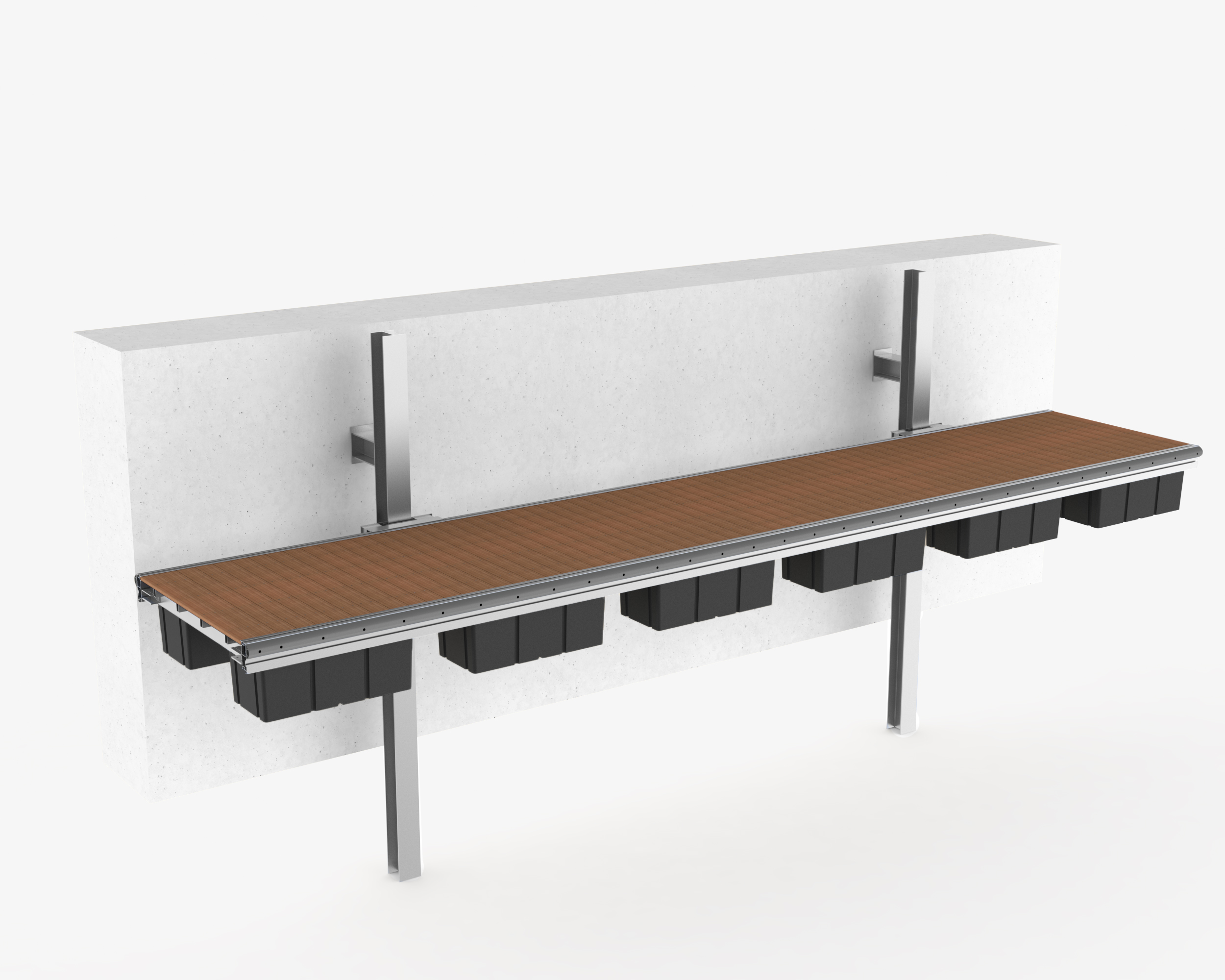
Anchoring
H-Beam
Can be used for wave attenuators anchored along a seawall or bulkhead.
Download Anchoring Systems brochure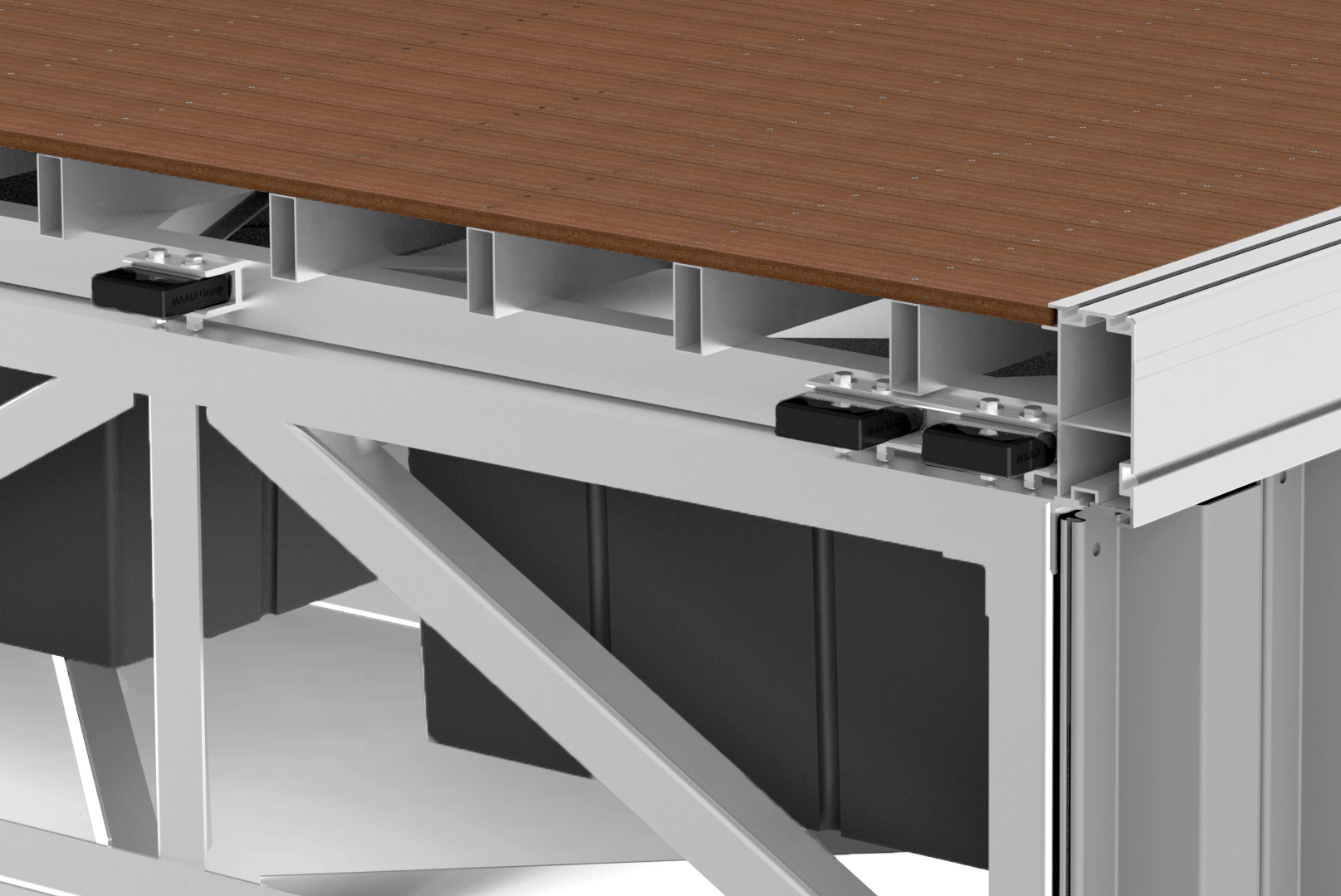
Marine-grade aluminum extrusions
Lightweight aluminum modules allow for better buoyancy.
Download Wave Attenuators brochure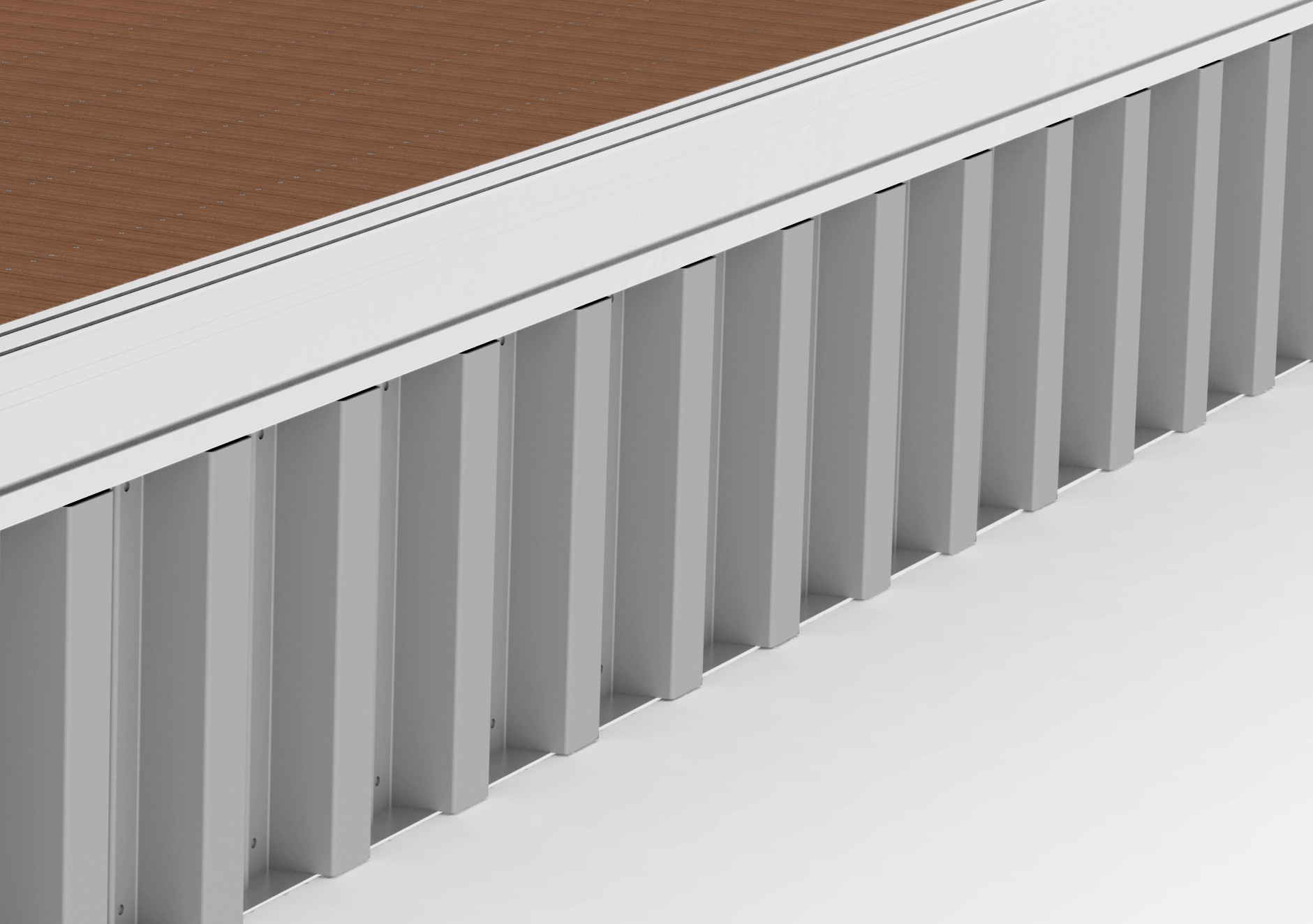
Lightweight vinyl panels
Vinyl panels are lighter than steel, do not rust, and are more efficient at preventing marine growth.
Download Wave Attenuators brochure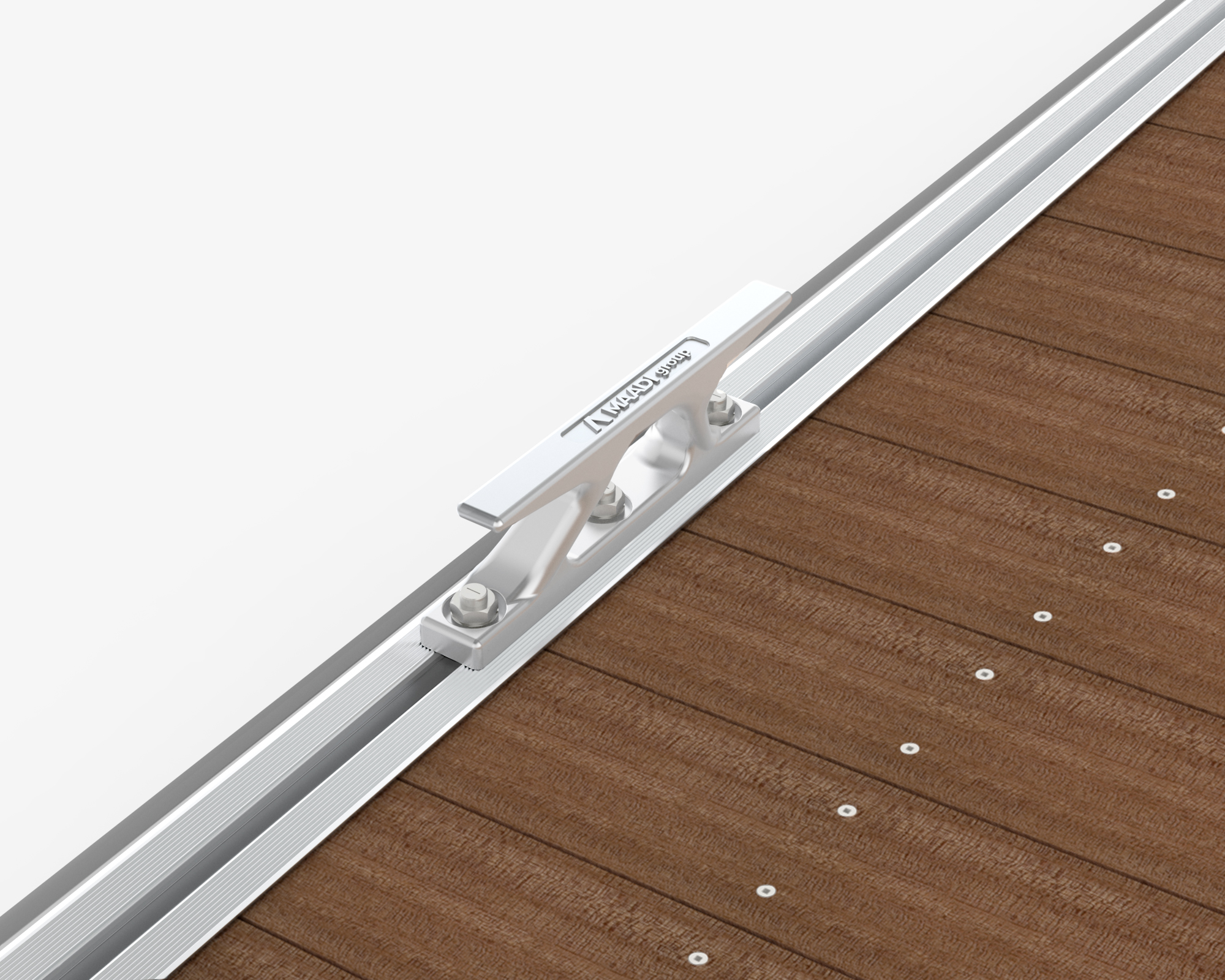
Multifunction track system
Heavy-duty built-in tracks along the edges of each extrusion allow dockside accessories, such as cleats, bollards, ladders, and pedestals to be attached to extruded rails via fasteners.
Download Wave Attenuators brochure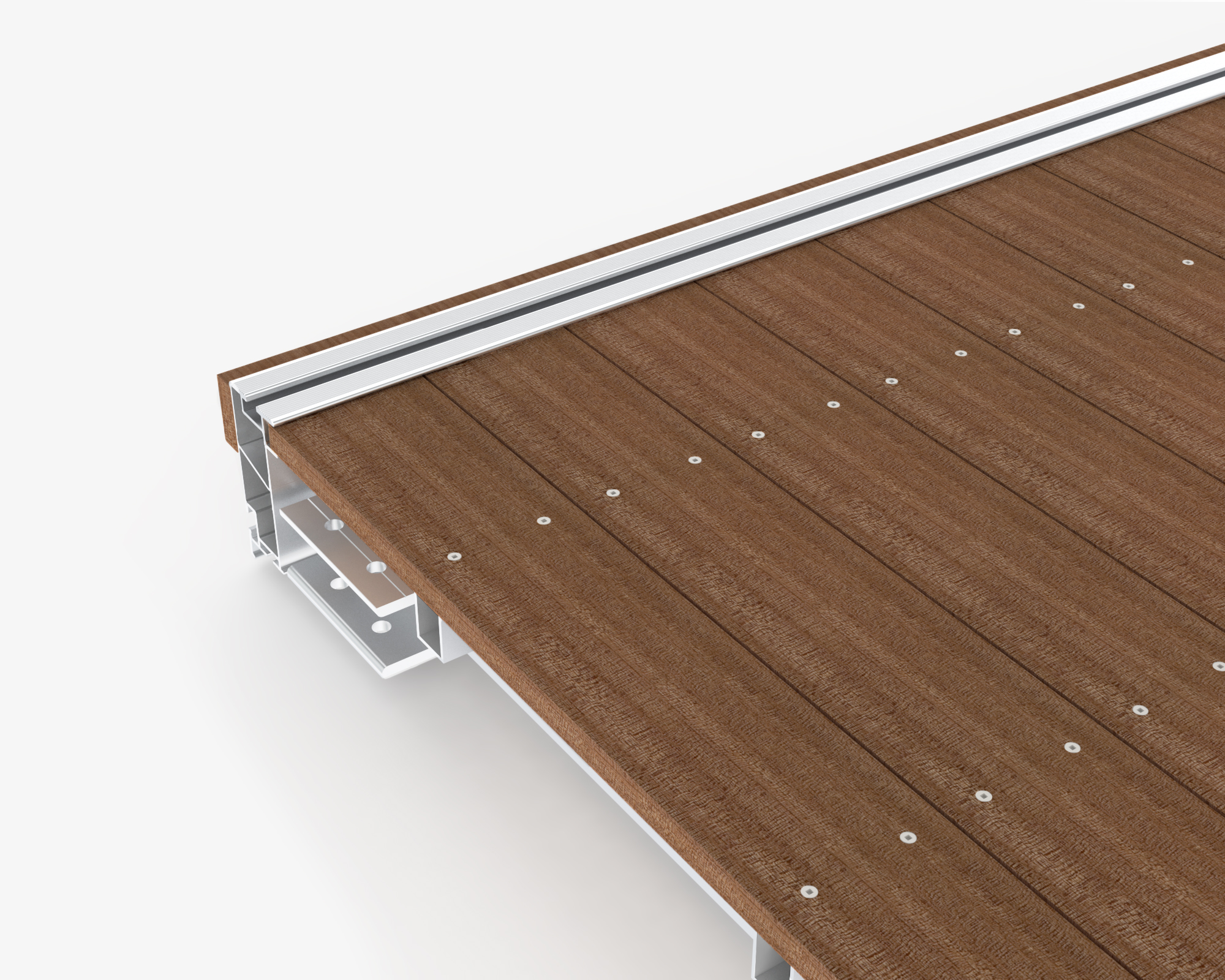
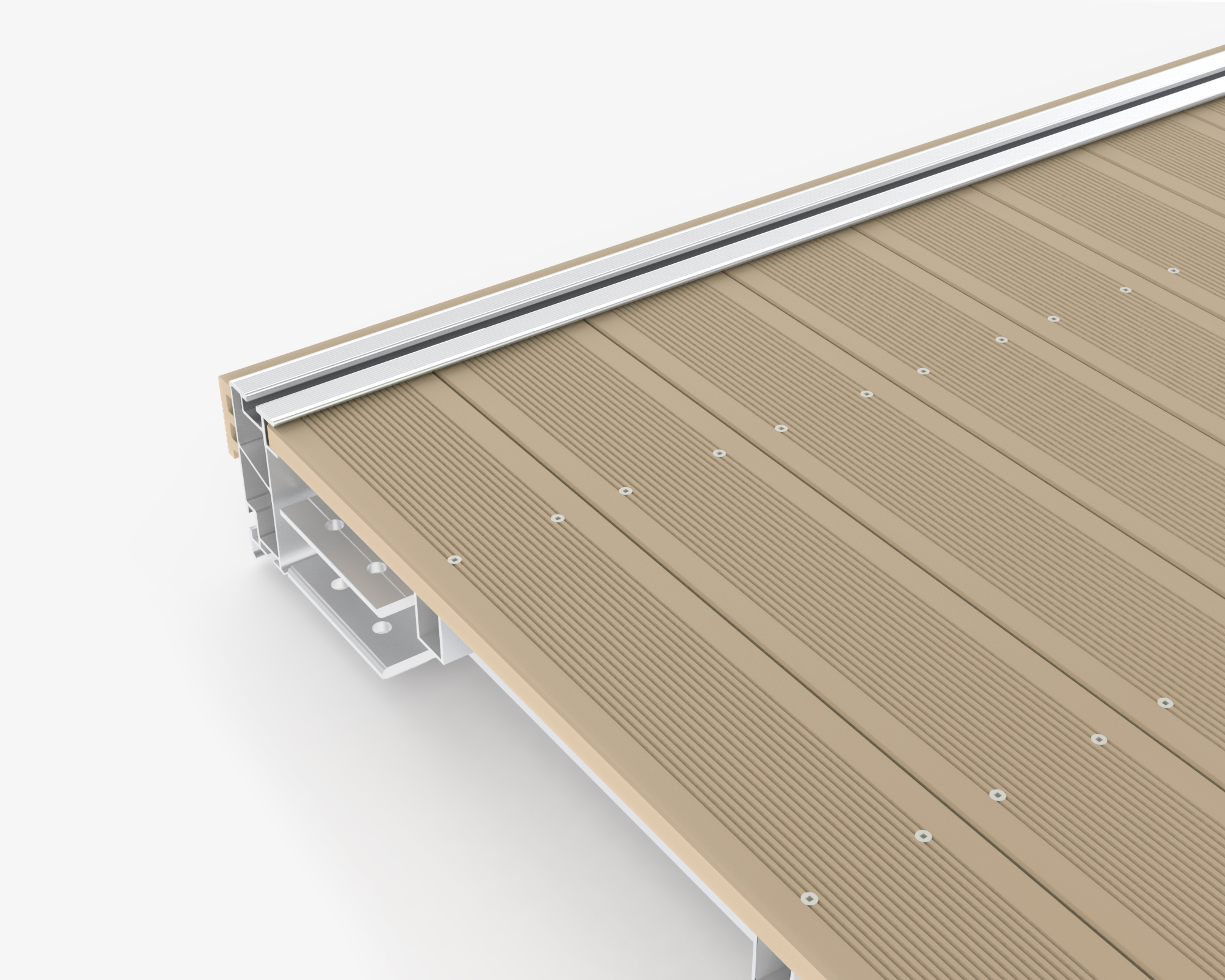
Durable decking materials
Ipe hardwood
- Naturally very resistant to decay, rot, and insect attack
- Minimum 40-year lifespan depending on use
- Low maintenance, no treating or sealing required for durability
- Other hardwood options such as ribbed cumaru are available upon request
Durable decking materials
Composite
- Designed to resist rot, warping, and fading
- Minimum 25-year lifespan depending on use
- Anti-slip ribbed surface
- Low maintenance, no treating or sealing required for durability
Expertise you can count on for floating wave attenuators
Environmental impact of floating wave attenuators
Traditional wave attenuators, with their stone rubble mounds or concrete slopes, require massive sub-surface soil foundations and carry large ecological footprints that obstruct water circulation and fish migration. While rubber tire wave attenuators and similar floating breakwater systems have been successfully used in certain applications, they may be more susceptible to biofouling, marine growth accumulation, debris entrapment, buoyancy loss, and long-term stability concerns than modern engineered alternatives. These factors can increase maintenance requirements and affect anchoring performance, durability, and overall lifecycle costs in exposed marina and waterfront environments. MAADI Group’s floating breakwaters eliminate these effects: across North America and the Caribbean, our design works with nature to dissipate waves and remain unscathed.
Greater stiffness through custom aluminum extrusions
MAADI Group improves the performance and reliability of floating breakwaters through custom aluminum extrusion that combines internal links with increased torsional rigidity and high section modulus. Every attenuator is engineered by our in-house Professional Engineers and a Certified Welding Engineer, with proprietary Welding Procedure Specifications (WPS) developed for structural aluminum. Code compliance is the starting point, not the finish line: each design is engineered to its site’s wave climate, then sealed by a Professional Engineer.
Guaranteed quality
Backed by 2-year limited warranty on aluminum against material failure, defects, and corrosion
Sector
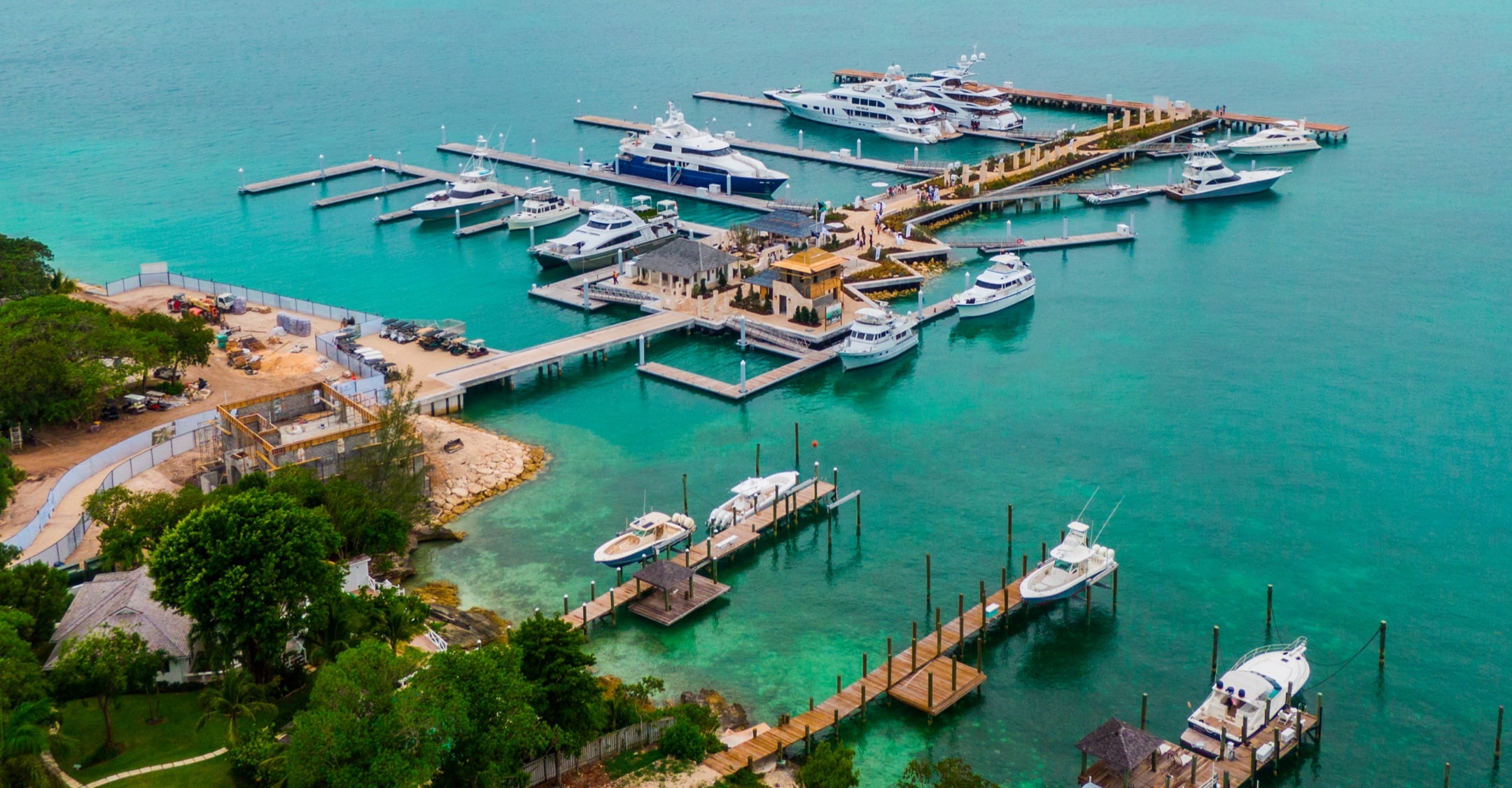
Marine Constructions
We’re your partner for a job well done, no matter how much (or how little) of our expertise you need. Our services include full engineering, technical support and manufacture, planning, and installation.
Our Services
Documentation
Want more details? Download our technical information about our products. And feel free to contact us with any questions!



Other Products
See all
Durable design with refined custom features to beautify your waterfront.
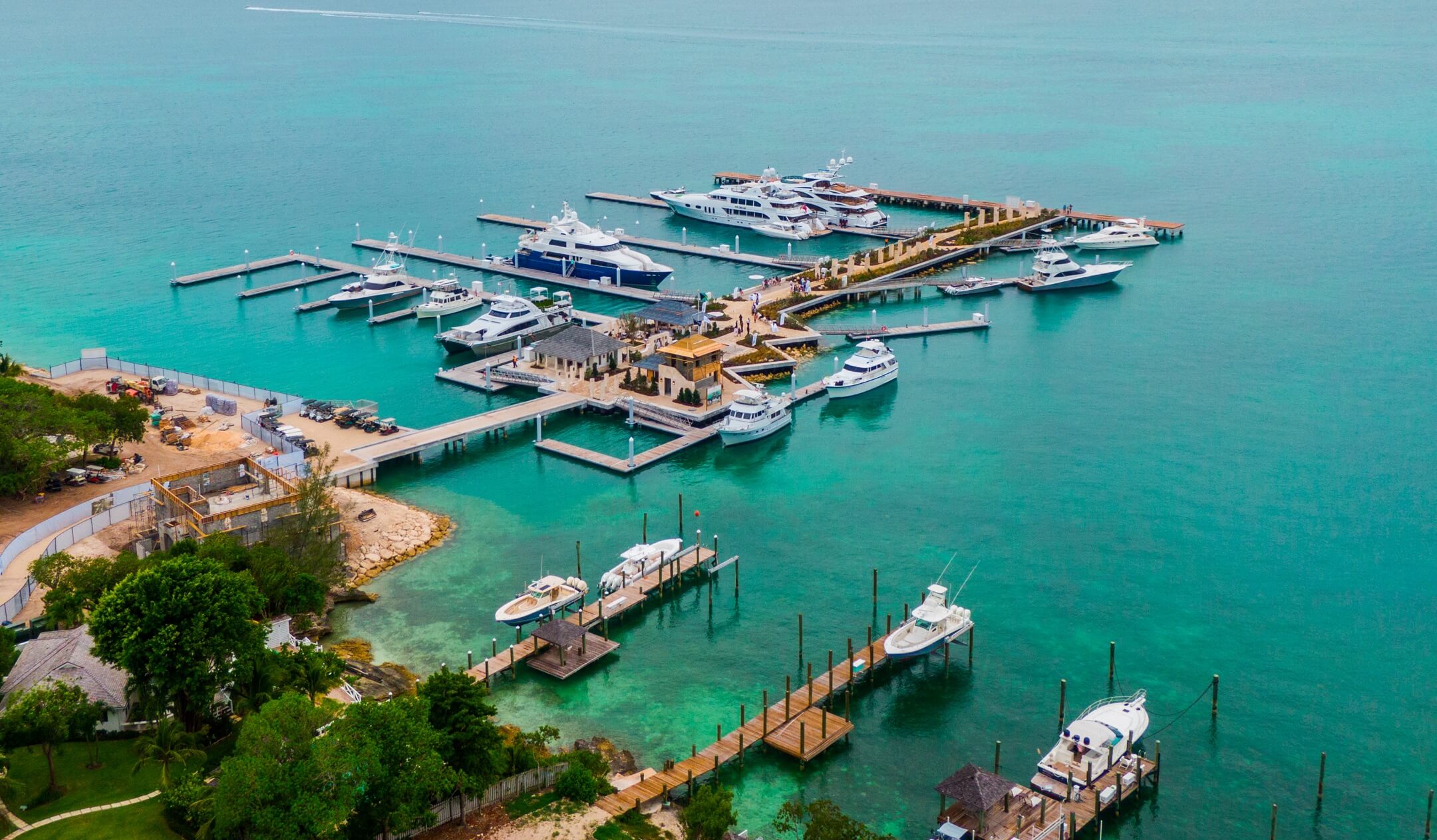
Stunning custom marinas designed to increase your revenue.
FAQ
Floating Wave Attenuator FAQs
What is a floating wave attenuator?
A floating wave attenuator, also called a floating breakwater, is a moored structure that dissipates incoming wave energy to reduce wave height inside a marina or harbor, protecting docks, vessels and shoreline from impact and erosion. Unlike fixed rubble-mound or concrete breakwaters, a floating attenuator rises and falls with water levels and does not require massive sub-surface foundations. MAADI Group's aluminum floating wave attenuators are engineered from 5000-series marine-grade aluminum to deliver this protection with a low ecological footprint.
How does an aluminum wave attenuator reduce wave energy?
An aluminum wave attenuator reduces wave energy through its mass, width and draft, reflecting and dissipating incoming waves before they reach the protected basin. MAADI Group engineers each attenuator around the site's wave climate, using custom hollow aluminum extrusions with high torsional rigidity and section modulus for stability, and flexible connectors between modules that absorb hogging and sagging movement. Our floating wave attenuators are optimized to provide effective protection against wakes and waves of up to 3 feet. Although the structures can safely withstand larger wave conditions, attenuation effectiveness is greatest when operating within the site's intended design wave climate. The effectiveness of a floating wave attenuator is influenced by its width, draft, mass, and structural configuration. Wider attenuators generally provide greater wave energy reduction, particularly for the longer wave periods commonly encountered in marina and harbor applications.
How effective are floating wave attenuators?
Floating wave attenuators can significantly reduce wave heights within a marina basin when properly engineered for the site's wave climate, water depth, and exposure conditions. The effectiveness of a floating breakwater depends on factors such as wave period, attenuator width, draft, mass, and overall structural configuration. MAADI Group engineers each system to meet project-specific performance objectives, helping maintain calm berthing conditions that improve vessel safety, docking operations, and marina comfort.
How long do aluminum wave attenuators last?
Marine-grade aluminum floating wave attenuators are designed for a service life measured in decades. Unlike steel structures, aluminum does not rust, and unlike timber systems, it does not rot or suffer from marine borer attack. With proper engineering, quality fabrication, and routine inspections, aluminum wave attenuators can provide reliable long-term marina protection with minimal maintenance requirements.
What wave conditions can a floating wave attenuator handle?
The wave capacity of a floating wave attenuator depends on its width, draft, structural design, anchoring system, and site conditions. MAADI Group designs floating wave attenuators for site-specific wave climates, vessel traffic, and environmental loads. Our systems can be engineered for protected marinas, semi-exposed harbors, and demanding waterfront environments where wave reduction is critical to dock performance and vessel safety.
Are aluminum wave attenuators better for the environment than concrete or rubble?
Yes. Traditional stone rubble-mound and concrete-slope breakwaters require large sub-surface foundations and can obstruct water circulation and fish migration, while rubber-tire systems cause fouling and debris entrapment. MAADI Group's aluminum floating wave attenuators are non-invasive: they do not obstruct water circulation or fish migration, do not trap debris, and do not cause biofouling buildup, protecting both the coastline and the marine ecosystem.
Can a wave attenuator also be used as a dock?
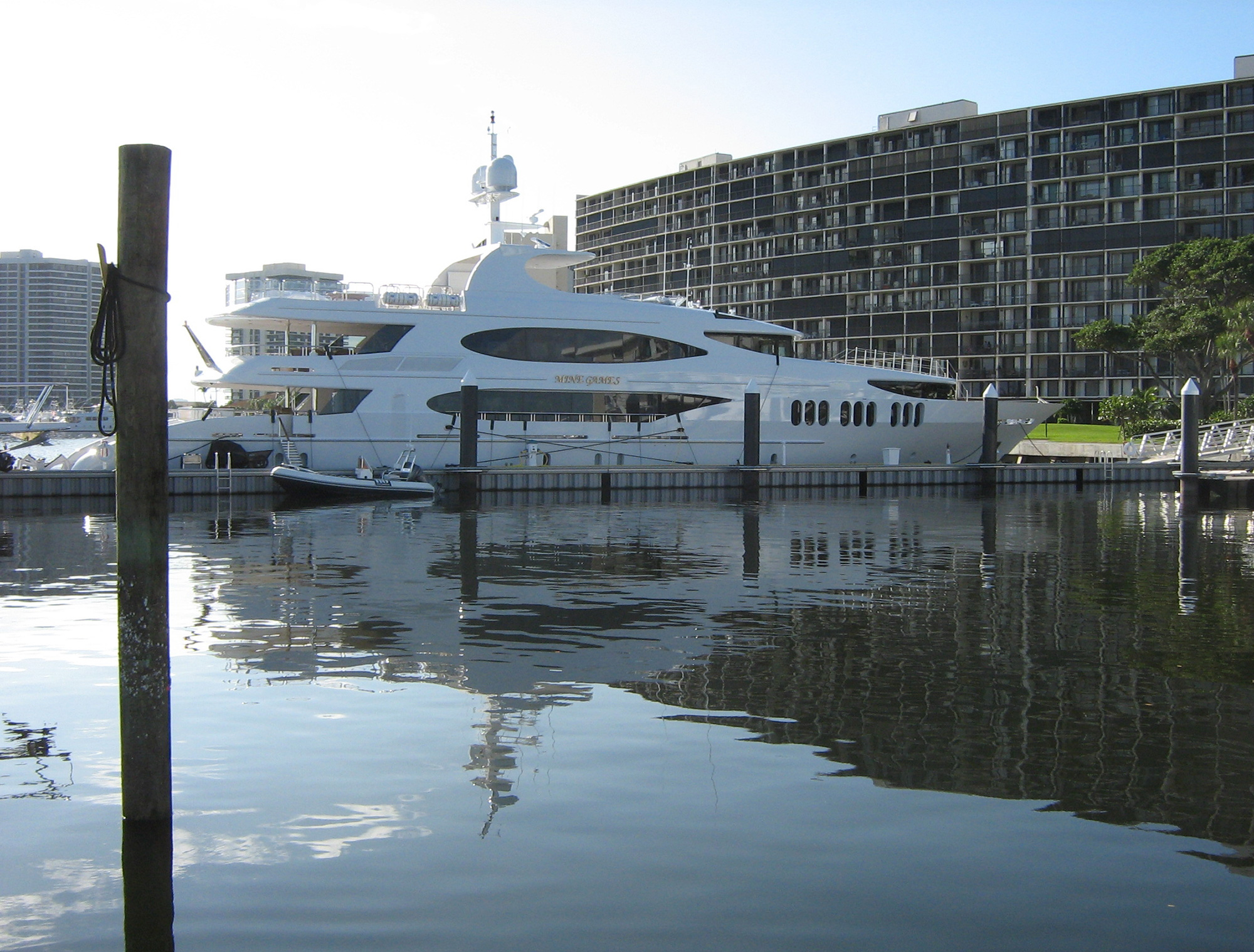
Yes. Because our floating wave attenuators are built on the same marine-grade aluminum extrusion platform as our docks, they can double as additional boat slips and dockage areas. Anchoring with piles instead of chains improves performance and frees up the space to create extra berthing, so the attenuator protects the marina and adds capacity at the same time.
How are floating wave attenuators anchored?
MAADI Group anchors floating wave attenuators with piles or deadman anchors, depending on site conditions. Piles provide the greatest performance and create additional dockage, while deadman anchoring suits deep water. Each anchoring solution is engineered to local water depth, seabed conditions and wave loads.
What materials are MAADI Group wave attenuators made from?
MAADI Group's floating wave attenuators are constructed using durable marine-grade materials selected for long-term performance in harsh waterfront environments. The submerged structure is fabricated from 5000-series marine aluminum alloys or hot-dip galvanized steel protected with coal tar epoxy coatings, combined with vinyl sheet panels that resist corrosion, marine growth, and environmental degradation.
The above-water portion utilizes MAADI's proprietary Tri Ocean™ extruded aluminum system manufactured from 6000-series marine-grade aluminum alloys. This robust structural platform allows vessels to moor directly alongside the wave attenuator, maximizing marina functionality while providing wave protection.
Decking options include premium Ipe hardwood, composite decking, or other project-specific finishes. The integrated multifunction track system accommodates cleats, bollards, ladders, utility pedestals, safety equipment, and other marina accessories without field welding or structural modifications.
Download your resource


"*" indicates required fields
