



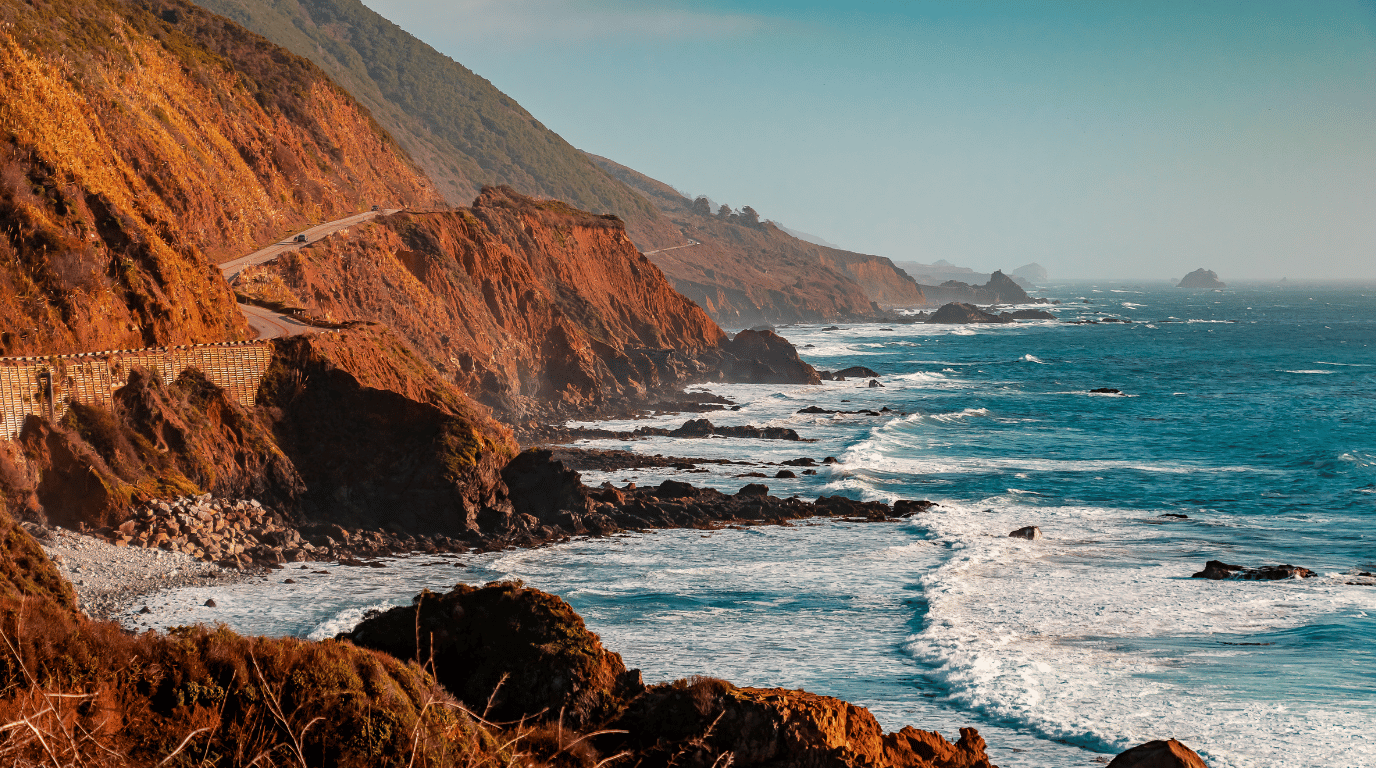
Coastal engineering is a branch of civil engineering focused on the unique demands of building at or near the coast, and on managing the coastline itself. A coastal engineer combines knowledge of hydrodynamics, sediment transport and oceanography with structural design to solve problems created by waves, tides, storm surge and shifting shorelines.
The work sits at a dynamic and often harsh boundary. Saltwater, wave action, coastal erosion and sea-level rise all act on the same stretch of shore, and a coastal engineer has to account for every one of them. Their goal is shoreline protection and coastal resilience: designing solutions that keep people, property and ecosystems safe while standing up to forces that never stop moving. To do this, a coastal engineer studies wave dynamics, tides, storm surge and the way sediment moves along a coast, then applies civil engineering principles to design structures and strategies that work with those forces rather than against them.
Coastal engineering draws on many disciplines at once. It blends civil engineering with oceanography, geology, hydrodynamics and environmental science, which is why it is often described as a hybrid technical field. A coastal engineer might model wave behavior one week and oversee the construction of a breakwater the next.
Because the coast touches so many interests, coastal engineers usually work in interdisciplinary teams alongside oceanographers, geologists, environmental scientists, government agencies and local communities.
At its core, coastal engineering is the practice of designing for forces that never stop moving.
What Does a Coastal Engineer Do?
A coastal engineer's day-to-day work spans analysis, design, fieldwork and construction oversight. Their responsibilities generally fall into four broad areas.
Coastal Protection and Erosion Control
Protecting the shoreline from erosion is the heart of the discipline. Coastal engineers assess how a coast is losing or gaining sand, then design measures to stabilize it. This includes beach nourishment (adding sand back to eroding beaches), building seawalls and groins, and restoring dune systems that act as natural barriers. Managing sediment transport, the way water moves sand along a coast, is central to all of it. Increasingly, coastal engineers also turn to nature-based solutions, such as living shorelines and artificial reefs, that provide coastal protection while supporting habitat rather than replacing it.
Coastal Structures and Infrastructure
Coastal engineers design and maintain the built structures that make coastlines safe and functional. These coastal structures include breakwaters, jetties, revetments, and the infrastructure of ports and harbors. Each coastal structure has to handle wave loads, resist corrosion in saltwater, and perform for decades, so the design and construction of coastal infrastructure demands a deep understanding of wave dynamics and the marine environment.
Coastal Hazard and Flood Management
Coasts face storm surge, hurricanes, tsunamis and rising seas. Coastal engineers analyze wave dynamics, tidal cycles and storm behavior to assess how vulnerable a coast is to coastal erosion and flooding, then design flood protection such as levees, flood walls and floodplain strategies. As climate change raises sea-level rise and intensifies storms, this coastal hazard and flood management role has become one of the most important parts of coastal engineering.
Modeling, Assessment and Environmental Impact
Much of modern coastal engineering happens on a computer before anything is built. Coastal engineers use coastal modeling and simulation to predict how waves, currents and sediment transport will behave, and how a proposed coastal structure will perform. They also carry out environmental impact assessment, working with ecologists to make sure projects protect rather than damage sensitive coastal habitats.
Types of Coastal Engineers
Coastal engineering is broad, so many engineers specialize. Common types of coastal engineers include:
- Coastal protection engineers, who focus on seawalls, revetments, groins and other erosion-control structures
- Beach engineers, who specialize in beach nourishment, dune restoration and sediment management
- Harbor and port engineers, who design breakwaters, jetties, navigation channels and berth facilities
- Coastal modeling engineers, who build numerical models of wave dynamics, sediment transport and storm surge
- Coastal environmental engineers, who assess ecological impact and design nature-based solutions
- Coastal planning and policy engineers, who shape coastal zone management plans and regulatory compliance
In practice, many coastal engineers move between these areas over a career, since most real projects touch several at once.
Why Coastal Engineering Matters
Coastal engineering matters because the coast is where a growing share of the world's people, property and infrastructure sits, and where the forces of erosion, storm surge and sea-level rise hit hardest. Without coastal protection, shorelines retreat, harbors silt up, and storms cause far more damage to communities and ecosystems.
Coastal engineers protect against these risks in several ways:
- They design shoreline protection and erosion control that shields homes, roads and businesses from waves and flooding
- They keep ports and harbors operating, which supports global trade and navigation
- They design and maintain marinas and waterfront facilities that drive coastal tourism and recreation
- They build coastal resilience against climate change, planning for sea-level rise and more intense storms
- They protect coastal habitats and biodiversity through environmental impact assessment and nature-based solutions
As climate change accelerates, this work only grows in importance, which is part of why coastal engineering is considered such a future-proof field.
Coastal Engineering vs Related Fields
Coastal engineering is easy to confuse with neighboring disciplines, but the focus differs:
- Coastal engineer: concentrates on the shoreline and nearshore zone, including erosion, beaches, surge and coastal protection structures
- Marine engineer: designs and builds the mechanical systems of ships and vessels, such as engines and propulsion
- Ocean engineer: works further offshore on systems like offshore platforms, subsea equipment and deep-water structures
- Marina engineering firm: a firm that specializes in engineering the structures of a marina itself, including floating docks, gangways, wave attenuators and basin layout (also described as a waterfront engineering firm or marine infrastructure engineering firm)
- Civil engineer: the broad parent discipline; coastal engineering is one of its specialties
A common point of confusion is what to call the firm that designs the marina itself. The clearest label is a marina engineering firm, sometimes a waterfront engineering firm or marine infrastructure engineering firm: a specialist in the engineering of marina and waterfront structures, staffed by Professional Engineers. This is different from a marine engineer, who designs the mechanical and propulsion systems of ships rather than the structures vessels tie up to.
The lines blur in the real world, especially around marinas, ports and waterfront structures, where coastal engineers, marina engineering firms and other marine specialists often collaborate on the same project.
How to Become a Coastal Engineer
The path into coastal engineering runs through civil engineering. Most coastal engineers earn a bachelor's degree in civil or environmental engineering, then specialize in coastal or ocean topics, often through a master's degree, since the wave mechanics and sediment dynamics involved are advanced. In the United States and Canada, practicing engineers typically pursue a Professional Engineer (PE) license, which allows them to seal designs and take legal responsibility for their work.
Beyond formal education, the role rewards a particular mix of skills: strong physics and mathematics, comfort with modeling software, field-data analysis, and the communication skills to work across the many stakeholders a coastal project involves.
Coastal Engineer Salary and Career Outlook
Coastal engineering is a stable and growing field, driven by rising seas, intensifying storms and continued coastal development. As more people and infrastructure concentrate near the water, demand for coastal protection, shoreline protection and resilient coastal infrastructure keeps climbing.
Salaries vary by source, experience and location. In the United States, reported averages for a coastal engineer salary generally fall in the range of roughly $90,000 to $135,000 per year, with entry-level roles lower and senior or specialized engineers higher. As with any field, location, employer and credentials such as a PE license have a significant effect on pay.
Coastal engineering is one of the few disciplines where the demand curve is being driven directly by climate change.
Where Coastal Engineering Meets Marine Structures
Not every waterfront structure is built by a full-service coastal engineering firm. Much of the work at the water's edge, the marinas, docks and breakwaters people actually use, is designed and built by specialists in marine structures.
Floating breakwaters are a good example. A floating wave attenuator performs a classic coastal-protection function, dissipating wave energy to calm a harbor, but it is an engineered marine structure rather than a shoreline earthwork. The same is true of marina structures and the docks within them: they live in the coastal environment and must survive its forces, while being a structural engineering specialty in their own right. This is where coastal engineering overlaps with marina and waterfront engineering, and where projects often bring both kinds of expertise together.
Frequently Asked Questions About Coastal Engineers
What is the difference between a coastal engineer and a marine engineer?
A coastal engineer focuses on the shoreline and nearshore zone, designing erosion control, flood protection and coastal structures like seawalls and breakwaters. A marine engineer designs the mechanical and propulsion systems of ships and vessels. The two fields overlap around waterfront structures such as harbors, marinas and aluminum floating docks, but their core focus is different.
What degree do you need to be a coastal engineer?
Most coastal engineers hold a bachelor's degree in civil or environmental engineering, often followed by a master's degree specializing in coastal or ocean engineering. A Professional Engineer (PE) license is typically required to seal designs and advance in the field. Strong physics, mathematics and modeling skills are essential throughout.
How much does a coastal engineer make?
In the United States, coastal engineer salaries generally range from about $90,000 to $135,000 per year, depending on experience, location and credentials. Entry-level engineers earn less, while senior and specialized engineers with a PE license earn more. These figures are approximate and vary by source.
Is coastal engineering a good career?
Coastal engineering is considered a stable and growing career, largely because climate change, sea-level rise and coastal development are increasing demand for shoreline protection and resilient infrastructure. It offers varied work across analysis, design and fieldwork, and the chance to work on projects that protect communities and ecosystems.
What skills does a coastal engineer need?
A coastal engineer needs a strong foundation in physics and mathematics, knowledge of hydrodynamics and sediment transport, and proficiency with coastal modeling and simulation software. Just as important are field-data analysis and the communication skills to collaborate with scientists, agencies and communities on complex coastal projects.


