


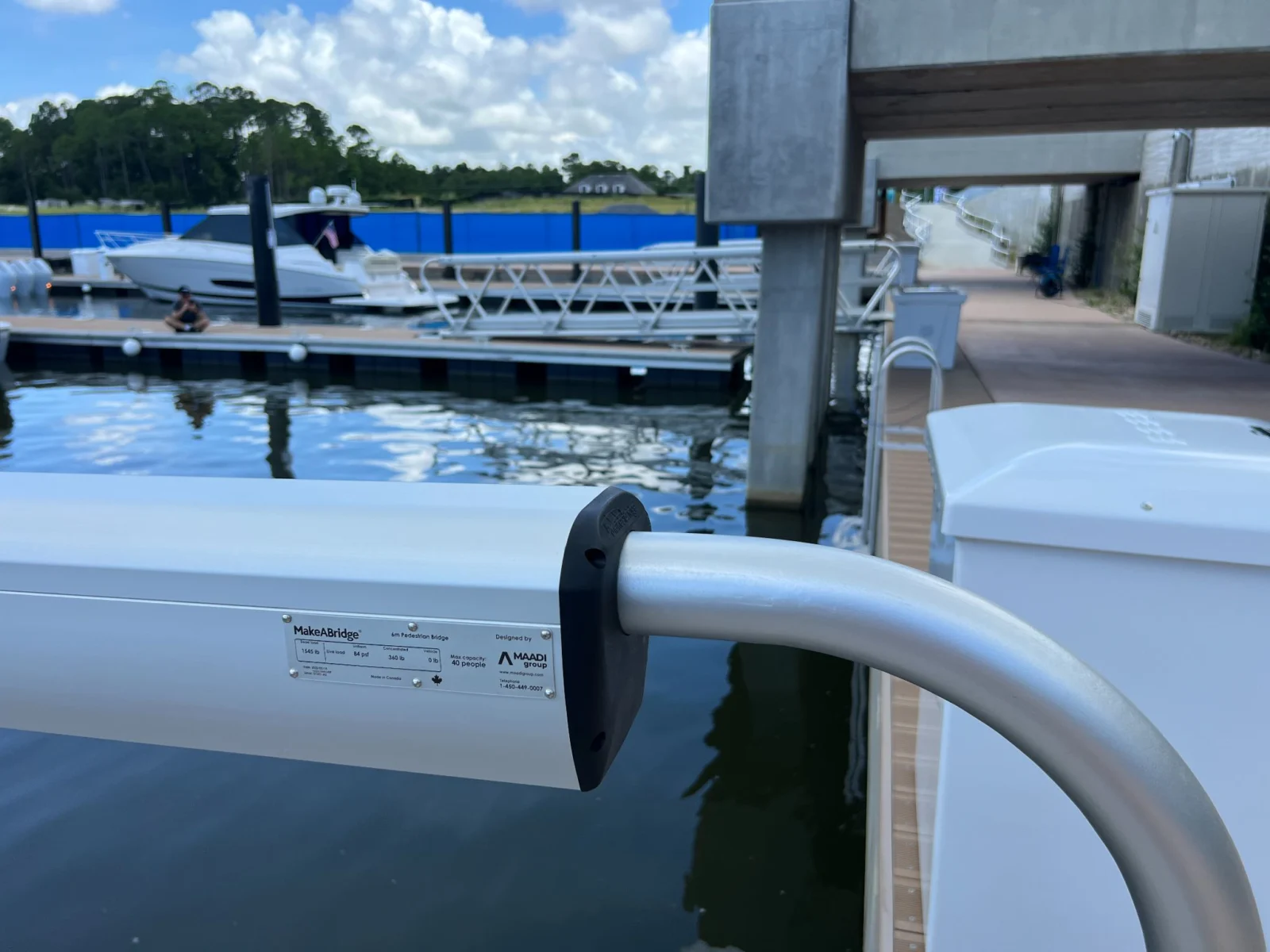
Galvanic corrosion is an electrochemical process that can occur when two dissimilar metals are electrically connected and exposed to a common electrolyte, such as seawater. Under these conditions, the less noble metal acts as the anode and may experience accelerated corrosion, while the more noble metal acts as the cathode.
This phenomenon is particularly relevant in marine engineering, where aluminum alloys, stainless steel fasteners, carbon steel components, and other metals are frequently used together in docks, gangways, pedestrian bridges, and waterfront structures.
However, galvanic corrosion is not determined by metal compatibility alone. Its severity depends on several factors, including the metals' electrochemical potentials, the conductivity of the electrolyte, the exposed anode-to-cathode surface area ratio, and the condition of protective surface films.
For aluminum structures, the naturally forming aluminum oxide layer provides an important passive barrier that limits electrochemical activity. Although this protective film significantly improves corrosion resistance, localized damage or breakdown, particularly in chloride-rich marine environments, can increase susceptibility to galvanic corrosion.
Understanding these mechanisms is essential for selecting compatible materials, designing durable connections, and minimizing corrosion risks throughout the service life of marine infrastructure.
In this guide, you'll learn:
- The three essential conditions required for galvanic corrosion to occur.
- How to interpret the galvanic series in seawater and evaluate metal compatibility.
- How aluminum's natural oxide layer influences galvanic corrosion resistance.
- Why the anode-to-cathode surface area ratio affects corrosion severity.
- How electrical isolation, protective coatings, appropriate material selection, and sacrificial anodes can help protect aluminum marine structures.
Galvanic Corrosion and Its Three Conditions
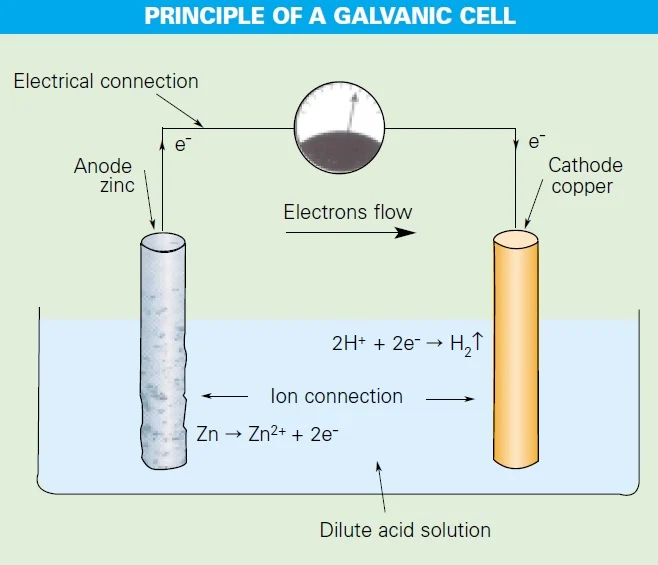
AMPP, the corrosion engineering association, defines galvanic corrosion as corrosion damage resulting from the electrical coupling of dissimilar materials in a corrosive electrolyte.
Also known as bimetallic corrosion or dissimilar metal corrosion, this electrochemical process accelerates the corrosion of the less noble metal (anode), while the more noble metal acts as the cathode.
Although electrons can travel throughout electrically connected metals, corrosion occurs at surfaces exposed to the electrolyte. Its severity depends on electrochemical activity, exposed surface areas, and environmental conditions—not simply the volume of each metal.
In aluminum structures, the naturally forming protective oxide layer can significantly limit galvanic corrosion by restricting electrochemical reactions. However, this passive film can break down locally in seawater, particularly around fasteners, crevices, or damaged surfaces.
Three conditions must exist simultaneously for galvanic corrosion to occur:
Two Dissimilar Metals With Different Electrochemical Potentials
Galvanic corrosion requires two metals with different electrochemical potentials. When aluminum is electrically coupled with more noble metals such as stainless steel, copper, or carbon steel, aluminum generally acts as the anode and may experience accelerated corrosion. Two components made from the same alloy in similar surface conditions typically have little or no galvanic driving force.
An Electrically Conductive Path Between Metals
Galvanic corrosion requires an electrically conductive connection between the dissimilar metals, allowing electrons to flow from the anode to the cathode. This connection can occur through direct metal-to-metal contact or conductive components such as bolts, welds, or structural frames.
Electrical isolation using non-conductive washers, bushings, gaskets, or other insulating barriers can interrupt this electron flow and prevent galvanic corrosion, provided no alternative conductive path exists.
A Common Electrolyte, Such as Seawater
Galvanic corrosion requires a common electrolyte that allows ions to move between electrically connected metals, completing the electrochemical circuit. Seawater, rainwater, condensation, and moisture trapped in joints or beneath debris can all act as electrolytes.
Seawater presents a particularly high risk because its dissolved salts increase electrical conductivity, facilitating galvanic current flow. Repeated wetting and drying can also concentrate chlorides, potentially compromising protective oxide films on aluminum and increasing the risk of localized corrosion.
Eliminating any one of the three essential conditions prevents galvanic corrosion. This principle underlies electrical isolation, protective coatings, and proper connection design, as further explained in our guide to aluminum corrosion resistance and durability in marine environments.
The Galvanic Series in Seawater: Understanding Metal Compatibility
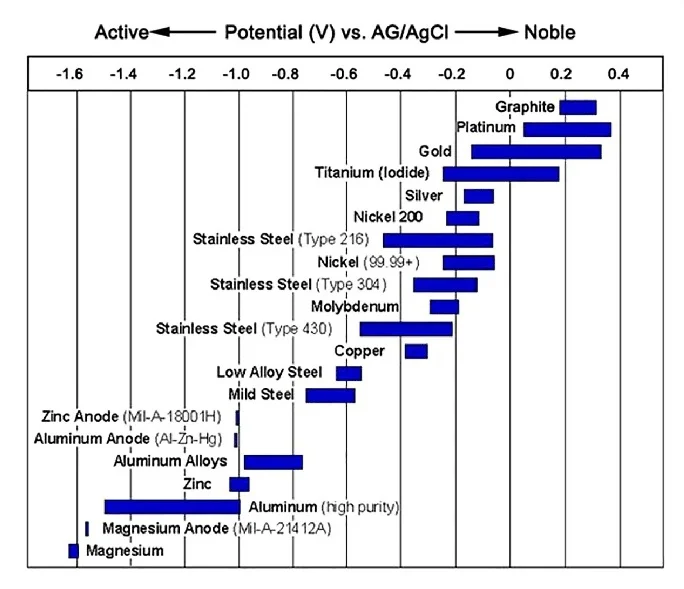
The galvanic series in seawater ranks metals and alloys according to their measured corrosion potentials in a marine electrolyte. It helps engineers identify which metal is more likely to act as the anode (corrode preferentially) and which will act as the cathode when dissimilar metals are electrically connected.
According to the NASA Kennedy Space Center galvanic series in seawater, common metals can be grouped approximately as follows, from most noble to most active:
| Galvanic position | Common metals and alloys in seawater |
|---|---|
| Noble (cathodic) | Platinum, gold, graphite, silver, stainless steel 316 and 304 (passive), titanium |
| Intermediate | Copper, bronze, brass, stainless steel 316 and 304 (active), cast iron, mild steel |
| Active (anodic) | Aluminum alloys, cadmium, galvanized steel, zinc, magnesium |
The greater the difference in corrosion potential between two connected metals, the greater the potential driving force for galvanic corrosion. However, a larger potential difference does not necessarily mean a higher corrosion rate.
As explained in ASTM G82 – Standard Guide for Development and Use of a Galvanic Series for Predicting Galvanic Corrosion Performance, the galvanic series provides a qualitative assessment of metal compatibility rather than a quantitative prediction of corrosion severity.
Actual corrosion behavior also depends on the exposed anode-to-cathode surface area ratio, electrolyte conductivity, temperature, oxygen availability, protective surface films, and environmental conditions.
Why does stainless steel appear twice in the galvanic series?
Stainless steel 304 and 316 can exhibit two distinct electrochemical conditions:
- Passive stainless steel: When its chromium-rich protective oxide film remains intact, stainless steel behaves as a relatively noble metal.
- Active stainless steel: When passivity breaks down, particularly in oxygen-depleted crevices or aggressive chloride environments, its corrosion potential can shift toward the active region.
Aluminum also develops a naturally protective oxide film that significantly influences its corrosion resistance. Although aluminum alloys generally occupy the anodic region of the galvanic series, their actual susceptibility to galvanic corrosion depends on the stability of this passive layer and the conditions at the metal interface.
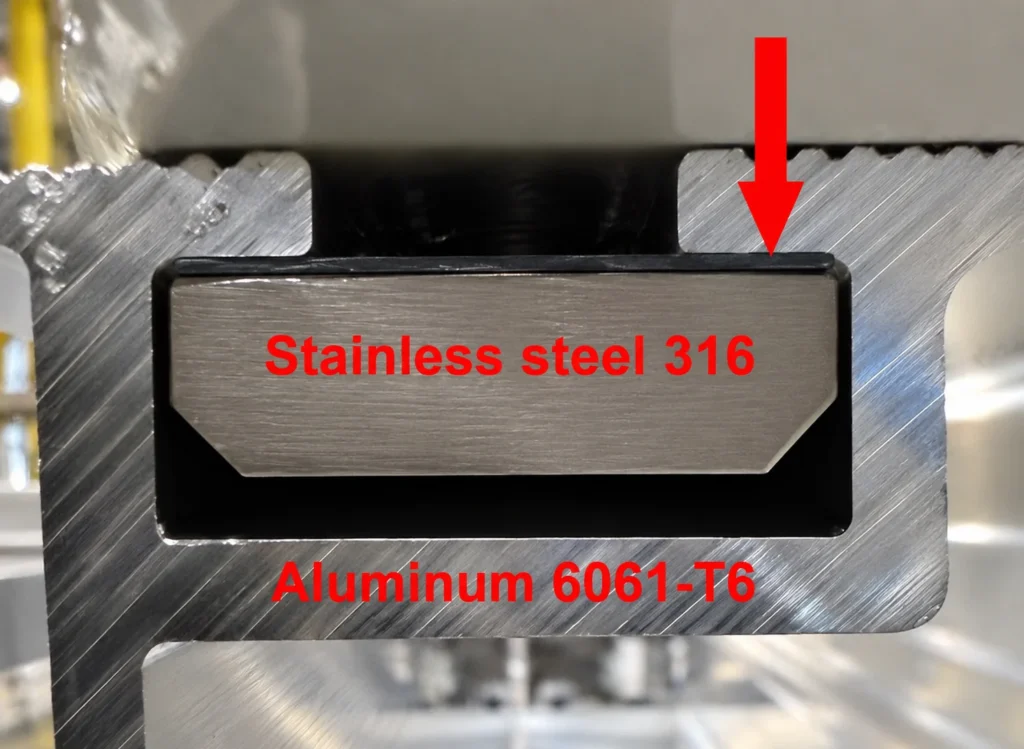
For marine structures combining 6061-T6 aluminum and 316 stainless steel, the galvanic series provides an essential starting point for assessing material compatibility. However, ensuring long-term durability also requires careful consideration of electrical isolation—as demonstrated by the dielectric isolator integrated into MAADI’s Tri-Ocean™ Floating Dock Track System illustrated above—along with connection geometry, moisture retention, and prolonged exposure to seawater.
How the Anode-to-Cathode Area Ratio Affects Galvanic Corrosion
The anode-to-cathode surface area ratio is one of the most important factors influencing the severity of galvanic corrosion between dissimilar metals. While the difference in electrochemical potential determines which metal is more likely to corrode, the relative exposed surface areas influence galvanic current distribution and corrosion intensity.
According to AMPP (Association for Materials Protection and Performance), a small anodic surface coupled with a large cathodic surface represents a particularly unfavorable condition. Galvanic current becomes concentrated over the smaller anode, increasing its current density and potentially accelerating localized metal loss.
This principle is also explained in corrosion engineering materials from King Fahd University of Petroleum and Minerals (KFUPM), where current density is used to illustrate how the relative areas of electrically connected metals affect corrosion severity.
Why a Small Anode and Large Cathode Increase Corrosion Risk?
Two practical design principles are particularly relevant to aluminum structures exposed to seawater:
- Small stainless steel fasteners in large aluminum components generally present a more favorable area ratio. When a relatively small stainless steel bolt or screw acts as the cathode and a much larger aluminum component acts as the anode, the galvanic current can be distributed over a larger anodic surface. However, localized corrosion may still develop around fastener holes, particularly where protective oxide films are damaged or chloride-rich moisture becomes trapped. NASA has documented galvanic corrosion of aluminum associated with stainless steel fasteners following atmospheric exposure.
- Avoid coating only the anodic metal. If an aluminum component is coated while a large stainless steel cathode remains exposed, a scratch, coating defect, or damaged area can create a very small exposed anode coupled to a much larger cathode. This unfavorable area ratio can significantly accelerate localized corrosion at the coating defect. Where protective coatings are used, coating the cathodic metal—or both metals, with appropriate surface preparation and coating systems—can help reduce galvanic corrosion risks.
For marine infrastructure, including aluminum floating docks, gangways, pedestrian bridges, and stainless steel connections, proper material selection must therefore be accompanied by careful consideration of exposed surface areas, electrical isolation, protective coatings, and moisture accumulation.
Key takeaway: In galvanic corrosion, the relative size of the anode and cathode can be just as important as the electrochemical difference between the metals. A small exposed aluminum anode connected to a large stainless steel cathode can experience severe localized corrosion, even when both materials offer excellent corrosion resistance individually.
Galvanic Corrosion Examples in Marine Structures
Aluminum and Stainless Steel: Galvanic Corrosion in Seawater
Aluminum and 316 stainless steel are widely used together in marine structures, including floating docks, gangways, pedestrian bridges, and mooring systems. Although both metals offer excellent corrosion resistance, their different electrochemical potentials can create a risk of galvanic corrosion when electrically connected in the presence of seawater.
Corrosion engineering references from King Fahd University of Petroleum and Minerals (KFUPM) and the UK Aluminium Federation highlight this risk, particularly in chloride-rich marine environments where saltwater spray and trapped moisture sustain galvanic activity.
However, direct contact between aluminum and stainless steel does not necessarily cause severe galvanic corrosion. Aluminum naturally forms a protective oxide layer that helps limit corrosion. The actual risk depends on the stability of this passive film, the exposed anode-to-cathode area ratio, joint design, and environmental conditions.
Importantly, recognized aluminum design standards—including CSA S157-05 (Clauses 4.4.1 and 15.2), CSA S6:19 (Clause 17.6.3), and the Aluminum Association's Aluminum Design Manual 2020 (Clause M.7.1)—permit certain stainless steel and zinc-coated steel components in aluminum connections. CSA S6:19 explicitly allows direct contact between aluminum and 300-series stainless steel without coatings or separators.
For 6061-T6 aluminum structures incorporating 316 stainless steel, long-term durability in seawater environments requires careful consideration of galvanic compatibility, exposed surface areas, moisture retention, and, where appropriate, protective measures such as dielectric isolation, coatings, and effective drainage.
Aluminum and Copper or Brass: High Galvanic Corrosion Risk
Copper and brass are significantly more noble than aluminum in the galvanic series, creating a high risk of galvanic corrosion in marine environments. As noted by the UK Aluminium Federation, direct contact with copper alloys can accelerate aluminum corrosion, particularly in the presence of seawater. Copper and brass fittings should therefore be electrically isolated from aluminum structures, and copper-containing runoff should be prevented from reaching aluminum surfaces.
Aluminum and Carbon Steel or Galvanized Steel
Direct contact between aluminum and unprotected carbon steel can accelerate galvanic corrosion in wet or marine environments. MAADI Group's CEO observed severe deterioration of aluminum stanchions mounted directly on steel decks during NATO destroyer retrofit projects in 1989, illustrating the importance of proper joint design and corrosion protection.
Hot-dip galvanized steel offers improved compatibility with aluminum because its zinc coating provides sacrificial protection. However, this protection gradually diminishes as the zinc is consumed. Research conducted by MAADI's CEO in collaboration with Frank Ajersch, adjunct professor at Polytechnique Montréal, identified an average degradation lifespan of approximately 33 years for hot-dip galvanized steel under the urban exposure conditions studied.
Actual service life varies considerably with coating thickness, atmospheric corrosivity, and exposure to chlorides. These durability considerations are important when evaluating the total cost of ownership of aluminum versus steel structures.
How to Prevent Galvanic Corrosion in Aluminum Structures
Preventing galvanic corrosion begins with proper engineering design. AMPP recommends addressing galvanic compatibility early in the design process. Five key strategies can significantly reduce corrosion risks in marine environments.
Material Selection Based on the Galvanic Series
Selecting compatible metals is the first step in preventing galvanic corrosion. Whenever practical, choose materials with similar electrochemical potentials in the galvanic series.
Although 316 stainless steel offers excellent corrosion resistance in many marine applications, it is more noble than aluminum and can create a galvanic couple in the presence of seawater. However, aluminum design standards, including CSA S157, CSA S6, and the Aluminum Association's Aluminum Design Manual, permit certain stainless steel fasteners in direct contact with aluminum.
For aluminum structures exposed to seawater, material selection should therefore consider the anode-to-cathode area ratio, joint geometry, moisture retention, and the potential need for dielectric isolation rather than relying solely on the galvanic series.
Electrical Isolation of Dissimilar Metals
Electrical isolation is an effective way to prevent galvanic corrosion by interrupting the conductive path between dissimilar metals. NASA recommends non-conductive gaskets, sleeves, and washers for bolted connections, while the UK Aluminium Federation identifies neoprene as a suitable insulating material.
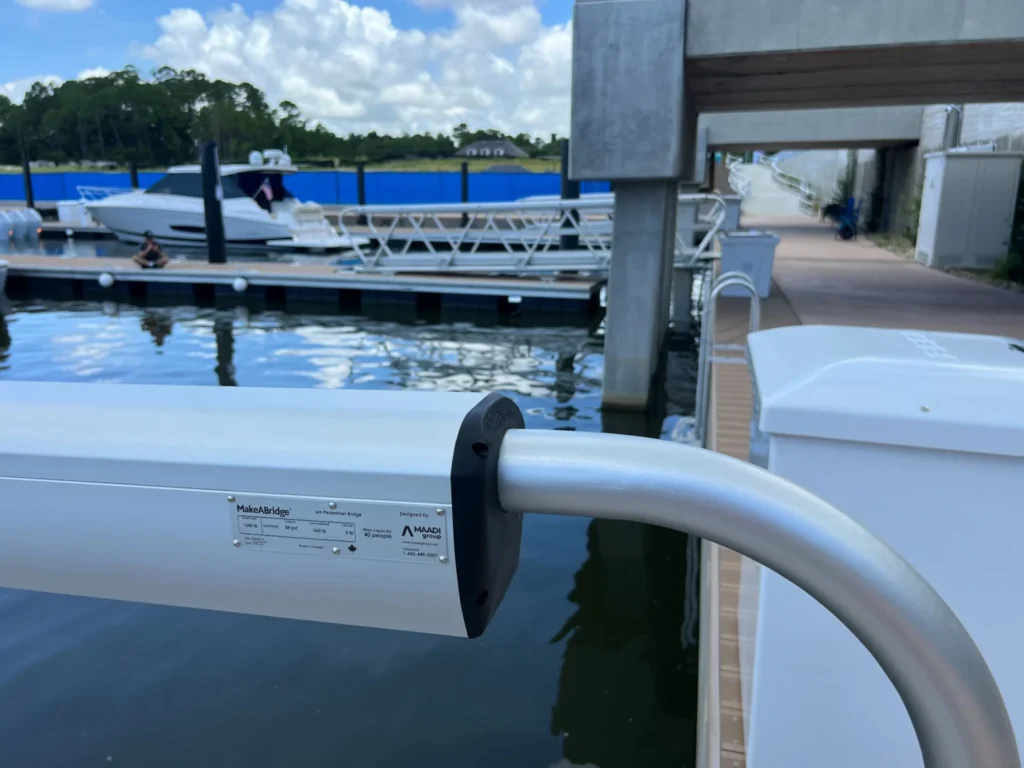
For its GuarDECK® aluminum bridge decking installed on steel girders, MAADI Group developed a specialized dielectric isolator combining high friction resistance with electrical insulation. This solution helps reduce galvanic corrosion risks while providing a high-friction interface for structural load transfer.

Protective Coatings and Sealed Joints
Protective coatings and properly sealed joints help prevent galvanic corrosion by limiting moisture and electrolyte contact between dissimilar metals. When coating a galvanic couple, protecting the more noble (cathodic) metal is particularly important, as coating defects on the anodic metal can concentrate corrosion at exposed areas. Sealing mating surfaces also helps prevent seawater and chloride-rich moisture from accumulating in crevices.
For aluminum marine structures, clear anodizing provides additional surface protection by increasing the thickness of the natural aluminum oxide layer. Learn more about the benefits and limitations in our comparison of clear anodized vs. mill finish aluminum gangways.
Sacrificial Anodes and Cathodic Protection
Sacrificial anodes help prevent galvanic corrosion by connecting a more electrochemically active metal to the structure, causing the anode to corrode preferentially and protect the connected metals. AMPP identifies zinc, magnesium, and aluminum alloys as common sacrificial anode materials, while the UK Aluminium Federation recognizes the use of appropriately selected zinc anodes to protect aluminum structures in marine environments.
For aluminum marine structures exposed to seawater, effective cathodic protection requires proper anode selection, electrical continuity, and periodic inspection and replacement of consumed anodes.
Drainage and Joint Inspection
Proper drainage and regular joint inspections are essential to preventing galvanic corrosion in marine aluminum structures. Avoid crevices and pockets where seawater, salt deposits, and debris can accumulate around fasteners, particularly in splash zones where prolonged moisture exposure increases the risk of galvanic, crevice, and pitting corrosion.
Routine inspections should identify trapped moisture, coating damage, and localized corrosion around connections before significant metal loss compromises structural integrity. These preventive measures should be part of every aluminum floating dock maintenance program.
In marine aluminum structures, corrosion is often driven by poor joint detailing, trapped moisture, or inadequate material compatibility—not an inherent lack of corrosion resistance in aluminum.

Further Reading: Aluminium and the Sea — Alcan Marine
For a deeper understanding of aluminum corrosion resistance in seawater, MAADI Group recommends Aluminium and the Sea, a comprehensive technical publication by Alcan Marine, authored by aluminum corrosion specialist Christian Vargel.
This reference covers marine aluminum alloys, natural oxide passivation, galvanic (bimetallic) corrosion, and corrosion protection methods. Particularly relevant are Chapter 10: Corrosion Behaviour (pp. 145–164) and Chapter 11: Protection of Aluminium (pp. 165–174).
Read Aluminium and the Sea — Technical Reference (PDF)Talk to our engineers about your connections
Our engineers detail dielectric isolation, fasteners and drainage on every aluminum dock, gangway and bridge we design.
Request a QuoteFAQ: galvanic corrosion
What Three Conditions Cause Galvanic Corrosion?
Galvanic corrosion requires three conditions: two metals with different electrochemical potentials, an electrical connection between them, and a shared electrolyte such as seawater, rainwater, or condensation. The less noble metal acts as the anode and may corrode faster, while the more noble metal acts as the cathode. Eliminating any one of these conditions prevents galvanic corrosion.
Is Galvanic Corrosion the Same as Electrolysis?
No. Galvanic corrosion is an electrochemical process driven by the natural potential difference between electrically connected metals, without an external power source. Although sometimes incorrectly called electrolysis, it differs from externally driven electrochemical reactions. Preventive measures include electrical isolation, protective coatings, and properly designed cathodic protection.
Can Stainless Steel Bolts Cause Galvanic Corrosion in Aluminum?
Yes. 316 stainless steel bolts can cause galvanic corrosion in aluminum when exposed to seawater, but corrosion is not inevitable. A small stainless steel fastener connected to a large aluminum member generally provides a more favorable anode-to-cathode area ratio. Aluminum design standards, including CSA S157, CSA S6, and the Aluminum Association's Aluminum Design Manual, permit certain stainless steel fasteners in direct contact with aluminum. Dielectric isolation, sealing, and proper drainage may provide additional protection in aggressive marine environments.
Does Galvanic Corrosion Occur in Fresh Water?
Yes. Galvanic corrosion can occur in freshwater lakes, rainwater, condensation, and seawater, provided the metals are electrically connected and share an electrolyte. Seawater generally increases corrosion risks because of its conductivity and chloride content. However, actual corrosion severity depends on water chemistry, oxygen availability, temperature, and joint design.
What Does Galvanic Corrosion Look Like on Aluminum?
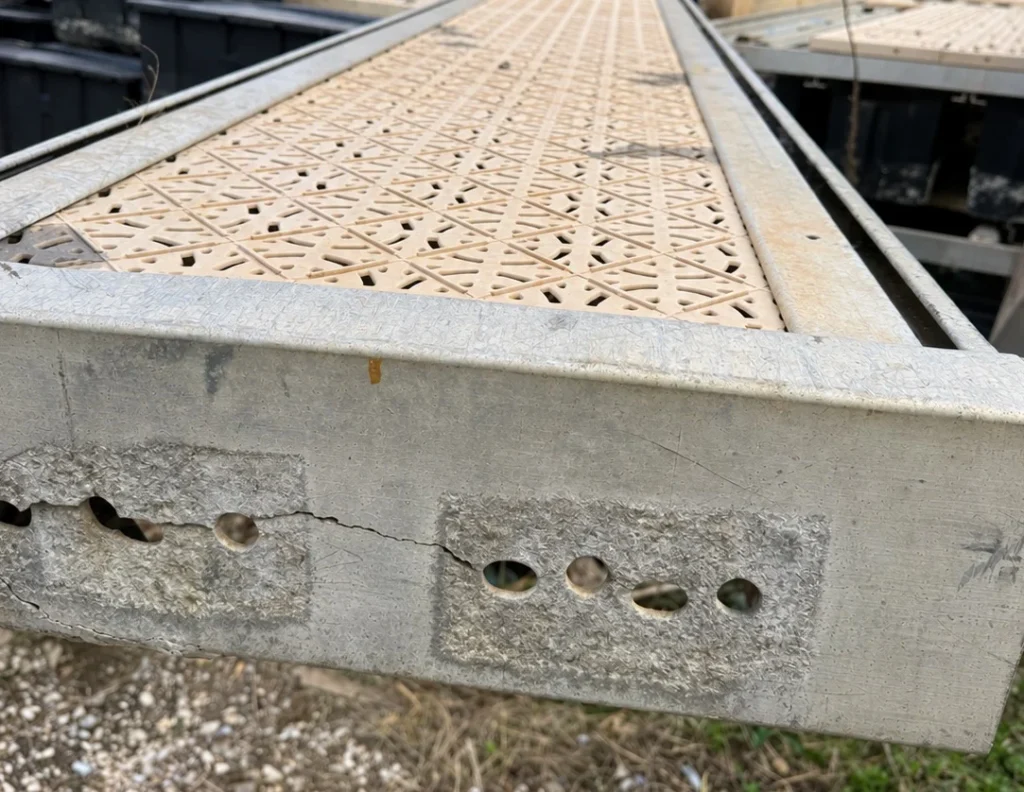
Galvanic corrosion on aluminum typically appears as localized pitting, whitish corrosion deposits, and metal loss around dissimilar-metal connections. In severe cases, extensive material deterioration and associated cracking can develop around fastening holes, potentially compromising structural integrity.
The photograph below illustrates advanced galvanic corrosion in an aluminum marine structure where steel connection components were used in direct contact with aluminum. Although these symptoms are consistent with galvanic attack, visual inspection alone cannot always distinguish galvanic corrosion from other corrosion mechanisms.
How Do Sacrificial Anodes Prevent Galvanic Corrosion?
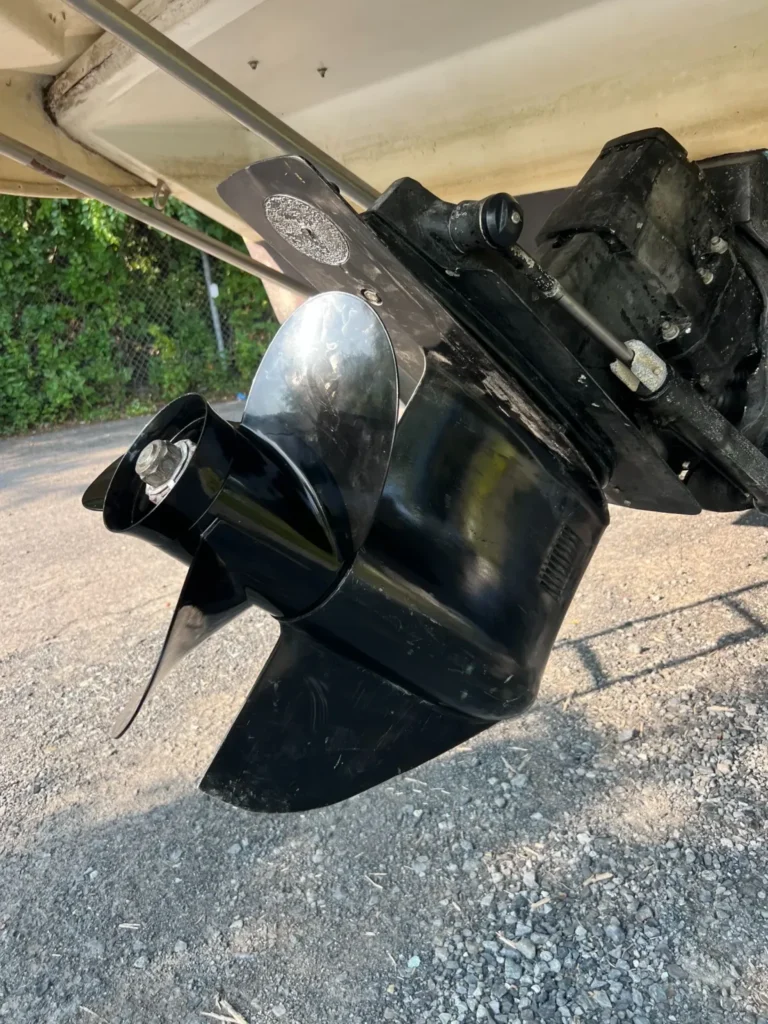
Sacrificial anodes protect metal structures by corroding preferentially. Made from appropriately selected zinc, aluminum, or magnesium alloys, they are electrically connected to the structure and provide cathodic protection. Anodes require periodic inspection and replacement as they are consumed. For aluminum marine structures, proper anode selection is essential to avoid inadequate protection or excessive cathodic polarization.
Does Galvanized Steel Cause Galvanic Corrosion on Aluminum?
Hot-dip galvanized steel is generally more compatible with aluminum than bare carbon steel in marine environments because its zinc coating provides sacrificial protection. In the galvanic series of metals, zinc and aluminum have relatively close electrochemical potentials, potentially reducing the driving force for galvanic corrosion compared with more noble metals such as stainless steel.
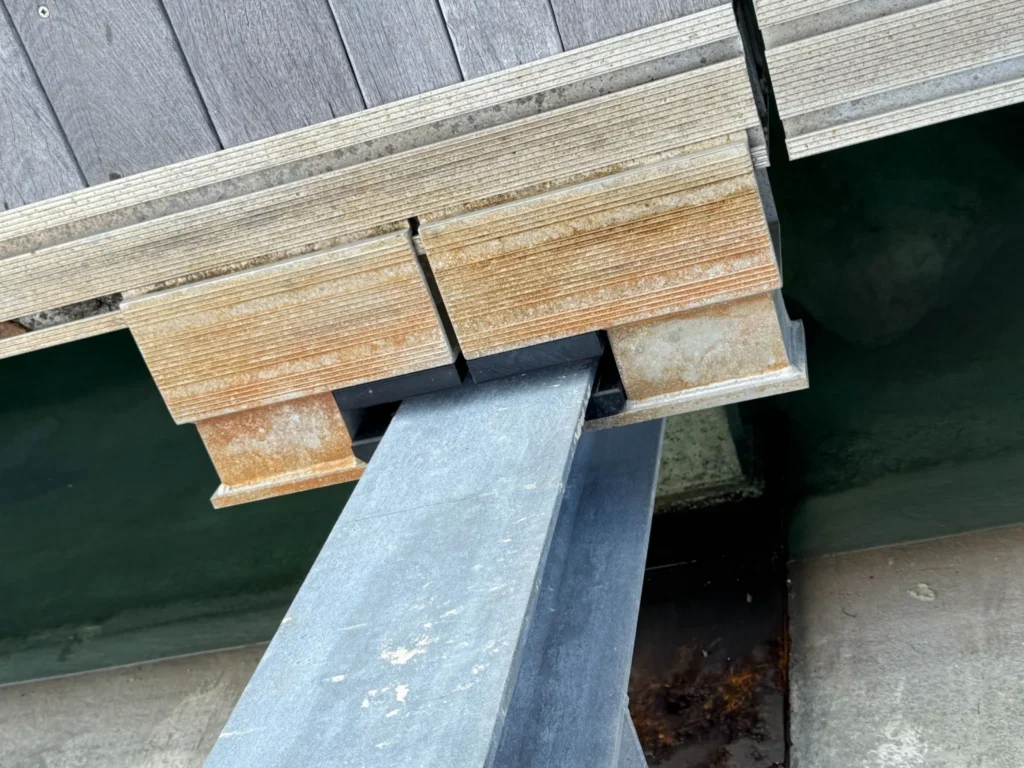
Although bare carbon steel is generally closer to aluminum than passive stainless steel in the galvanic series, it remains susceptible to corrosion. Rust deposits can accumulate on textured or pitted aluminum surfaces, causing undesirable discoloration and compromising the appearance of the structure.
As the zinc coating deteriorates and the underlying steel becomes exposed, galvanic conditions may change, potentially increasing localized corrosion risks. Long-term performance depends on coating thickness, environmental corrosivity, moisture exposure, and connection detailing. Electrical isolation and proper drainage may provide additional protection in aggressive marine environments.
Rust staining can also result from ferrous contamination during installation. For example, cutting or grinding galvanized steel components near aluminum structures can deposit steel particles onto aluminum surfaces. These particles may subsequently corrode, leaving visible brown stains without necessarily indicating galvanic corrosion of the underlying aluminum.
Does Anodizing Prevent Galvanic Corrosion?
Anodizing improves aluminum corrosion resistance by thickening its natural protective oxide layer, but it does not guarantee complete galvanic isolation. Scratches, damaged anodic layers, exposed edges, and electrically conductive connections can compromise protection and create conditions for localized galvanic corrosion.
A real-world example is the anodized aluminum bumper on a 1993 Volvo 240, which exhibited severe corrosion despite its anodized finish. As illustrated in our Aluminum Corrosion Resistance and Durability case study, anodizing alone does not guarantee long-term protection against galvanic corrosion when unfavorable environmental conditions and dissimilar-metal interfaces are present.
In marine environments, anodizing can enhance resistance to atmospheric corrosion while improving surface appearance. However, it should be considered part of a broader corrosion prevention strategy that includes appropriate material selection, dielectric isolation where required, and proper joint design.
Which ASTM Standards Cover Galvanic Corrosion?
ASTM G82 and ASTM G71 are two key standards used to evaluate galvanic corrosion and material compatibility. ASTM G82 provides guidance on developing and using galvanic series to compare the electrochemical behavior of metals and alloys in specific environments. ASTM G71 outlines procedures for conducting and evaluating galvanic corrosion tests under defined conditions. Together, these standards help engineers assess galvanic corrosion risks, evaluate dissimilar-metal combinations, and investigate corrosion behavior through galvanic corrosion testing.


