



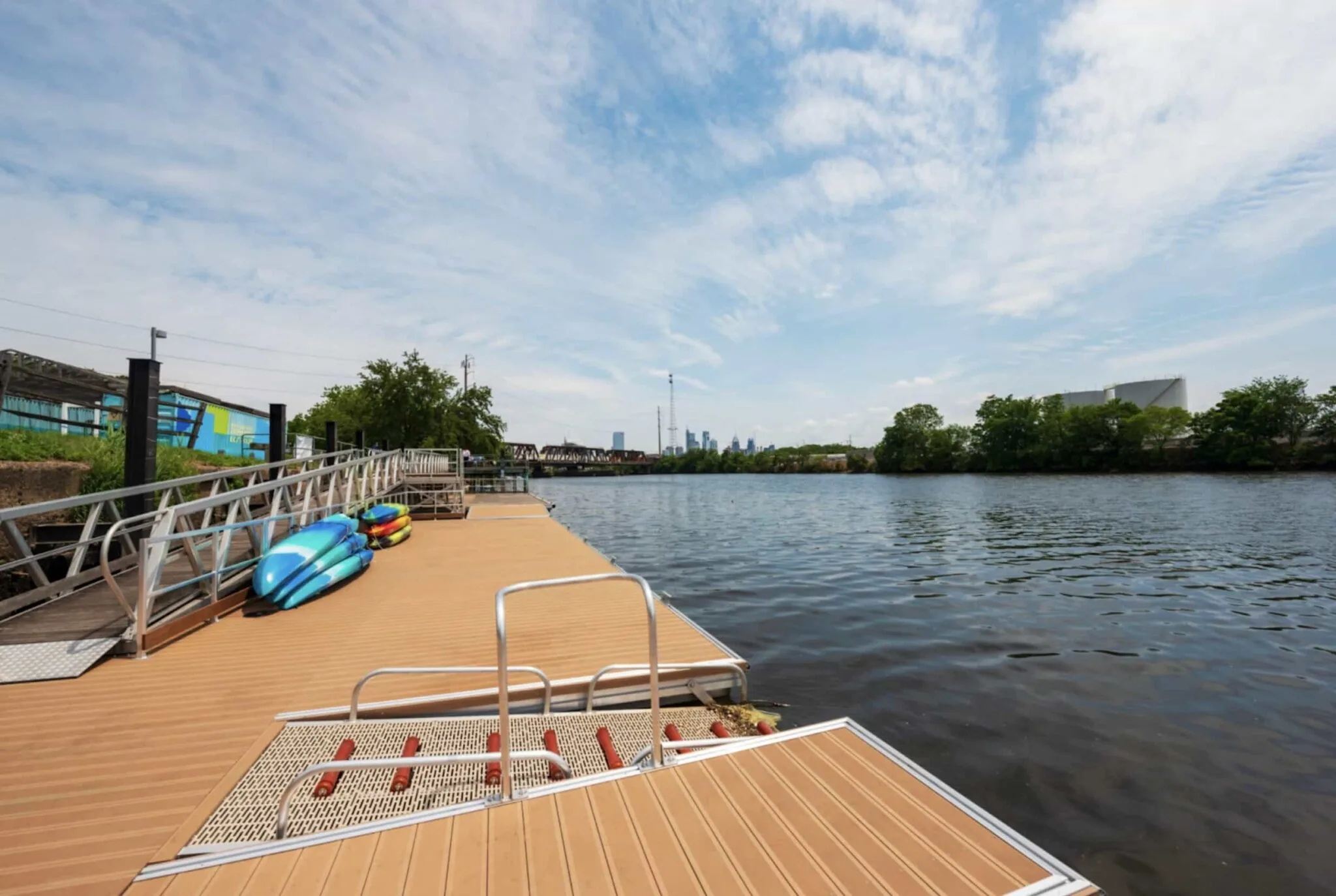
How to Maintain Aluminum Docks Year-Round
Floating docks have come a long way—from simple wood planks to engineered aluminum floating docks built for busy marinas, shifting shorelines, and rough weather. Compared with wood or steel, aluminum is lighter, resists rot and rust, and reconfigures easily as your needs change. That’s why floating docks made from aluminum are the go-to in so many regions today. Europe actually led the trend thanks to big extruders investing early in marine R&D.
History of Aluminum Floating Docks and Marine Applications
From the 1970s–1990s, European extruders—METRA (Italy), Hydro Aluminium (Norway), Alcan (France/Canada), and Alusuisse (Switzerland)—ran dedicated R&D and could design full profile systems for aluminum floating docks on demand, jump-starting widespread marine use. In Canada, Alcan—originally Alcoa’s Canadian arm and part of Rio Tinto since 2007—leveraged hydroelectric power to lead innovation.
After a 1945 U.S. antitrust ruling, Alcoa divested Alcan, which continued producing advanced marine and architectural systems for decades. Norsk Hydro ASA developed specialized bridge decking like the SAPA FRONT system, while Alcoa’s extrusions helped pioneer early North American curtain walls, including the Empire State Building and Lever House.
By the late 20th century, marine-grade 5000/6000 alloys were the standard for high-end floating docks in Europe—a benchmark that’s now global.
Environmental Challenges That Affect Aluminum Floating Dock Maintenance
When you maintain floating systems, plan for constant motion and changing conditions. Saltwater speeds up corrosion, waves load joints and floats, wind presses on frames and berthed vessels, docking impacts transfer shock into structure, and UV slowly breaks down decking, fenders, and bumpers. Unlike fixed piers, aluminum floating docks flex with every tide and wake—so prevention means smart specs, steady checks, and quick cleanups.
- Corrosive environments – Saltwater accelerates corrosion more than freshwater.
- Wave forces – Lateral and vertical loads stress flotation modules and dock joints.
- Wind loads – High winds exert pressure on dock structures and berthed vessels.
- Impact forces – Boat collisions can transfer significant shock loads.
- UV degradation – Sunlight can deteriorate decking, fenders, and bumpers.
Design Features That Reduce Aluminum Dock Upkeep
A well-engineered aluminum floating dock is built to move without breaking: frames that distribute load, connectors that flex, and anchoring that cushions rather than grinds. Isolate dissimilar metals, choose hardware that plays nice with aluminum, and use sealed flotation that resists fouling and bind-ups. Most maintenance headaches start as design shortcuts—avoid them early and your seasons run smoother.
Preventing Galvanic Corrosion
The potential difference between aluminum and steel is high, so contact in wet conditions can make aluminum the sacrifice metal, causing galvanic corrosion. Break the circuit and protect the surface.
- Use dielectric isolators or non-conductive gaskets between metals.
- Select compatible fasteners and apply protective coatings.
Efficient Anchor Systems
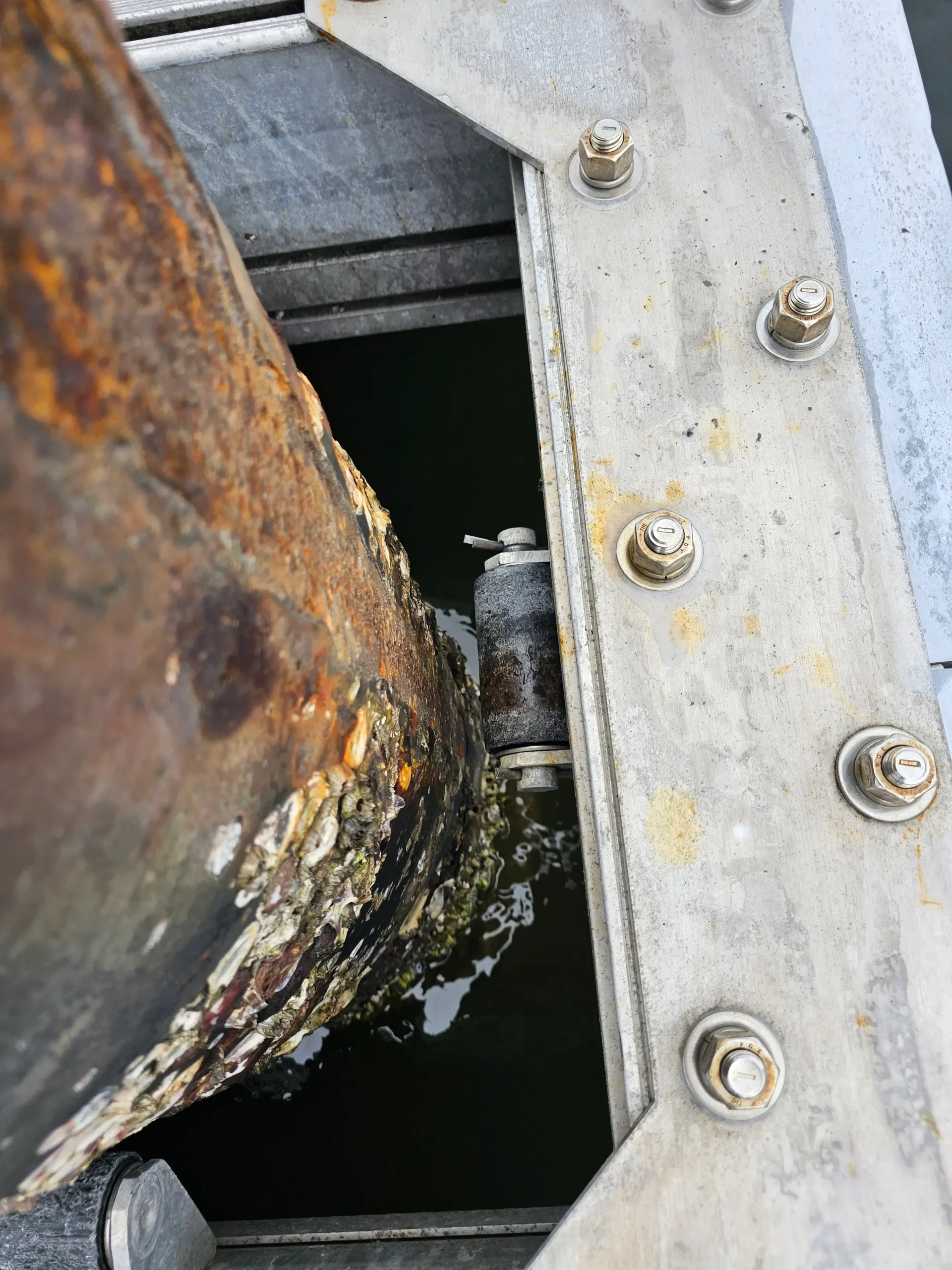
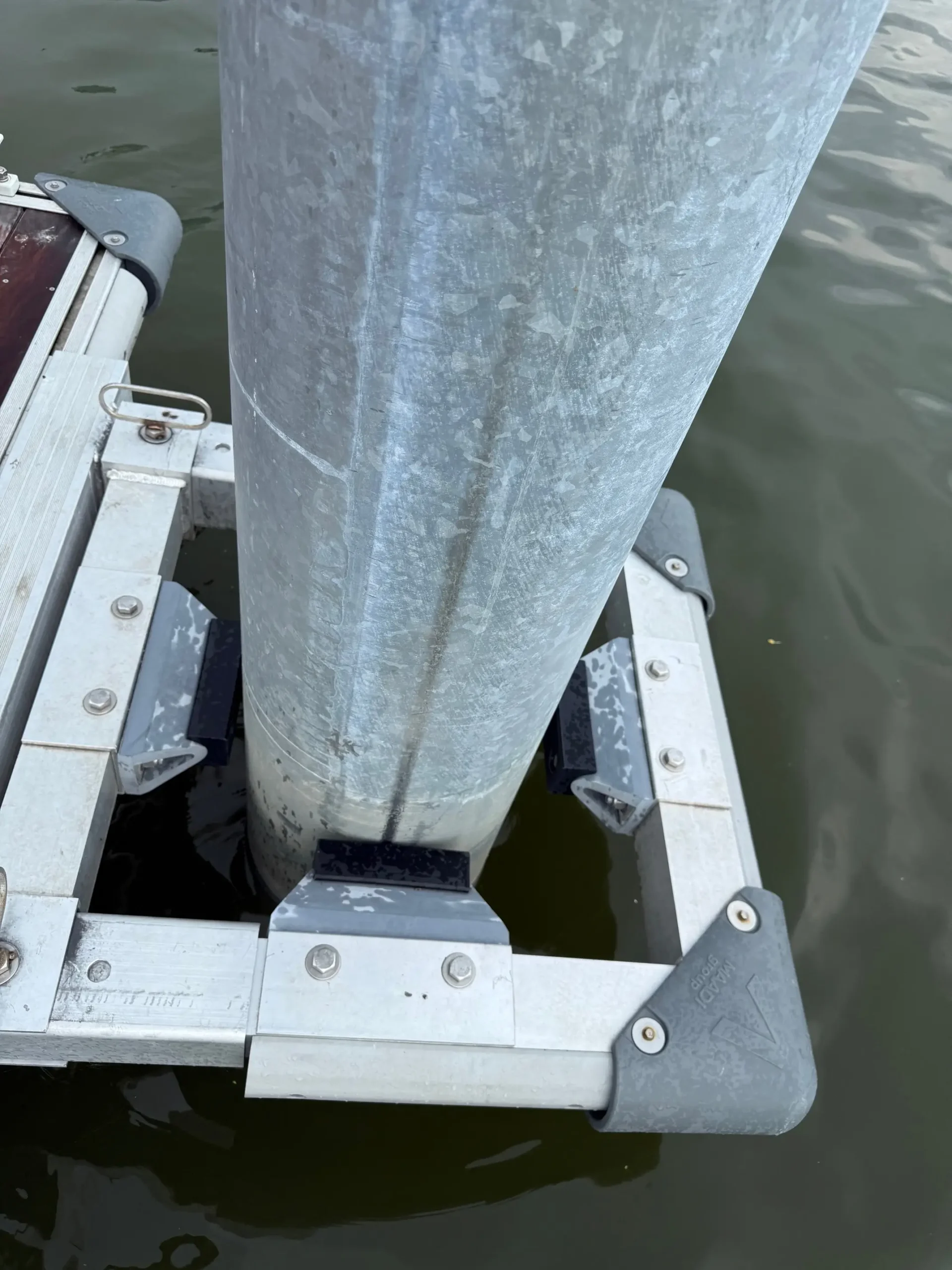
Anchoring drives day-to-day wear. Classic roller-style pile guides collect grit and can bind; modern cushion systems spread load, stay quiet, and resist jams. Add shock-absorbing elements so wave energy fades before it reaches the frame.
- Older pile-guide rollers wear quickly and are costly to replace (pic. 1).
- Frictionless cushion systems around piles extend service life (pic. 2).
- Shock-absorbing pile guides reduce wave energy transfer and structural stress (pic. 2).
High-Wear Aluminum Dock Components to Inspect Regularly
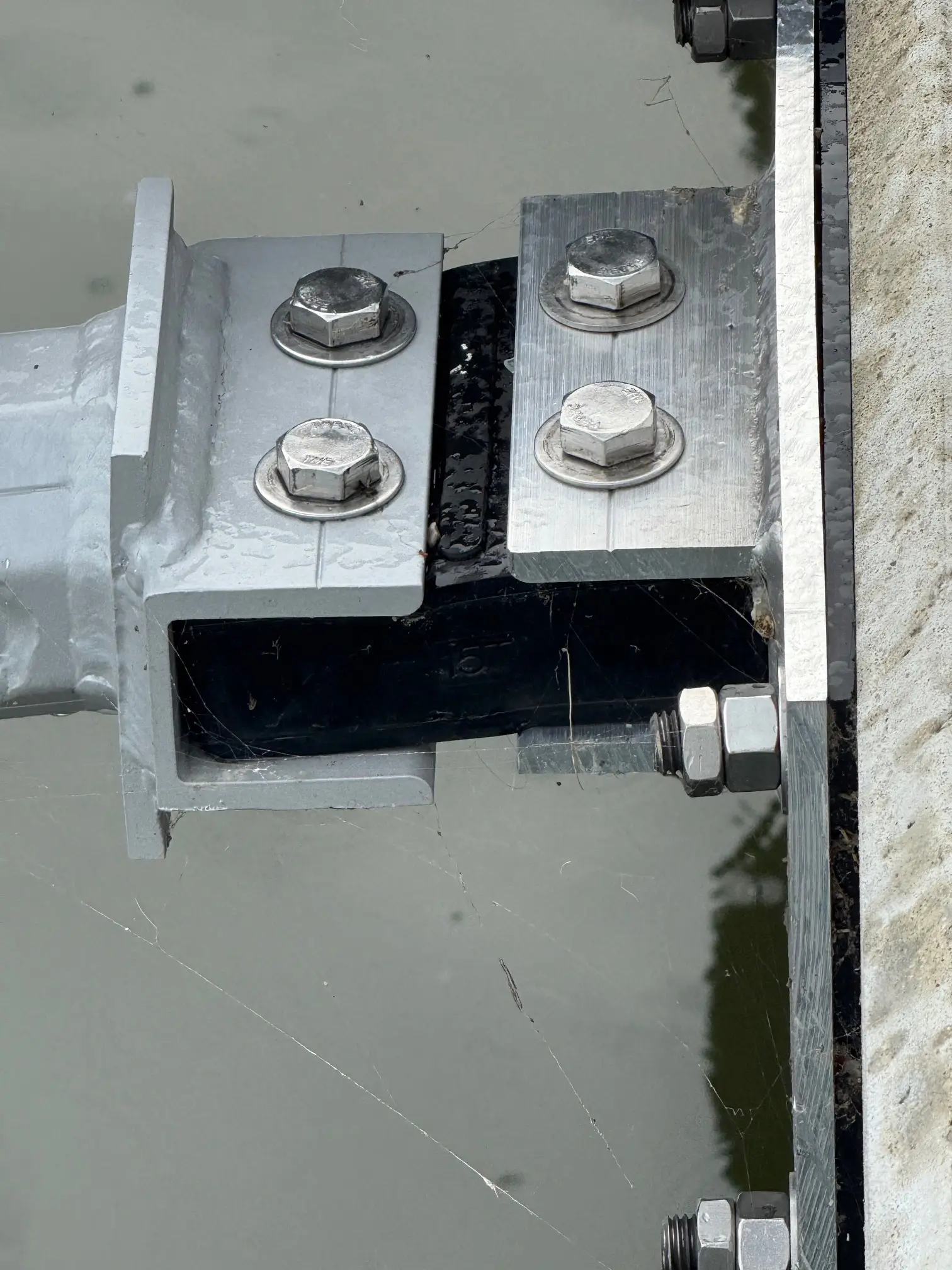
Anything that moves or rubs deserves routine attention. Flexible connectors outperform rigid hinges because they absorb stress, cut noise, and allow torsion; the best versions include internal reinforcement sized for storm loads. Safety links must follow the real load path—skip steel chain inserts that might survive while the frame fails in an extreme hit.
- Flexible dock connectors – Absorb stress, reduce noise, allow torsion movement (pic. 3).
- Reinforced internal links – Prevent total disconnection if connectors fail; avoid steel chain inserts.
Best Practices for Year-Round Aluminum Floating Dock Maintenance
Follow these steps to keep your dock in optimal condition:
1. Inspect regularly: Every six months or after major storms, check connectors, pile guides, and floats.
2. Protect from corrosion: Keep isolators and coatings in good condition, especially in saltwater environments.
3. Clean surfaces: Remove algae, barnacles, and debris from pile guides and flotation modules.
4. Monitor decking and fenders: Replace UV-damaged parts before they create safety risks.
5. Winter precautions: In icy climates, relocate or remove docks to prevent ice damage.
Why Aluminum Floating Docks Provide the Best Long-Term Value
When the design is right, aluminum floating docks deliver strength without weight, resist rot and rust, and reconfigure easily as boats or water levels change. Choose a manufacturer with real engineering depth, stop galvanic corrosion before it starts, use energy-damping anchoring, and keep a simple inspection rhythm. When built properly, your floating docks stay safe, quiet, and looking great for decades—while costing less over their lifetime than “cheap” builds that need repairs every season.


