



A floating dock is only as reliable as the floats that keep it above water. Whether you’re building a private dock for kayaks or designing a commercial-grade marina, correctly sizing your dock’s buoyancy is essential.
Too little flotation? Your dock risks being submerged or unstable.
Too much? You’re adding unnecessary cost, weight, and bulk.
This guide breaks down the buoyancy math step by step so you can confidently design a floating dock that stays level, handles its load, and performs reliably.
Step 1: Understand the Buoyancy Principle
Dock buoyancy is based on Archimedes’ principle:
A floating body displaces a volume of water equal to its weight.
That means:
- 1 cubic foot of freshwater supports ≈ 62.4 lb (28.3 kg)
- 1 cubic foot of saltwater supports ≈ 64 lb (29 kg)
So, the more water displaced, the more weight your dock can carry.
Step 2: Calculate the Total Load
Before choosing floats, determine the combined weight your dock must support:
- Dead load – the weight of the dock frame, decking, hardware, etc.
- Live load – people, carts, equipment, and dynamic use
- Safety margin – typically 10–20% for unforeseen loads
Example calculation:
- Aluminum dock frame & decking: 1,000 lb
- 4 people @ 200 lb: 800 lb
- Equipment & gear: 200 lb
- Safety factor (15%): 300 lb
Total: 2,300 lb
Step 3: Convert Load into Required Buoyancy
To keep the dock afloat, it must displace water equal to or more than its total weight:
- In freshwater:
Required volume = 2,300 ÷ 62.4 ≈ 36.9 cubic feet - In saltwater:
Required volume = 2,300 ÷ 64 ≈ 35.9 cubic feet
Step 4: Match Buoyancy to Float Specifications
Dock float manufacturers rate their products by buoyancy capacity (in pounds).
Let’s say one float provides 400 lb of lift:
- 2,300 ÷ 400 = 5.75, so you’d need at least 6 floats
Distribute floats evenly and symmetrically under the dock. If a gangway rests on one side, compensate with additional flotation to maintain balance.
Step 5: Consider Freeboard Height
Freeboard is the height of the dock deck above the waterline. It depends on how deep the floats are submerged under load (also called draft).
- Too little = water splashes, dock feels unstable
- Too much = hard to access small boats or kayaks
Recommended freeboard heights:
- Residential docks: 12–18 inches (30–45 cm)
- Marinas: 18–24 inches (45–60 cm)
- Commercial/Heavy-duty: 24+ inches (60+ cm)
Add a 10–20% safety factor to account for uneven loading, waves, and unexpected use.
Step 6: Adjust for Environmental Conditions
Consider special site conditions:
- Saltwater: Slightly more lift per cubic foot
- Wave & current exposure: Requires stronger floats and anchoring
- Ice zones: Choose durable, rugged floats; sometimes oversized
- Boat traffic: Use heavy-duty floats at docking points
Human Load Example: Floating Dock with Crowd
When people are the primary live load, you can estimate crowd weight and surface pressure using square footage per person.
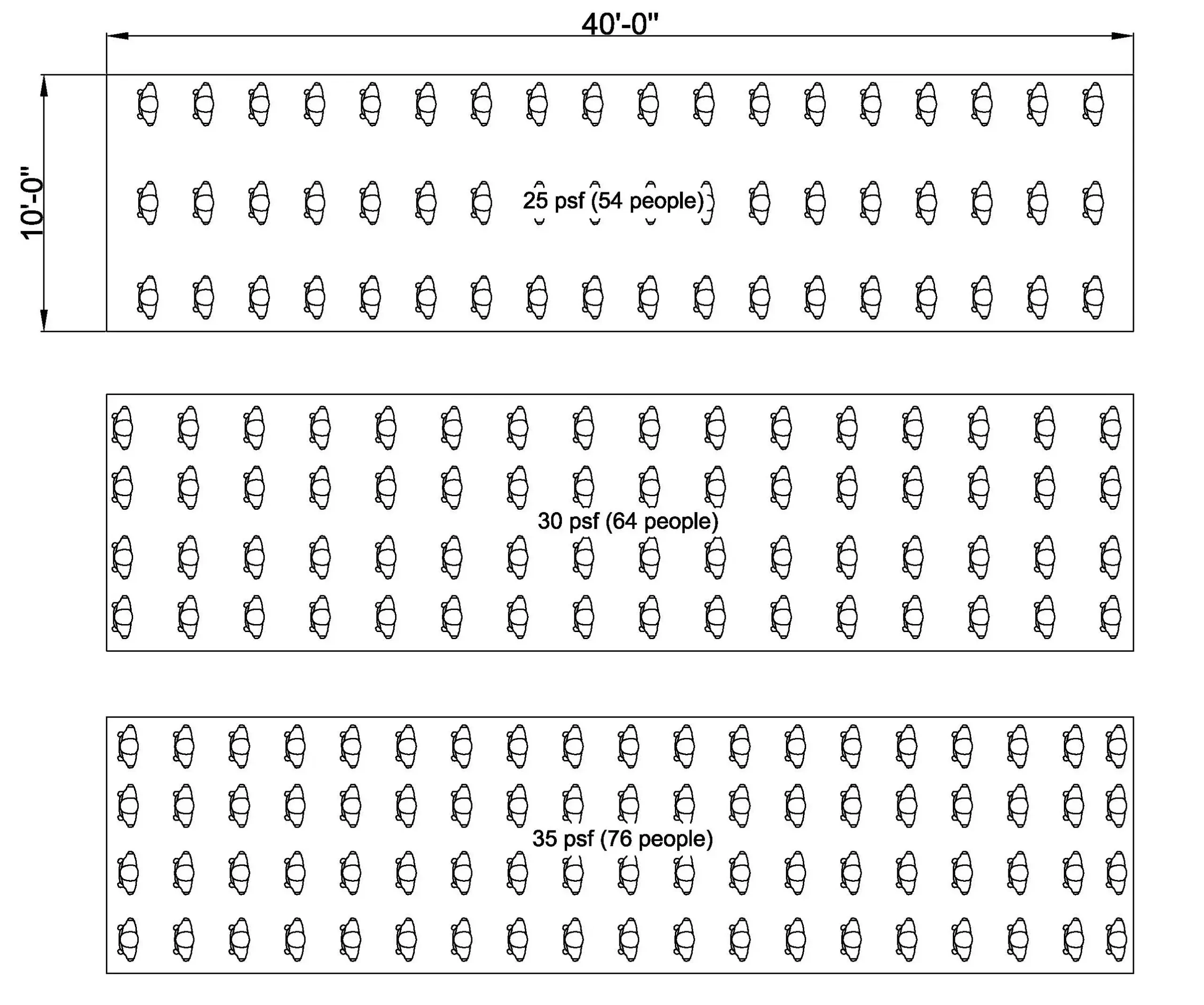
Example: 10 x 40 ft Floating Dock (400 sq ft)
- 2.7 sq ft/person = tightly packed (e.g., concert, metro)
- People weigh ~185 lb (USCG average)
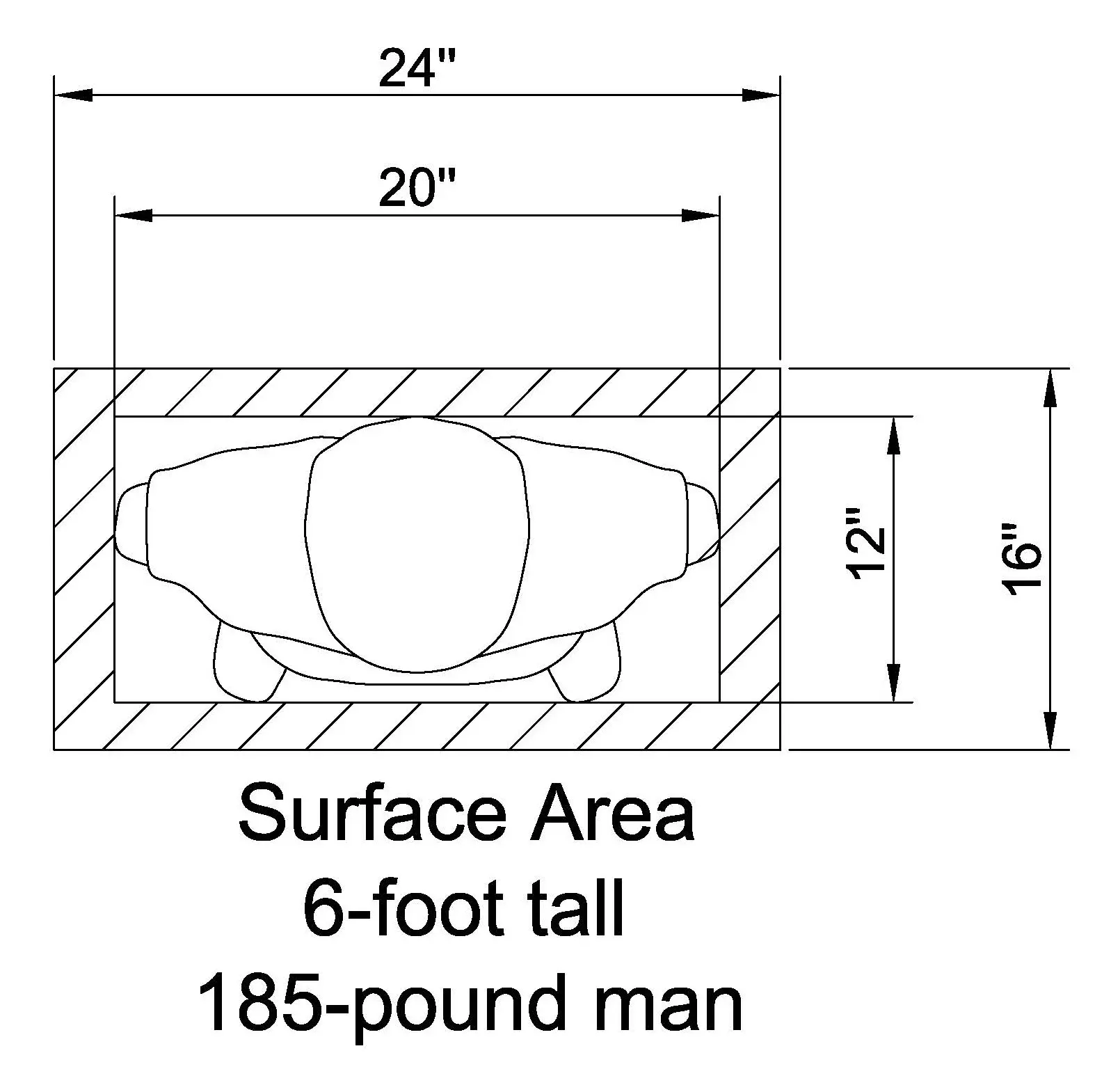
When planning the load capacity of a floating dock, it’s important to understand how human occupancy translates into surface pressure. An estimated 2.7 square feet per person represents the maximum realistic crowd density — similar to what you’d experience in a packed subway car or concert. This allocation allows for just about 2 inches of space around a person weighing 185 lb, standing within a footprint of approximately 12″ x 20″.
USCG Reference Weight Standards
When sizing for people, use the U.S. Coast Guard’s standard person weight:
- Before 2011: 160 lb
- Since 2011: 185 lb
→ Updated to reflect modern averages for safety
Load Scenarios:
| People | Load (psf) | Area per person | Notes |
|---|---|---|---|
| 148 | 68.45 psf | 2.7 sq ft | Extremely dense, near unsafe |
| 54 | 25 psf | 7.4 sq ft | Spacious, normal circulation |
| 64 | 30 psf | 6.25 sq ft | Realistic, slight crowding |
| 76 | 35 psf | 5.26 sq ft | Acceptable for events |
Conclusion: Build Smart, Float Safe
Getting your dock buoyancy right ensures safety, performance, and durability.
- Add up your total load
- Divide by 62.4 (freshwater) or 64 (saltwater)
- Choose the right number of floats with a safety margin
- Account for freeboard, balance, and environment
Whether it’s a private floating dock for a paddleboard or a full-size marina dock, solid buoyancy calculations save money, avoid mistakes, and keep your dock afloat for years to come.
Need Help Calculating Your Dock’s Buoyancy?
We can assist with sizing, layout, and product recommendations tailored to your project. Contact us here


