

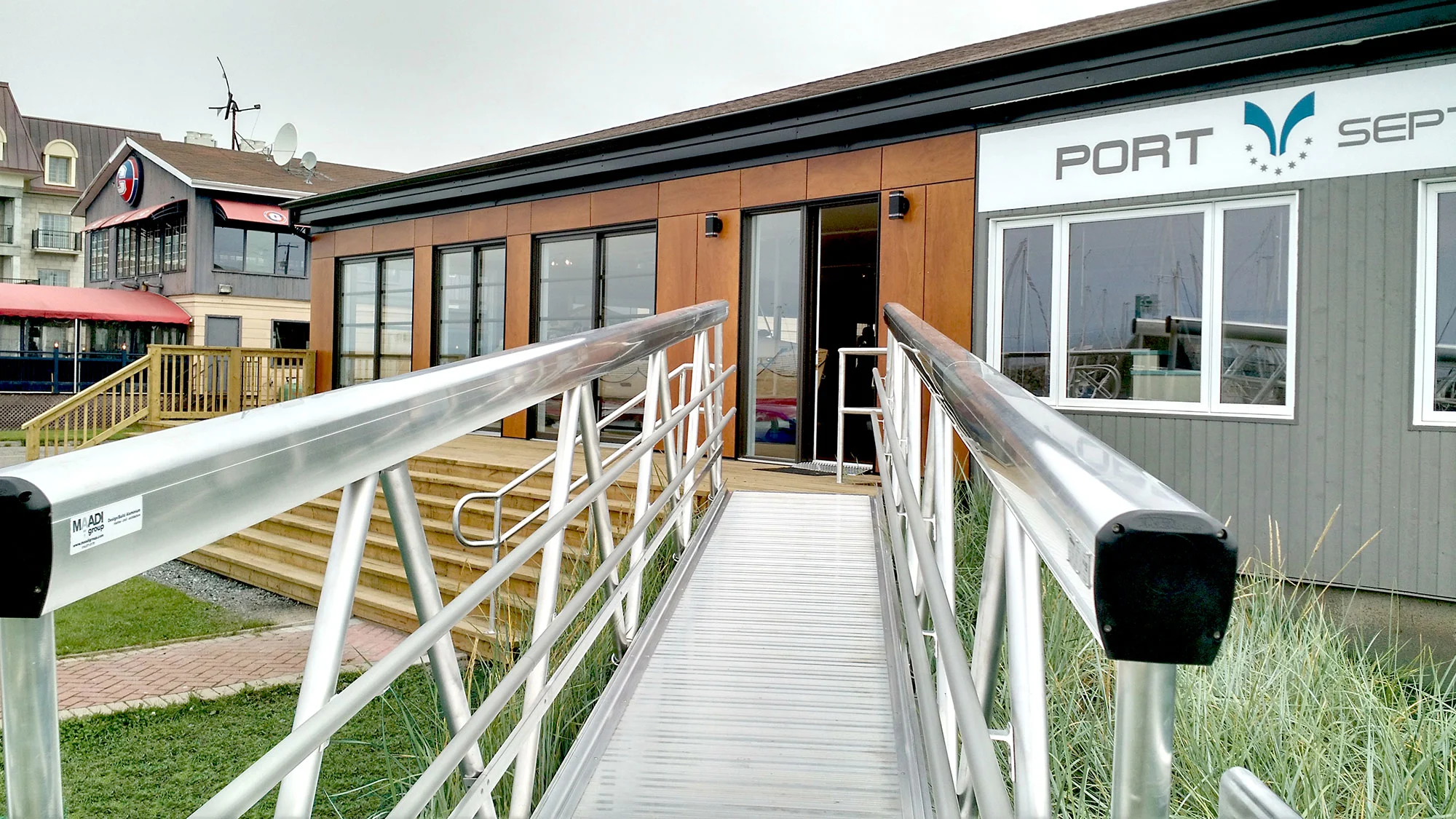
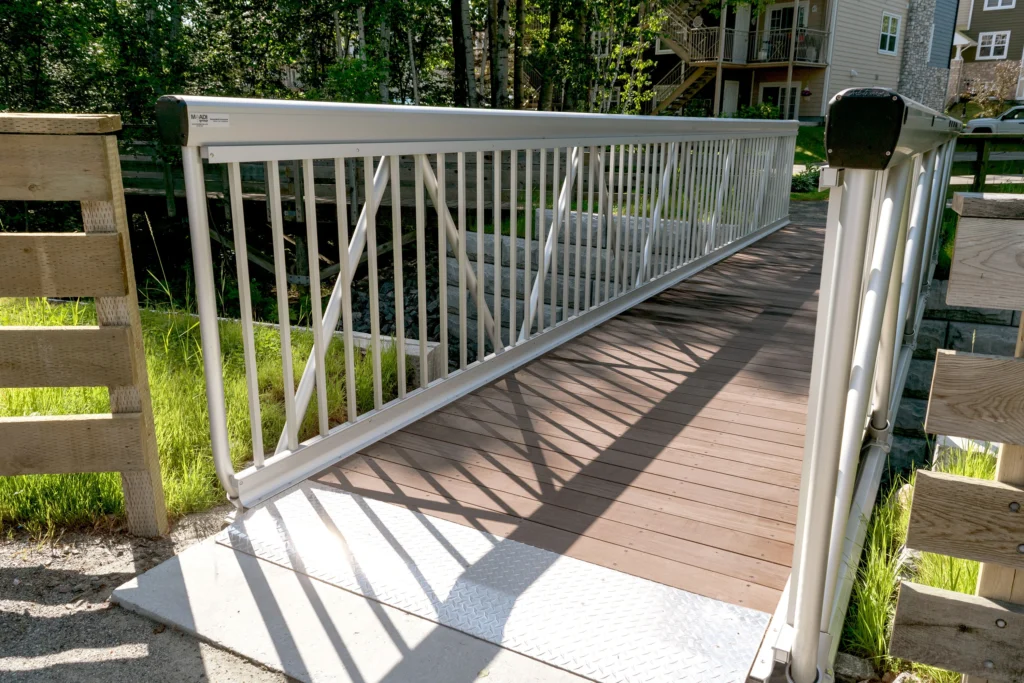
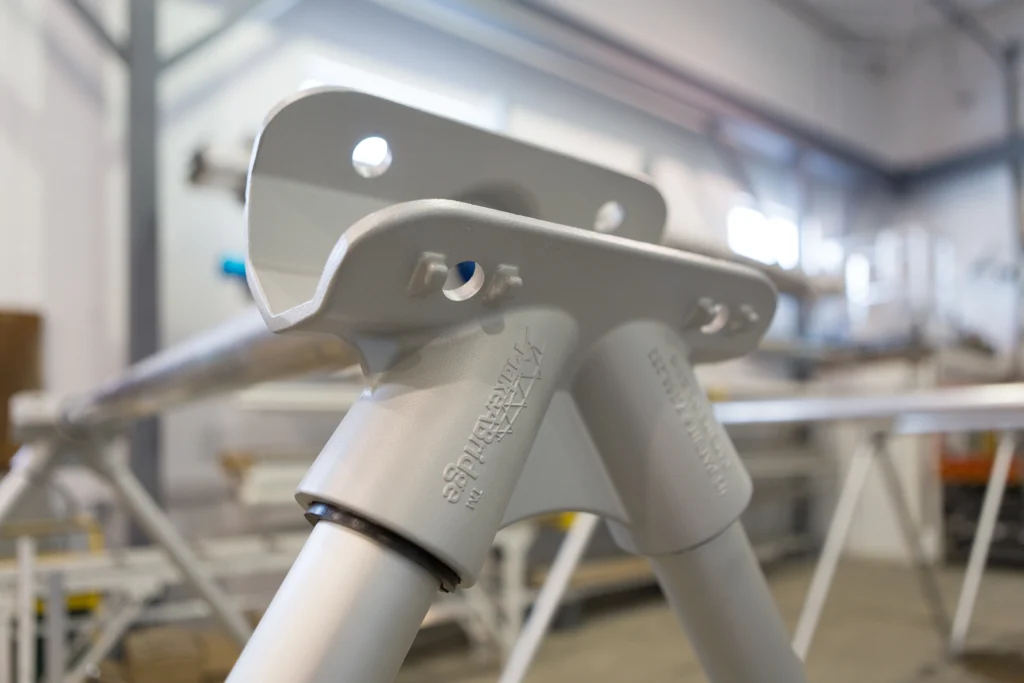
Les Affaires magazine addresses in this issue innovation and small business, especially the pedestrian bridge system called MakeABridge that MAADI has developed and now manufactures. The recipient of numerous awards and honors, the MakeABridge modular design is easy to transport, assemble and install. The structure, featuring weld-free interlocking components, can be used as temporary or permanent pedestrian bridges for commercial, industrial, institutional, military, and marine applications, indoors as well as outdoors.
This modular approach offers significant advantages over traditional bridge construction. The MakeABridge system allows rapid deployment, reducing labor costs and on-site construction time. Its weld-free design eliminates common corrosion points, providing long-term durability even in harsh weather or marine environments.
Versatile Applications Across Industries and Environments
The MakeABridge aluminum footbridges are not only structurally robust but also versatile. They serve a variety of sectors — from industrial sites needing quick, reliable pedestrian access, to military applications requiring deployable and lightweight infrastructure, to marine terminals where corrosion resistance is essential.
MAADI Group’s expertise in modular aluminum design ensures that the bridges meet stringent safety and performance standards while being environmentally sustainable. Their lightweight nature also reduces the need for heavy machinery during installation, further lowering environmental impact.
Overcoming Challenges: Breaking into a Steel-Dominated Market
The dossier mentions among other things the first steps of the firm in the Québec market, which had turned more to steel when it comes to infrastructure, and stresses the fact that MAADI Group, in its design and construction activities, had to finance scientific and technical research that led to the creation of the MakeABridge pedestrian bridges, because it is difficult to get financing for projects using aluminum as raw material. It is thanks to a team of experienced specialists that MAADI managed to pull out of the game and find its niche in the international pedestrian bridges sector.
This challenge was not just technical but financial and cultural. The prevalence of steel in Québec infrastructure meant that convincing stakeholders and clients to adopt aluminum required robust evidence of its benefits. MAADI invested heavily in R&D, testing, and certifications to prove the performance, safety, and cost-efficiency of their modular bridges.
Commitment to Innovation and Scientific Research
The journey to develop MakeABridge was rooted in MAADI’s commitment to innovation and scientific rigor. The company collaborated with engineering experts and research institutions to design a bridge system that could meet or exceed steel’s performance while delivering added benefits like lighter weight and corrosion resistance.
This research also contributed to technical publications and presentations, helping to educate the market and create awareness about aluminum as a viable infrastructure material. MAADI’s work has paved the way for aluminum’s growing acceptance in infrastructure projects across Canada and internationally.
A Word from the Founder: Vision and Pride
“We are delighted that the prestigious newspaper Les Affaires has decided to publish an article on our MakeABridge footbridges and MAADI Group in general,” said Alexandre de la Chevrotière, founder and president of the firm, “This renowned publication needs no introduction and is known for the seriousness of their approach, which is why we are honored to have caught their attention. We are doing everything in our power to provide pedestrian walkways and high quality engineering products, and achieve visibility that enables us to highlight our expertise.”
Alexandre emphasized the importance of visibility and credibility in expanding MAADI Group’s footprint. The feature in Les Affaires aligns with the company’s strategic goal to build strong relationships with local clients while continuing to expand globally.