


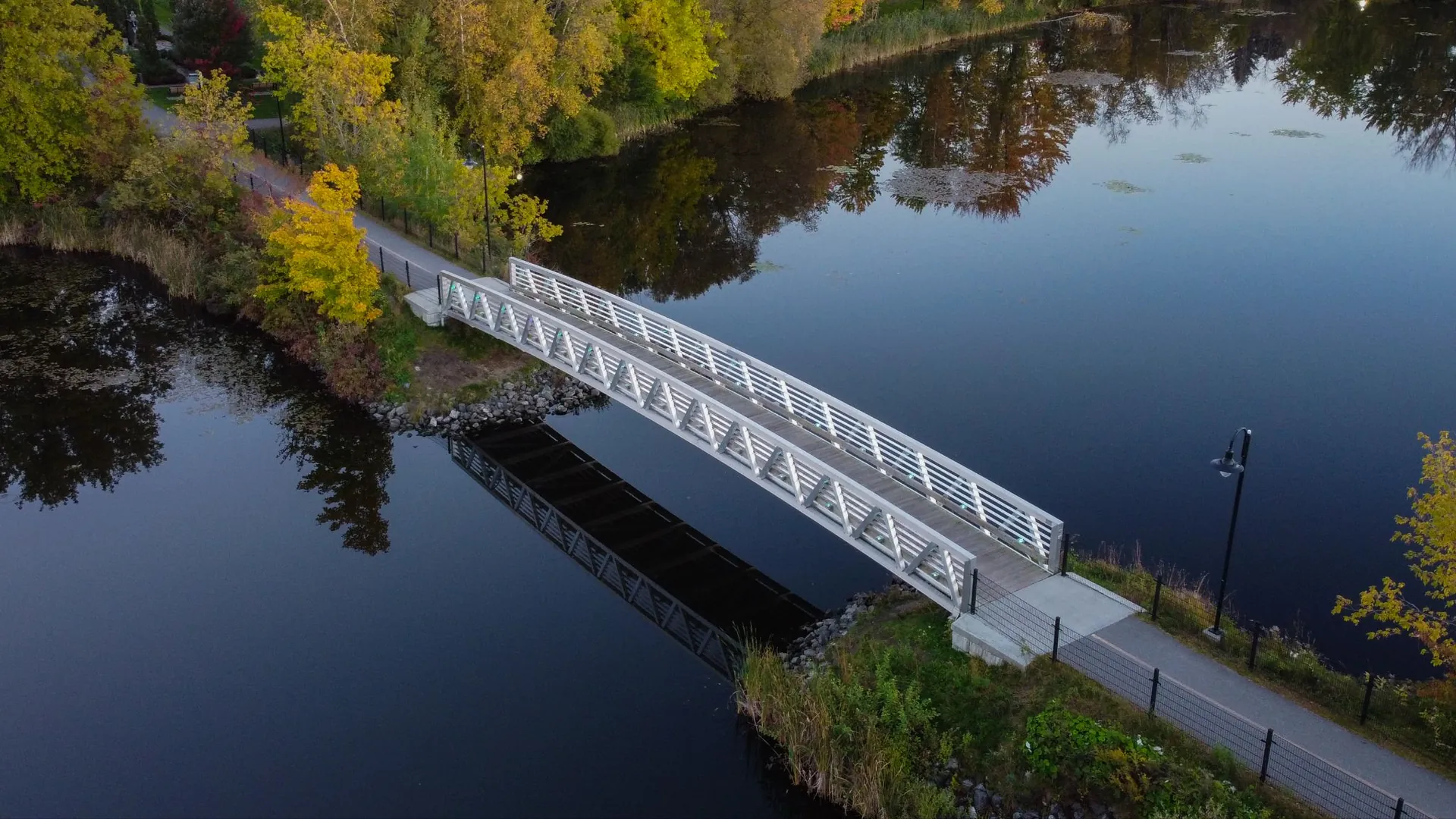
One team. Complete engineering-to-fabrication accountability. MAADI Group manages every stage of your aluminum pedestrian bridge—from structural analysis and engineering calculations to detailed engineering drawings, weldment design, precision fabrication, and final quality inspection—all under one roof.
MAADI Group provides in-house structural engineering, design and fabrication of aluminum pedestrian bridges engineered in accordance with applicable AASHTO and CSA bridge design standards, including AASHTO LRFD and CSA S6, as required by the project.
Our in-house Professional Engineers oversee the structural design and provide sealed engineering drawings in accordance with applicable professional licensing requirements. Each bridge is fabricated at our Canadian manufacturing facilities, ensuring continuity between engineering, production and quality control.
Our Pedestrian Bridge Engineering Services
Since 2005, MAADI Group has engineered nearly 150 aluminum bridges, ranging from pedestrian and trail bridges to elevated skywalks and specialized industrial crossings. Our portfolio includes projects such as the Bayview Skywalk Bridge and the Malampaya offshore service bridge, demonstrating our international engineering expertise across diverse structural applications and challenging operating environments.
Our engineering capabilities extend from new bridge construction to the rehabilitation and upgrading of existing crossings, including bridge widening, structural modifications, and lightweight aluminum deck replacements.
From structural analysis and detailed engineering to precision fabrication and quality control, every stage is integrated within our broader aluminum bridge engineering and manufacturing capabilities.
New Footbridge Design to Code
MAADI Group engineers custom aluminum pedestrian bridges in accordance with applicable North American and international bridge design standards, including the AASHTO LRFD Guide Specifications for the Design of Pedestrian Bridges, the AASHTO LRFD Bridge Design Specifications, CSA S6, and relevant European (EN) and Saudi Building Code (SBC) requirements for international projects.
Our seven bridge configurations accommodate a wide range of architectural and structural requirements, from the arched St. Lawrence™ pony truss to the Banff™ bowstring and Mackenzie™ box truss, with spans reaching up to 160 ft (48.8 m). Explore our custom pedestrian bridges for available configurations and design options.
Integrated LED lighting and ADA-compliant design features are available to enhance accessibility, safety, and aesthetics.
Load Cases and Vibration Serviceability
Our structural engineering analysis evaluates pedestrian, cyclist, equestrian, and maintenance vehicle loading, along with wind loads, load combinations, member stresses, deflections, and overall structural stability. Because aluminum pedestrian bridges are lightweight, vibration serviceability is a critical design consideration, particularly under dynamic pedestrian and crowd loading. MAADI Group’s MakeABridge® system has been independently evaluated by the University of Waterloo through a vibration study examining its dynamic response under pedestrian loading.
Retrofits, Bridge Widening and Aluminum Deck Replacement
Expand pedestrian and cycling access without replacing the entire bridge. MAADI Group engineers lightweight aluminum retrofit solutions that improve the functionality, safety, and service life of existing infrastructure while minimizing additional dead loads on the supporting structure.
Our Jasper™ cantilever walkway system creates dedicated pedestrian and cycling lanes alongside existing road bridges, helping separate vulnerable users from vehicular traffic. A notable example is the 620 ft (189 m) Tar River bridge widening project in North Carolina, where a lightweight aluminum cantilever structure provided a new crossing for pedestrians and cyclists while limiting additional loads on the existing bridge.
For aging or deteriorated bridge decks, our GuarDECK™ weld-free aluminum decking system offers a lightweight, corrosion-resistant alternative to traditional timber, steel, and concrete decking. Its modular, mechanically fastened panels simplify installation and reduce long-term maintenance requirements. At Îles-de-Boucherville National Park in Québec, MAADI supplied aluminum decking for three pedestrian and cycling bridges, demonstrating its suitability for demanding environments and existing steel-girder applications.
Our retrofit engineering addresses critical structural considerations, including existing bridge capacity, additional dead loads, cantilever-induced torsion, connection design, differential thermal expansion, galvanic corrosion protection, drainage, and serviceability.
Learn more about the engineering considerations in our guide to widening existing bridges for safer cycling and walking.

Pre-Engineered Pedestrian Bridge Kits
Engineered for performance. Designed for fast, weld-free assembly. MAADI Group's MakeABridge® aluminum pedestrian bridge kits provide a lightweight, modular solution for shorter spans, remote locations, and sites with limited equipment access.
Each bridge kit is supplied with engineering documentation and prefabricated, interlocking aluminum components designed for efficient on-site assembly using standard hand tools, without field welding. The modular system simplifies transportation, reduces on-site labor requirements, and minimizes the need for specialized installation equipment.
MakeABridge® combines engineered structural performance with practical installation efficiency, making it particularly suitable for recreational trails, parks, pedestrian crossings, and environmentally sensitive locations.
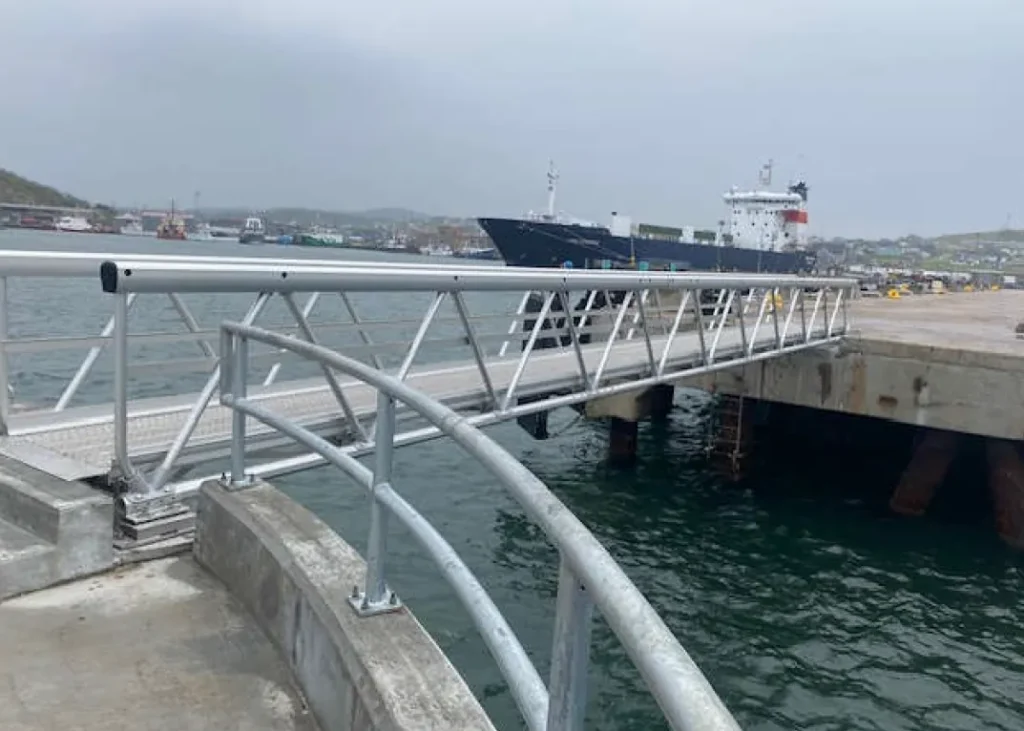
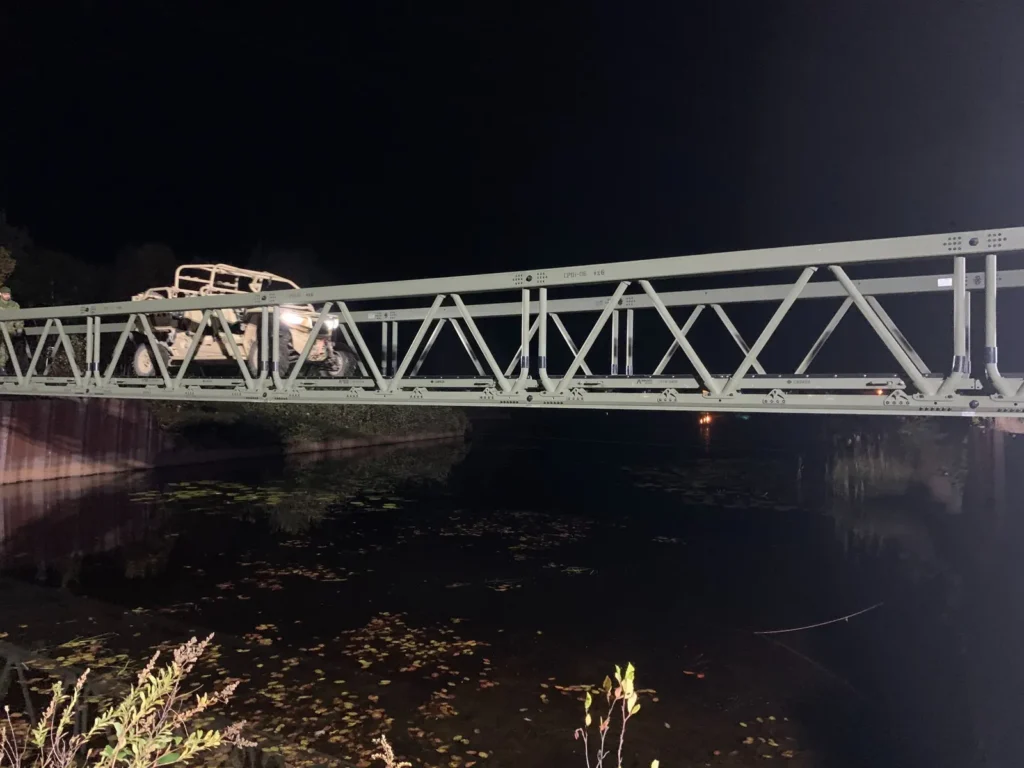
Our Bridge Design Process in Three Steps
Step 1 — Site Assessment and Engineering Feasibility
Every bridge project begins with a comprehensive review of site conditions, intended use, structural requirements, and project constraints. Clients provide available drawings, photographs, survey data, geotechnical information, anticipated traffic loads, and project schedules.
Our in-house engineers evaluate the required span and clear width, pedestrian and maintenance vehicle loading, foundation and support conditions, environmental exposure, and applicable design codes. This preliminary engineering assessment establishes the design criteria, identifies potential structural and installation challenges, and determines the most suitable aluminum bridge configuration before detailed engineering begins.
Step 2 — Structural Analysis, Detailed Engineering and Sealed Drawings
Our in-house structural engineering team develops 2D and 3D analytical models and performs structural analysis using beam-element modeling and finite element analysis (FEA), as appropriate, to evaluate load combinations, internal forces, member stresses, deflections, structural stability, and serviceability.
Detailed engineering includes aluminum member sizing, welded and bolted connection design, bearing assemblies, anchorage systems, and structural interfaces. Bridge bearings and anchorage details are engineered to accommodate thermal expansion and contraction while safely transferring design loads to the supporting structure.
MAADI Group prepares comprehensive engineering and fabrication drawings, including project-specific shop drawings for aluminum bridge decking, cantilever widening systems, and custom pedestrian bridge configurations.
Structural calculations and engineering drawings are reviewed and authenticated by MAADI Group's in-house Professional Engineers in accordance with applicable professional licensing and jurisdictional requirements.
Step 3 — Certified Fabrication, Installation and Quality Assurance
MAADI Group manufactures its aluminum pedestrian bridges in two Canadian facilities totaling 44,000 sq. ft. (4,090 m²), operating under an ISO 9001:2015 quality management system. Our fabrication processes comply with applicable CSA W47.2 division 1 and CSA W59.2 requirements, supported by CWB-certified aluminum welding operations and oversight by an International Welding Engineer (IWE).
Our integrated engineering and manufacturing approach ensures that structural design requirements are carried through every stage of production, including material traceability, dimensional verification, weld quality control, and final fabrication inspections.
Bridge installation can be performed by qualified local contractors with technical support from MAADI Group or by our experienced installation teams, depending on project requirements. Where included in the project scope, our engineers provide installation oversight and post-installation structural inspections to verify conformity with approved engineering drawings and applicable design requirements.
One integrated team. Complete engineering-to-fabrication accountability. Every MAADI Group pedestrian bridge is engineered under the responsibility of an in-house Professional Engineer, with sealed engineering drawings issued in accordance with applicable jurisdictional requirements.
Plan Your Pedestrian Bridge with Our Engineers
From initial concept to engineered solution. Share your required span, bridge width, intended users, and available site information. Our in-house engineering team will review your project requirements, recommend a suitable aluminum bridge solution, and prepare a tailored quotation.
Start Your Bridge Project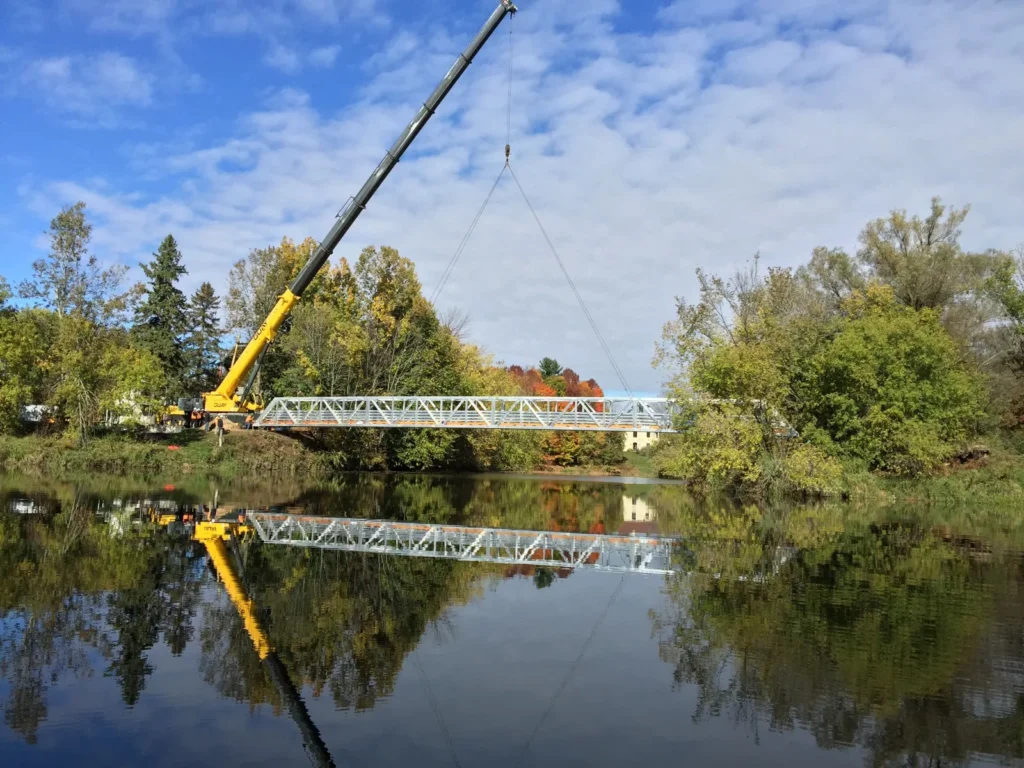
MAADI Group's Mackenzie™ 47-metre aluminum pedestrian box truss bridge being installed over a lake using a 350-ton crane to connect an island to the mainland. The installation demonstrates the engineering and construction of a long-span, lightweight aluminum pedestrian bridge, with the prefabricated structure lifted into position as a single assembly.
Cost of Pedestrian Bridge Engineering and Design
The cost of engineering a pedestrian bridge depends on several project-specific factors, including span length, clear width, design loads, structural configuration, decking system, availability of standard aluminum extrusions, site conditions, installation constraints, and applicable design codes. Complex geometries, custom-machined structural splices, specialized connections, and demanding environmental conditions can further increase engineering complexity, fabrication requirements, and overall project costs.
At MAADI Group, structural engineering is integrated into the supply of our custom aluminum pedestrian bridges. Our design-build approach brings structural analysis, detailed engineering, sealed drawings, connection design, and precision fabrication under one coordinated scope, reducing the complexity of managing separate engineering and manufacturing contracts.
Rather than treating engineering as a separate preliminary expense outsourced to an external consulting firm, MAADI Group integrates structural engineering directly into its bridge design and manufacturing process.
With nearly 150 aluminum bridge projects delivered since 2005 and engineering firms worldwide representing 65% of our client base, we bring specialized expertise that complements our clients' engineering teams.
By integrating structural design with manufacturing efficiency, material optimization, and project-specific performance requirements, we deliver cost-effective, fully engineered aluminum bridge solutions without compromising structural integrity, quality, or compliance with applicable design standards.
For a detailed breakdown of how structural engineering fees are determined—from feasibility studies and preliminary design to structural analysis, material optimization, and detailed fabrication drawings—explore our guide to engineering costs for bridges, marinas, and aluminum structures.
Aluminum Pedestrian Bridges for Parks, Trails, and Campuses
MAADI Group engineers and manufactures prefabricated and custom aluminum pedestrian bridges for municipalities, public parks, recreational trails, university campuses, stadiums, private estates, and transportation infrastructure.
Designed to cross rivers, streams, roadways, railways, and challenging terrain, our bridges combine lightweight structural engineering, corrosion resistance, architectural versatility, and long-term durability.
Our comprehensive range of aluminum pedestrian bridges includes both MakeABridge® modular bridge kits and fully customized structural designs, allowing engineers, architects, and project owners to select solutions tailored to their span requirements, site constraints, and architectural objectives.
A notable example of MAADI Group's engineering capabilities is our 145 ft (44 m) aluminum pony-truss pedestrian bridge in Brossard, Québec, recognized as Canada's longest aluminum pony-truss footbridge at the time of its installation in 2012.
This landmark project demonstrates our ability to engineer and deliver long-span aluminum pedestrian bridges beyond conventional modular bridge configurations.
Why Engineering Firms Choose MAADI Group for Aluminum Bridge Engineering
Engineering firms worldwide represent approximately 65% of MAADI Group's client base, relying on our specialized aluminum structural engineering expertise for complex pedestrian bridge projects involving demanding live loads, long spans, challenging site conditions, and compliance with applicable AASHTO, CSA, and international design standards.
While most engineering firms possess extensive experience designing structures using conventional materials such as steel, concrete, and timber, structural aluminum requires specialized expertise in alloy and welding filler metal selection, heat-affected zone (HAZ) strength reductions, aluminum-specific welding procedure specifications (WPSs), extrusion design constraints, structural connection engineering, and manufacturing processes.
Optimizing aluminum structures also demands an in-depth understanding of aluminum extrusion mill capabilities, including press tonnage, maximum circumscribing circle diameter (CCD), profile geometry limitations, extrusion weight per unit length, and available alloy-temper combinations. These manufacturing parameters directly influence structural efficiency, material optimization, extrusion feasibility, fabrication costs, and project lead times.
Many consulting engineering firms have limited direct experience with aluminum bridge fabrication and the unique opportunities offered by custom aluminum extrusions. Applying conventional steel design principles to aluminum structures without fully considering aluminum-specific properties and manufacturing processes can lead to unnecessarily complex connections, inefficient material utilization, and higher fabrication costs.
This is where MAADI Group brings exceptional value as a specialized engineering and manufacturing partner. Drawing on nearly 150 aluminum bridge projects delivered since 2005, our in-house engineering team combines decades of practical aluminum structural experience with advanced manufacturing knowledge to develop solutions optimized specifically for aluminum—not simply adapted from conventional steel designs.
Our engineering and manufacturing capabilities provide several key advantages:
In-house Professional Engineers, naval architects, and International Welding Engineer (IWE) expertise specializing in aluminum structural design, welded connections, and fabrication.
Our patented MakeABridge® modular aluminum bridge system and three First Place awards in the Structural Category of the Extrusion Technology Foundation's International Aluminum Extrusion Design Competition.
Carefully selected structural aluminum alloys deliver excellent corrosion resistance, reduced maintenance requirements, and long service life without relying on conventional protective paint systems.
Engineering and manufacturing projects delivered in more than 30 countries, with flexible project delivery ranging from engineered bridge supply packages to complete turnkey solutions.
Structural analysis, material optimization, custom aluminum extrusion design, connection engineering, precision CNC machining and laser cutting, fabrication, quality control, and project-specific engineering documentation are all coordinated in-house under one roof.
From initial structural calculations and professionally sealed engineering drawings to precision fabrication and final quality inspections, MAADI Group bridges the gap between conventional structural engineering and specialized aluminum manufacturing—helping engineering firms deliver efficient, cost-effective, and code-compliant aluminum pedestrian bridges engineered for decades of reliable service and backed by our 15-year structural warranty.
FAQ: Pedestrian Bridge Engineering
What Codes and Standards Govern Pedestrian Bridge Design?
In North America, pedestrian bridges are engineered in accordance with applicable standards, including the AASHTO LRFD Guide Specifications for the Design of Pedestrian Bridges, the AASHTO LRFD Bridge Design Specifications, and CSA S6 (Canadian Highway Bridge Design Code), depending on project requirements and jurisdiction.
Aluminum structural design follows applicable standards such as CSA S157, while welding requirements may include CSA W59.2 or AWS D1.2/D1.2M.
MAADI Group's Professional Engineers also address aluminum-specific considerations, including heat-affected zone (HAZ) strength reductions, connection design, fatigue, structural stability, and pedestrian-induced vibrations.
Learn more in our article on pedestrian bridge design codes and international engineering practices.
Is Vibration a Concern on Aluminum Pedestrian Bridges?
Yes. Pedestrian-induced vibration is an important design consideration for lightweight aluminum bridges. Natural frequencies, structural stiffness, and damping must be evaluated to ensure pedestrian comfort.
The AASHTO LRFD Guide Specifications for the Design of Pedestrian Bridges (2009) recommend fundamental frequencies above 3.0 Hz vertically and 1.3 Hz laterally, or additional dynamic evaluation where required.
MAADI Group supported an independent University of Waterloo vibration study on its 144 ft (44 m) aluminum pedestrian bridge in Brossard, Québec. Using 12 accelerometers, researchers measured a first vertical natural frequency of approximately 3.4 Hz and compared experimental results with finite element models.
Read the University of Waterloo pedestrian bridge vibration study.
Can an Existing Bridge Be Widened for Pedestrians and Cyclists?
Yes. MAADI Group's Jasper™ prefabricated aluminum cantilever system can add a dedicated pedestrian and bicycle pathway to an existing road bridge without requiring complete bridge reconstruction.
Designed for spans up to 100 ft (30.5 m) and pathway widths of 5 to 10 ft (1.5 to 3 m), Jasper™ uses lightweight aluminum components that can significantly reduce additional dead loads. Aluminum bridge decking can weigh 70–80% less than comparable concrete decking, helping minimize the structural impact on the existing bridge.
Subject to engineering verification of the existing structure, connections, and foundations, Jasper™ offers a cost-effective alternative to conventional bridge widening.
Who Designs the Bridge Abutments and Foundations?
MAADI Group's Professional Engineers coordinate with specialized foundation and geotechnical engineering partners to assess site conditions and establish structural support requirements during the feasibility stage.
Our engineering scope typically includes bridge reactions, bearing assemblies, anchor plates, and connection details at the abutments or piers. Foundation and abutment design responsibilities are defined according to the project delivery model, from bridge supply-only to full turnkey construction, and clearly identified in our proposal.
To facilitate preliminary engineering, we recommend providing geotechnical reports, existing abutment drawings, and site information with your initial project inquiry.
What Loads Must a Pedestrian Bridge Support?
Pedestrian bridges are engineered to resist dead loads, pedestrian and bicycle live loads, wind loads, and applicable environmental loads, including snow, ice, and seismic forces where required.
Depending on their intended use, bridges may also accommodate equestrian traffic, maintenance vehicles, or emergency vehicles, subject to project-specific requirements.
Applicable design codes, including AASHTO and CSA S6, establish loading criteria, load combinations, and serviceability requirements such as deflection, vibration, and pedestrian railing performance. Where vehicle access is required, design loads may include AASHTO H5 or H10 vehicles, or a specified CL-80 (80 kN) vehicle load, depending on the governing requirements and intended use.
Can a Local Engineer Stamp Your Bridge Drawings?
Yes, subject to the engineering licensing requirements of the project jurisdiction. MAADI Group's in-house Professional Engineers (P.Eng.) oversee the structural design of our aluminum bridges.
Depending on local regulations, a locally licensed Professional Engineer (P.Eng./PE) may seal the installation and site-specific connection drawings, while MAADI retains responsibility for the bridge's structural design. Where regulations require the bridge design itself to be performed under the direct supervision and professional responsibility of a locally licensed engineer, we coordinate the engineering process accordingly.
This approach supports projects across Canada, the United States, and international markets, from bridge supply-only to full turnkey delivery.
Talk to Our Bridge Engineers
Tell us about your bridge span, intended use, design loads, and site conditions. Our in-house team handles engineering, fabrication, and quality control, from concept to completion.
Request a Quote

