

Why Dock Ladders Matter
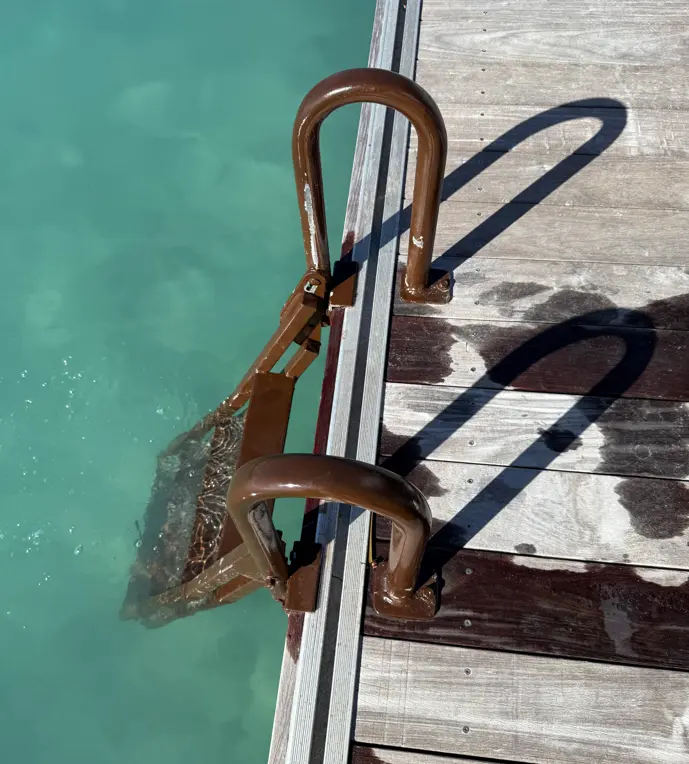
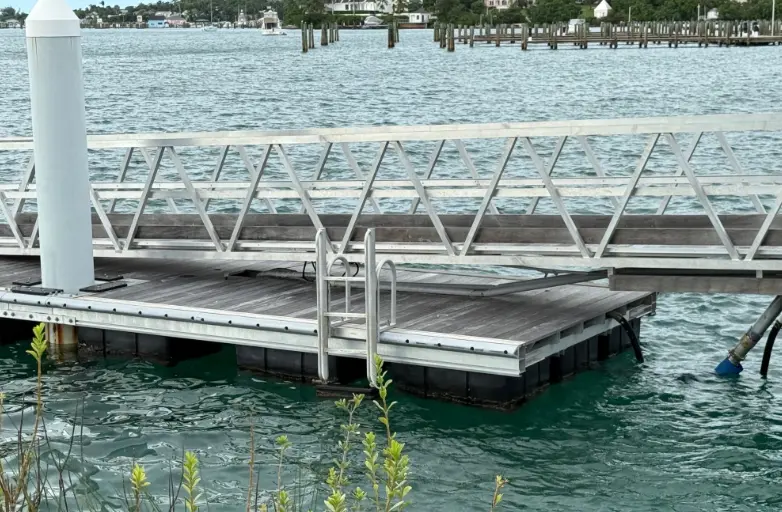
Dock ladders are not just simple accessories; they are vital safety components and key access points for marinas, ports, and private docks. The right choice is critical and depends entirely on the ladder’s primary purpose, the materials used, the installation angle, and strict adherence to safety standards. A well-designed aluminum ladder ensures maximum comfort for swimmers while providing life-saving access in an emergency.
Two Categories, Two Missions
1. Safety Dock Ladders (Emergency Rescue)
Safety ladders are permanent fixtures designed to allow self-rescue if someone accidentally falls into the water. These are mandatory in most marinas and port facilities and must remain ready for immediate use at all times—meaning no folding, pins, or manual deployment is acceptable.
Key Features
- Always accessible and reaches below the lowest water level (at least 22 in / 560 mm underwater per ABYC H-41 and related codes).
- High-visibility finish (bright yellow or orange).
- Co-located with life rings and safety signage.
Material Selection
For any ladder that is permanently submerged, avoid standard 6000-series aluminum. Specify marine-grade 5000-series aluminum (5083/5086) or Stainless Steel 316 for the best corrosion resistance and strength in salt or brackish water. 5000-series alloys are trusted in the shipbuilding industry precisely for these properties.

2. Swim Dock Ladders (Recreational Access)
Swim ladders are designed for frequent, comfortable use. They are typically removable, retractable, or hinged to stay above the waterline, reducing corrosion and marine growth.
Selection Tips
- Use 6000-series aluminum for ladders that remain dry when stowed.
- Choose durable hinges and protected pinch points for long service life.
- Consider adding a nearby fixed rescue ladder for safety compliance.


Choosing the Right Specifications
Every aluminum dock ladder should be designed around practical specifications that match site conditions. The number of steps, angle, tread design, and installation depth all affect comfort and accessibility. A ladder that extends at least 22 inches below the lowest water level ensures consistent reach during low tide, while 10–12 inch rung spacing provides ergonomic climbing comfort. Steps should measure at least 4 inches in depth to offer secure footing, especially for children or fatigued swimmers.
- Proper step count and depth improve safety and usability.
- Rung spacing of 10–12 inches balances accessibility with structural strength.
Treads & Anti-Slip Options
- Use wide, ribbed, serrated, or perforated treads for traction without hearting bare foot.
- Recommended finishes:
- Anti-slip extruded 5000-series aluminum profiles
- Underwater non-skid treads with Marine-grade non-slip epoxy spray with durable textured coating
- Anti-slip extruded 5000-series aluminum profiles
Design Standards & Best-Practice Spacing
| Requirement | Specification | Purpose |
| Width | ≥ 16 in (406 mm) | Secure footing and hand clearance |
| Reach | Extends below lowest water level | Accessibility at low tide |
| Above-deck height | 24–30 in (0.6–0.76 m) | Safe handhold during entry/exit |
| Spacing between ladders | ≤ 164 ft (50 m) best practice; ≤ 400 ft (120 m) max | Rapid access to safety |
| Construction | Stainless 316 or marine aluminum 5000-series | Strength and durability |
| Visibility | High-contrast paint; co-locate life rings | Quick recognition and rescue |
Regional Guidelines
- ASCE / UFC (U.S. Navy): ≤120 m (400 ft) spacing
- California Code: ≤122 m (400 ft)
- ILO / PIANC: ≤50 m (164 ft)
- British Columbia: ≤30 m (100 ft)
Grounding & Bonding on Powered Docks
Electrical safety is a crucial consideration for any metal structure near water. Per NEC Articles 680 and 682.33, all conductive dock ladders must be bonded and grounded to prevent Electric Shock Drowning (ESD). This involves connecting all metal components with 6-AWG copper wire and maintaining continuity across hinged ladders using flexible bonding jumpers. Integrating the ladder into the main dock bonding grid eliminates voltage differentials, while optional voltage monitors can detect stray currents before they become dangerous. Even small voltages—around 1.5 V—can cause muscle paralysis, making grounding a life-saving necessity.
- Follow NEC 680/682 grounding codes to prevent Electric Shock Drowning.
- Use bonding jumpers and voltage monitors for maximum electrical safety.
Maintenance & Service Life
Regular maintenance ensures aluminum dock ladders stay functional for decades. Periodically rinse with fresh water to remove salt and marine debris, and inspect fasteners, welds, and treads for corrosion or looseness. Applying dielectric grease to stainless steel hardware and using isolation washers helps prevent galvanic corrosion between dissimilar metals. Refresh high-visibility paint and replace damaged signage to keep rescue ladders easy to spot. A proactive maintenance routine reduces risk and protects your investment.
- Routine cleaning and inspection extend ladder life and safety performance.
- Prevent galvanic corrosion using dielectric grease and isolation washers.
Build Complete “Safety Centers”
Create identifiable rescue zones along your dock:
- Fire extinguisher (NFPA 303, within 75 ft)
- Life ring with 90 ft floating line
- Safety ladder extending below the lowest waterline (every 150 ft or at land/dock junctions)
- Mark zones with bright colors, raised flags, and clear labels visible from both dock and water.
Materials That Make Sense
| Material | Recommended Use |
| Aluminum 6061-T6 / 6005A-T6 | Frames, removable swim ladders (above water) |
| Aluminum 5083 / 5086 (5000-series) | Permanently submerged rescue ladders |
| Stainless Steel 316 | Ultimate corrosion resistance for saltwater immersion |
Pair ladders with non-slip treads, isolation washers, and marine-grade fasteners for long-term performance.
Quick Specs Cheat Sheet
- Ladder spacing: ≤164 ft (50 m) best practice; ≤400 ft (122 m) per code
- Minimum width: ≥16 in (406 mm)
- Reach: below lowest water level
- Above-deck height: 24–30 in (0.6–0.76 m)
- Marking: high-contrast color at ladder zones
- Co-location: ladders + life rings together
- Grounding: bond all metal ladders (NEC 680/682)
- Treads: serrated, ribbed, or perforated anti-slip
Final Thoughts: Design for Safety, Build for Life
The best aluminum dock ladder is one that fits both its purpose and its environment. Rescue ladders should remain permanently deployed, built from 316 stainless steel or 5000-series aluminum for unmatched corrosion resistance. Swim ladders, on the other hand, can be angled or retractable, offering ergonomic comfort and protection from marine growth. Incorporating anti-slip treads, grounding systems, high-visibility markings, and proper spacing ensures long-term safety and performance.
MAADI Group designs and fabricates marine-grade aluminum ladders and gangways that meet or exceed CSA, OSHA, PIANC, NFPA, and NEC standards—delivering safety and reliability across every dock and marina environment.
- Select ladders based on function, material, and compliance.
- MAADI Group ensures every ladder meets top international standards.