




MAADI Group engineers and manufactures aluminum shore gangways for seagoing vessels in accordance with ISO 7061 and BS MA 78 (BSMA 78).
Built for demanding marine environments, our gangways serve cruise ships, ferries, cargo vessels, tankers, bulk carriers, container ships, workboats, shipyards and pilot operations. Each gangway can be engineered for vessel- and berth-specific requirements and is manufactured at MAADI Group’s Canadian facilities in our CSA W47.2 Division 1-certified aluminum welding shop.
Every unit is supplied with a Professional Engineer (P.Eng.) certificate and is proof-load tested to 1.25 times its specified design live load prior to delivery.
Every shore gangway is engineered to the berth it serves.
Versatile Aluminum Shore Gangways for Ship-to-Shore Access
A berthed vessel is never completely stationary. Tidal variation, vessel surge and sway, and changes in freeboard continuously affect the relative position between the vessel and the shore-side landing.
A properly engineered shore gangway accommodates these changing conditions through its working angle, landing geometry, shore-end rollers or wheels, and interface with the vessel and berth. Its configuration can be adapted to the vessel’s access point, bulwark height and the range of operating conditions expected at the berth.
The objective is straightforward: maintain a safe and practical means of access between ship and shore as their relative positions change.
Type A and Type B Aluminum Gangway Configurations
Type A — up to 30°
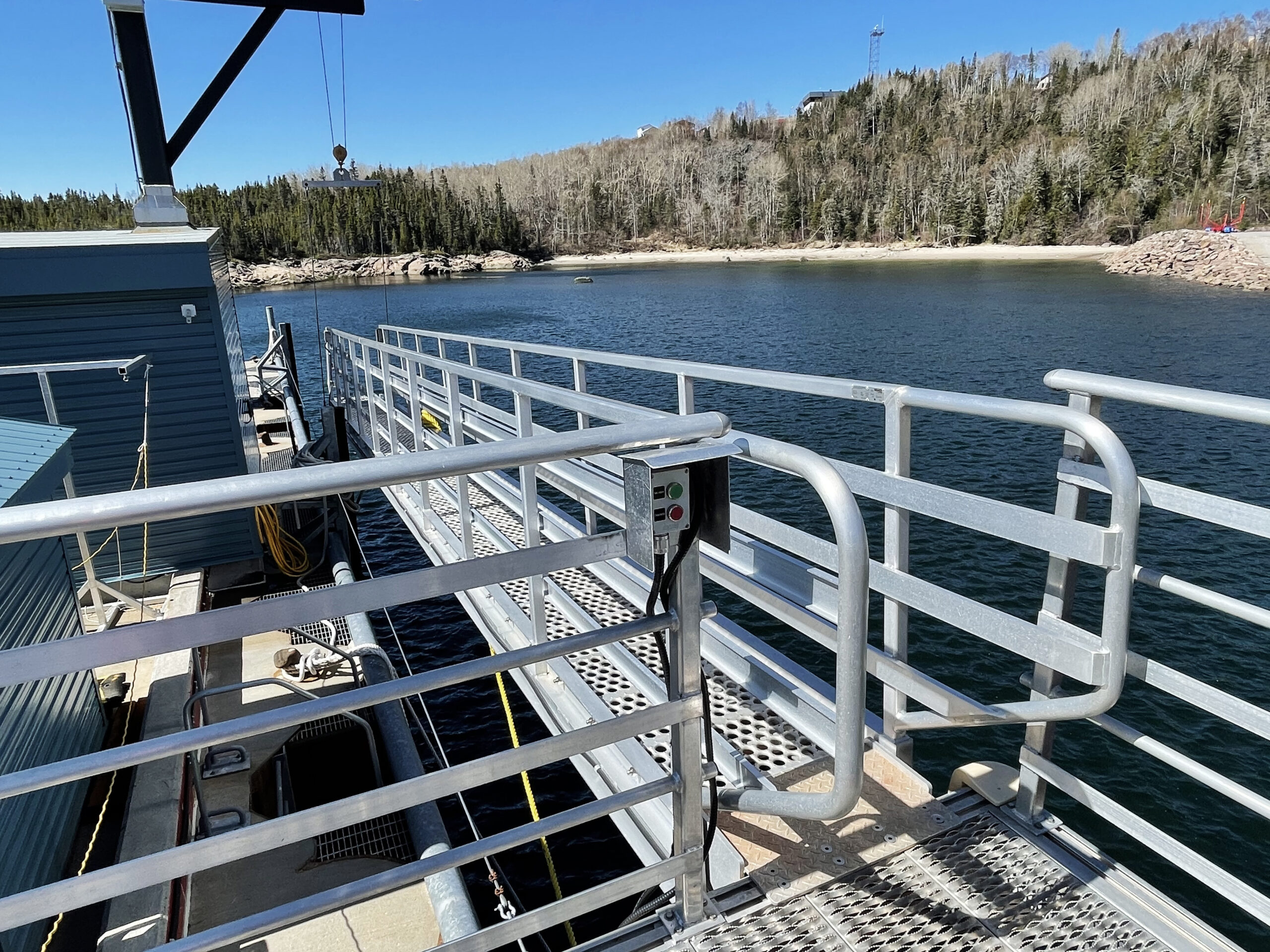
Type A features a continuous decking plate with anti-slip steps and is designed for working angles up to 30 degrees from horizontal.
Type B — up to 55°
Type B uses integrated anti-slip steps and can accommodate working angles up to 55 degrees from horizontal, providing a solution where vessel freeboard, quay elevation and tidal variation result in steeper access conditions.
The configuration follows the berth, not preference. Quay elevation, vessel freeboard, tidal range and the resulting operating angle determine the appropriate gangway arrangement.
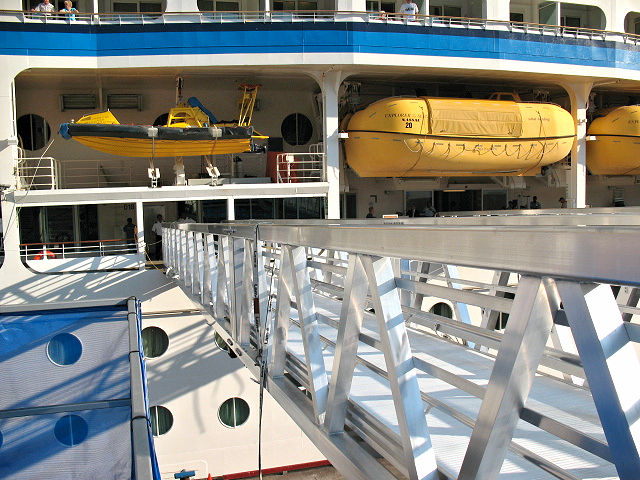
Terminals, Ferries and Cruise Ship Berths
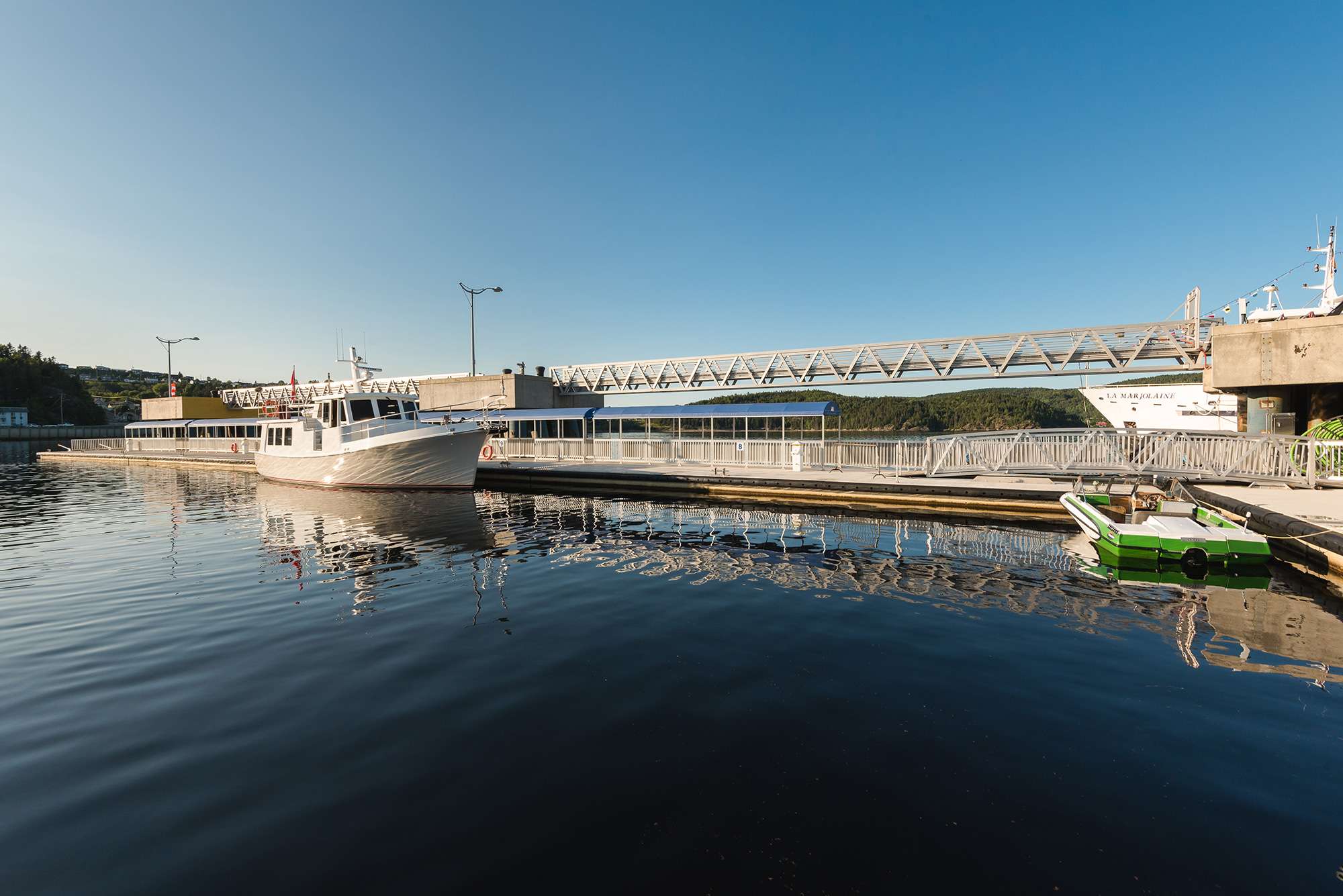
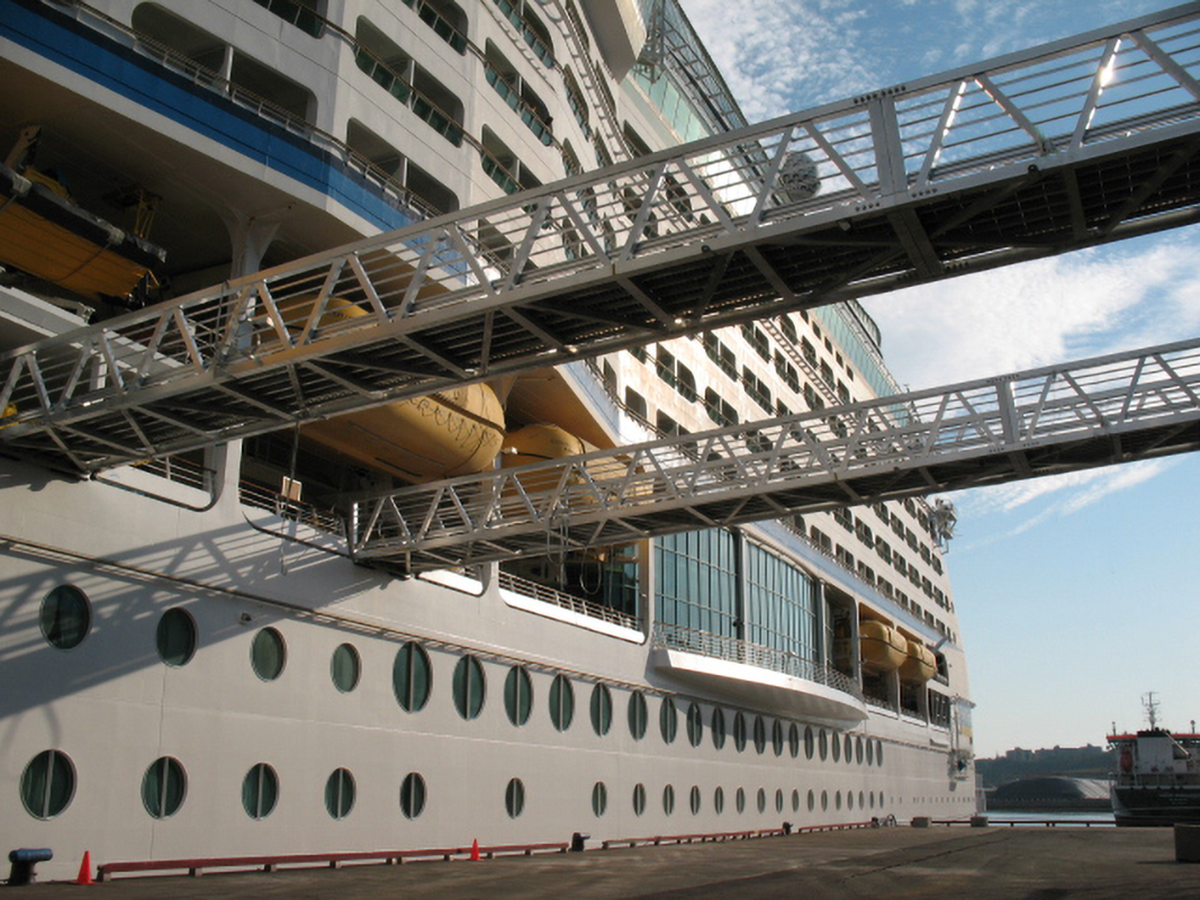
Passenger terminals and cruise ship berths can accommodate high volumes of foot traffic and vessels with significantly different freeboards. Gangway configuration must therefore account for passenger flow, vessel access points, berth geometry and the operating freeboard range. Where wheelchair accessibility is required, adjustable-step gangways with locking mechanisms can transition to a flat walking surface, allowing the access system to accommodate different users and operating conditions.
Ferry terminals add another constraint: frequent vessel movements and short turnaround times, requiring gangway arrangements that can be efficiently repositioned between arrivals and departures.
Cargo vessels, tankers, bulk carriers and container ships typically use shore gangways primarily for crew and authorized personnel access, with the required length and working angle determined by the vessel and berth interface.
Shipyards and repair facilities present an even broader range of conditions. Different vessel types, freeboards and access points may need to be accommodated at the same quay, while shipyard personnel and contractors may rely on the access system continuously throughout extended construction, repair or vessel-completion periods. In these applications, the gangway is more than a temporary boarding device: the access system should be engineered around the shipyard’s operations, vessel interface and expected duration of use.
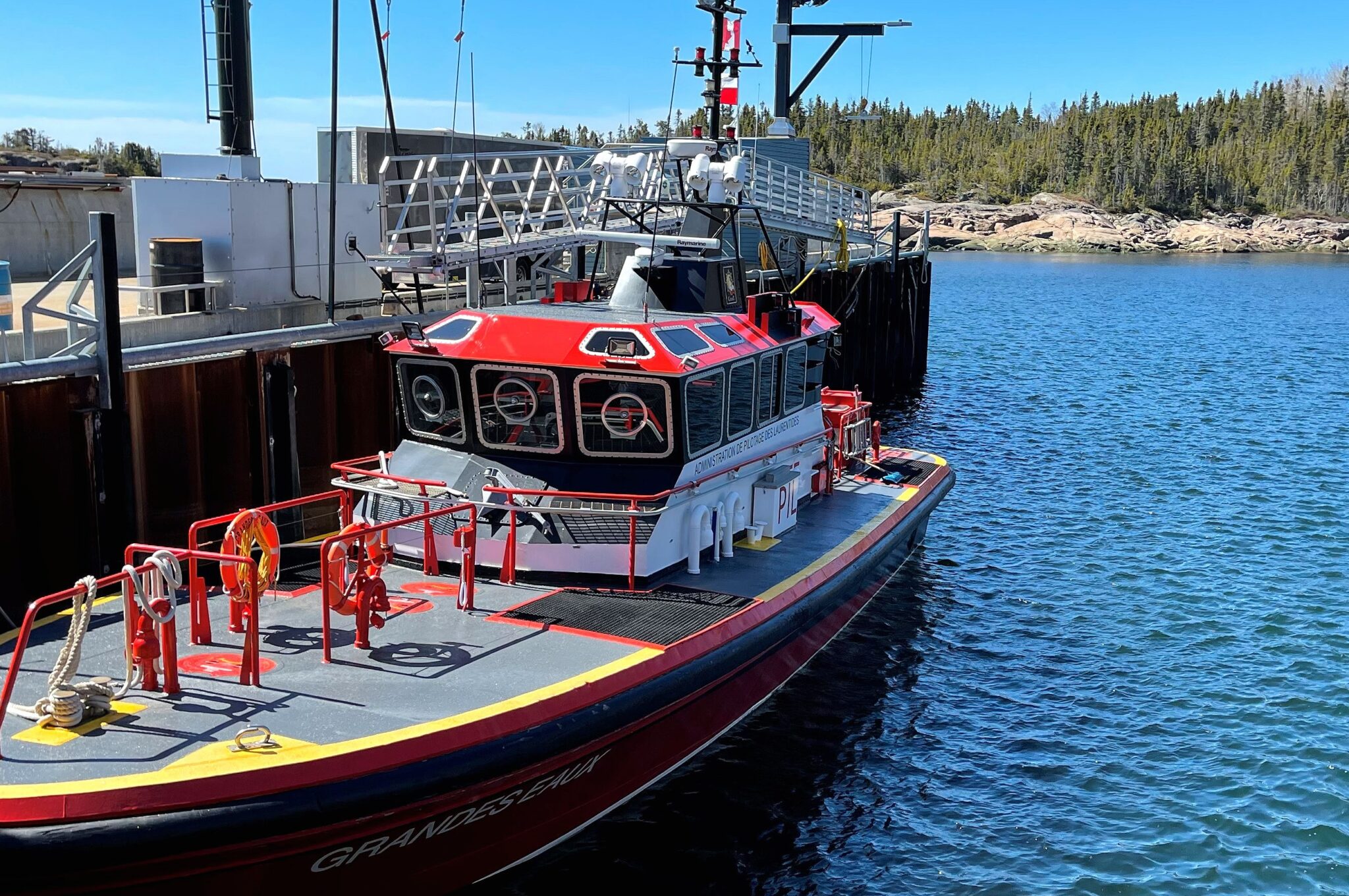
Aluminum Pilot Gangways
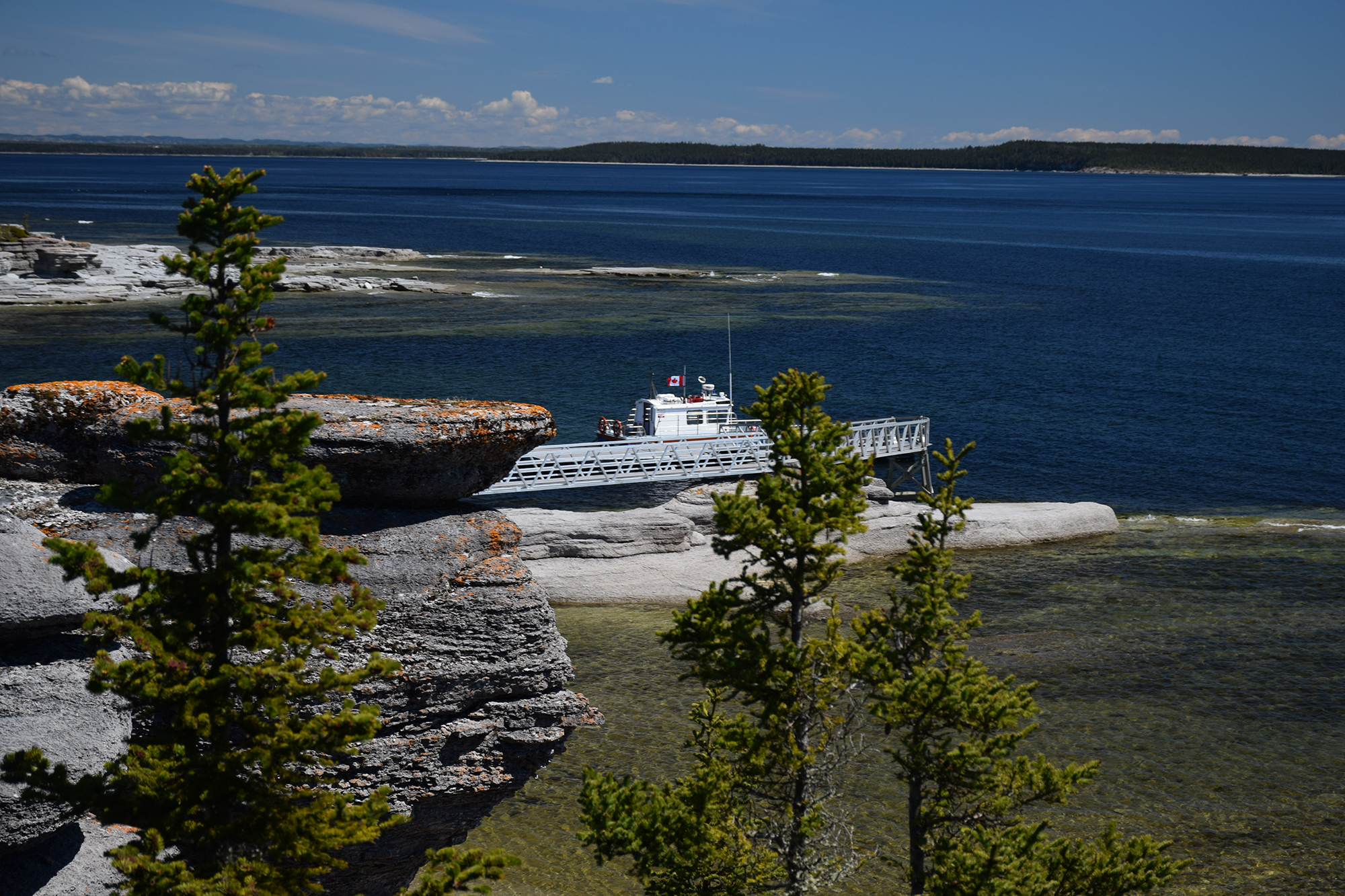
Pilot operations present a distinct access challenge. Transfers are frequent and operationally time-sensitive, requiring a gangway that provides safe, efficient and repeatable access for pilots and marine personnel.
MAADI engineers pilot gangways in marine-grade aluminum, with the configuration, length and working angle adapted to the pilot station, landing arrangement and vessels being served. Where applicable, the gangway can be engineered in accordance with ISO 7061 requirements for aluminum shore gangways.
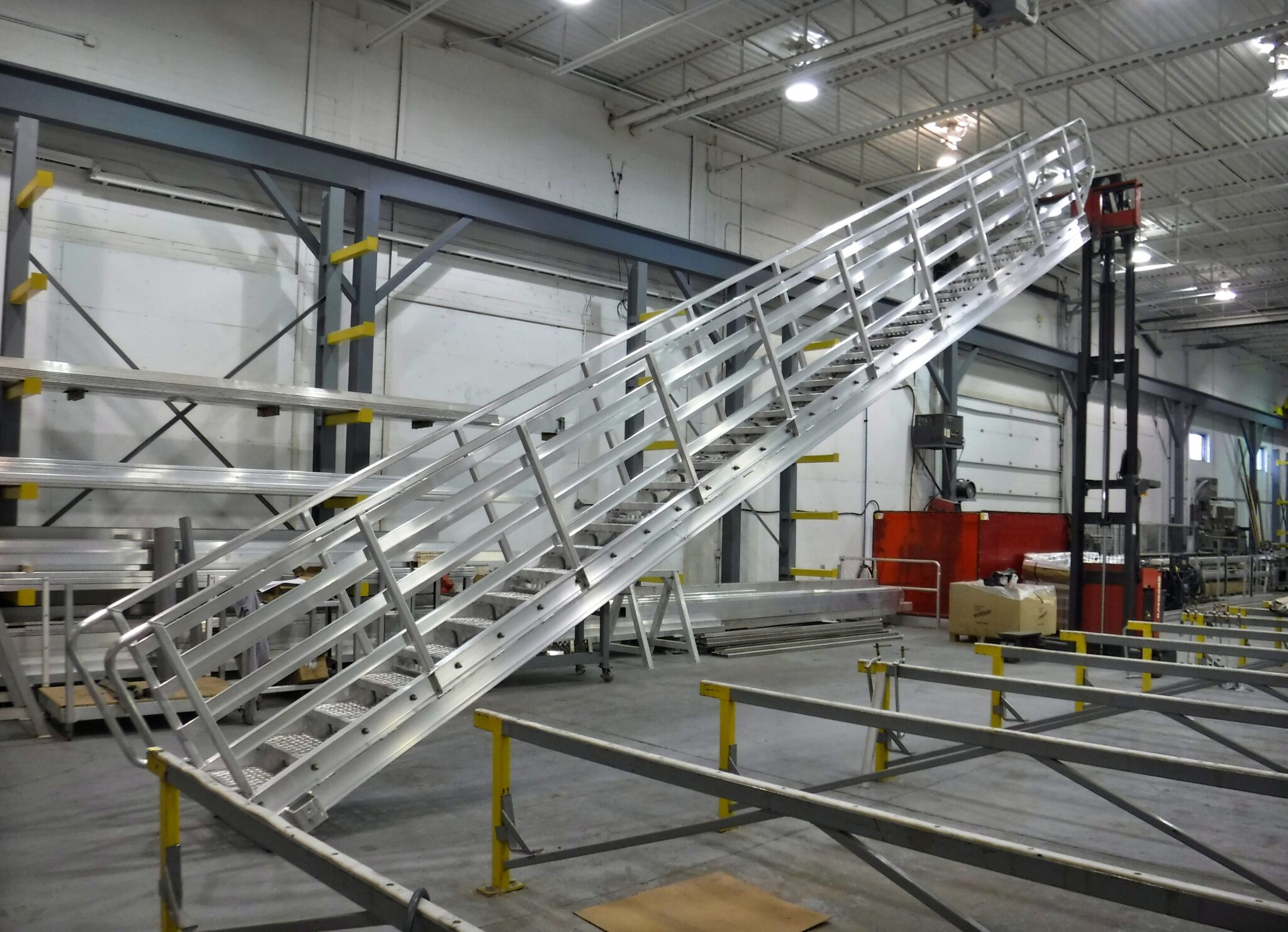
Engineering and Certified Aluminum Welding
MAADI integrates structural analysis, custom aluminum extrusions, CNC fabrication, Welding Procedure Specifications (WPS) for aluminum, and semi-automated welding within its Canadian engineering and manufacturing operations.
Engineering and fabrication are performed to applicable CSA, AWS—including AWS D1.2 for structural aluminum—and Eurocode requirements, with aluminum welding carried out in MAADI’s CSA W47.2 Division 1-certified facility. This integrated approach maintains engineering intent from structural analysis and detailing through fabrication, welding and final inspection.
MAADI has engineered aluminum structures since 2005 and holds seven patents, including six protecting the MakeABridge® system. Our structures are used in ports, terminals and shipyards across more than 30 countries.
One engineering and manufacturing team carries the structure from stress analysis to the finished weld.
Tailored Shore Gangway Design
Shore access requirements vary with vessel freeboard, berth geometry, tidal range, operating envelope and traffic patterns. MAADI can integrate the gangway with mobile platforms, traveling trolleys or rotating systems to accommodate the specific vessel-to-berth interface.
With Mobile Platforms
Aluminum Shore Gangway with Mobile Platforms for Seagoing Vessels

With Traveling Trolley
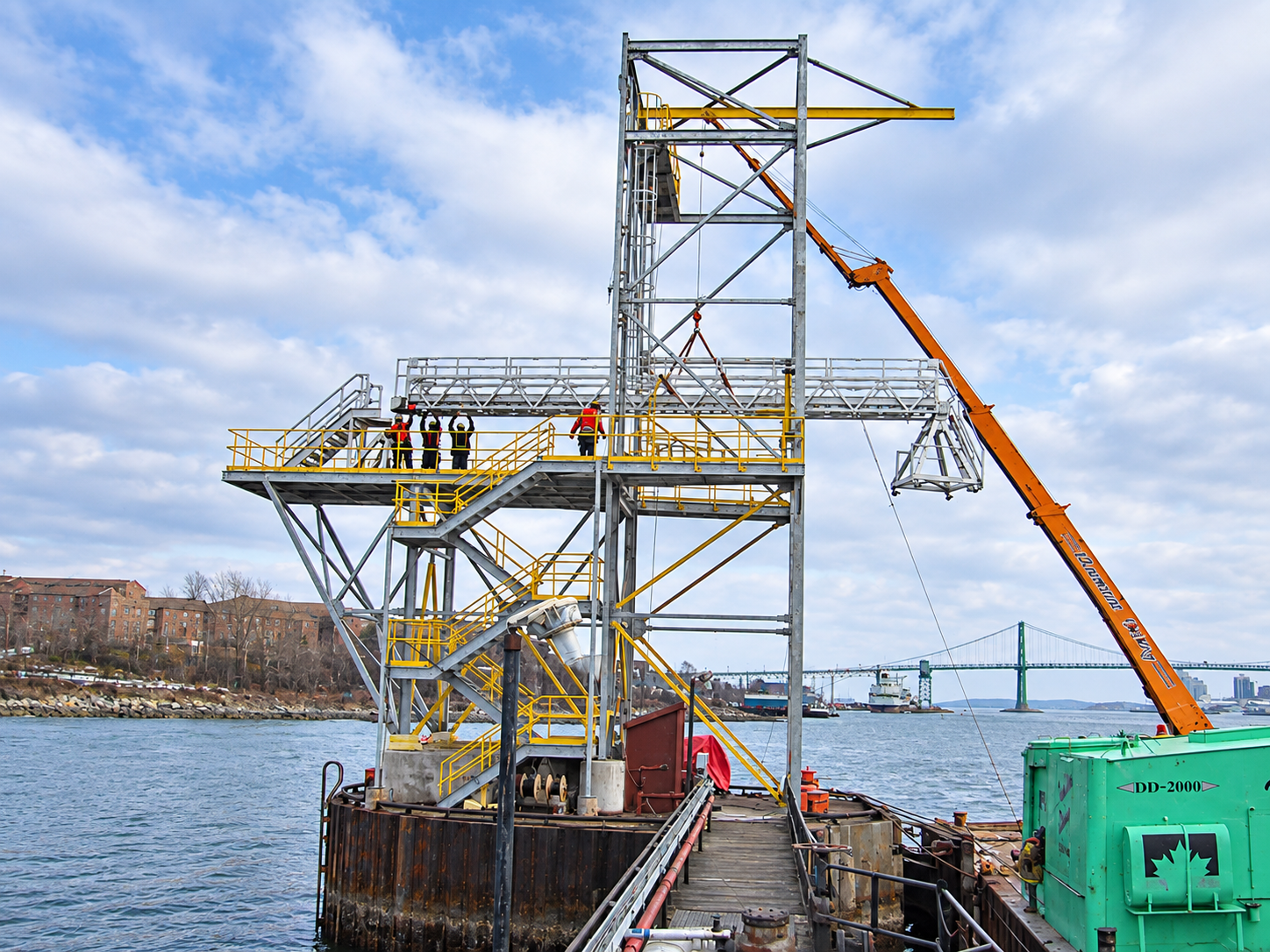
Tower Aluminum Gangway System with Trolley for Ship Access

With Turntable
Aluminum Ladder Gangway with Turning Table ISO 7061
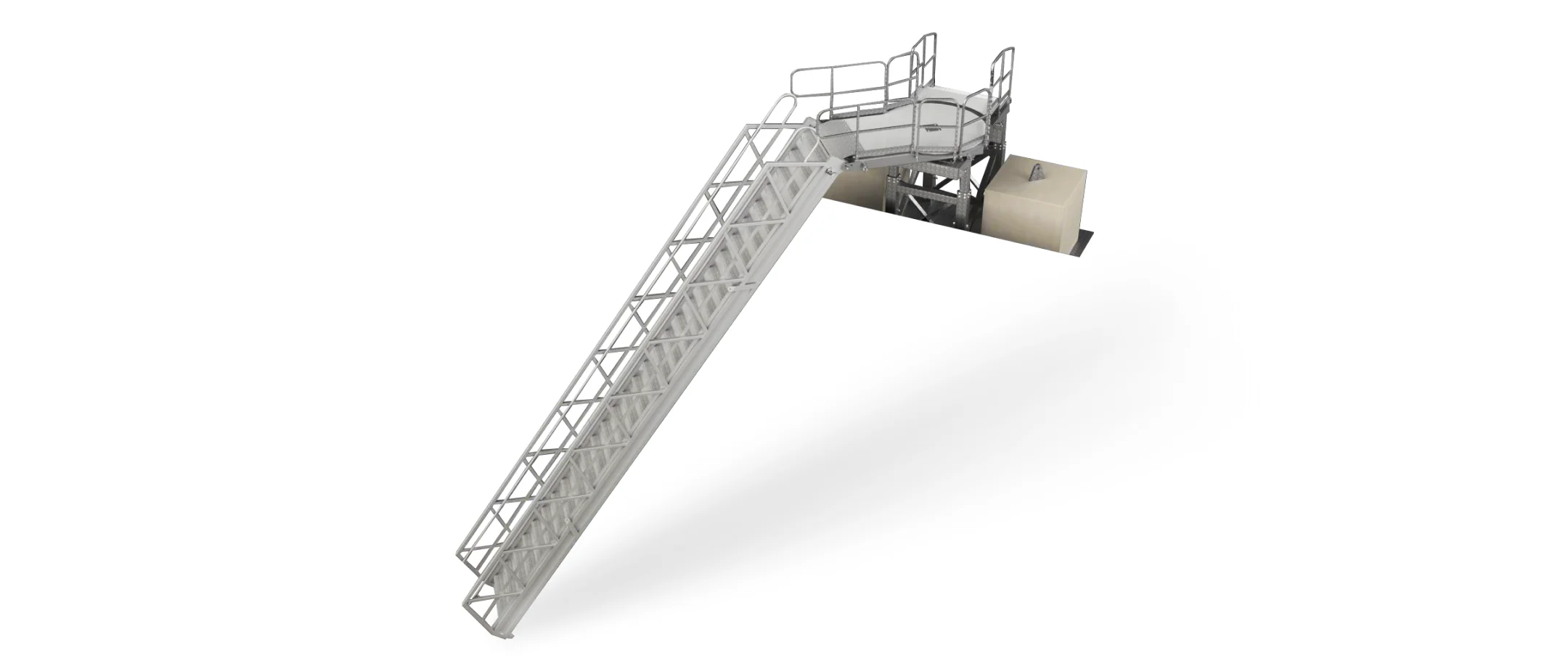
With Tripod and Trolley
One access system, engineered around the realities of your port operations.
Offshore Temporary Access Bridges
When standard shore-access geometry ends, the access structure becomes a project-specific engineering solution.
Aluminum Shore Gangway with Mobile Platforms for Seagoing Vessels
A vertically adjustable access platform allows the gangway landing elevation to be repositioned to accommodate vessels with different freeboards and bulwark heights. This provides greater operational flexibility at berths serving multiple vessel types without designing the access system around a single vessel class.
Tower Aluminum Gangway System with Trolley for Ship Access
A traveling trolley system allows the gangway to accommodate vessel movement without requiring the vessel-side landing point to be repeatedly repositioned as environmental and operational conditions change. This configuration is particularly suited to shipyards and terminals where vessel access must remain available for extended periods.
The complete access system can be engineered to accommodate the vessel’s six degrees of freedom—surge, sway, heave, roll, pitch and yaw—as wind, waves, tides and loading conditions change. Properly designed traveling, rotating and articulated interfaces allow these relative movements to occur without imposing unintended loads on the gangway or its supporting structure, reducing structural demands while maintaining safe ship-to-shore access.
Aluminum Ladder Gangway with Turning Table ISO 7061
A cantilevered turntable landing system allows the upper end of the gangway to pivot horizontally and vertically, accommodating changes in vessel position and landing geometry as operating conditions vary. This provides flexibility where the vessel-to-berth interface changes with tides, loading conditions and vessel movements.
The gangway itself can be engineered in accordance with ISO 7061, while the supporting turntable, pivot structure and interfaces are engineered for the loads, movements and operating conditions of the complete access system.
The turntable assembly is installed at the main deck level and incorporates a gravity counterweight specifically engineered to balance the gangway system throughout its intended operating range. The supporting structure, pivot mechanism and counterweight are designed as an integrated system for the applicable dead, live and operational loads.
The gangway configuration follows the vessel, the berth and the operation—not the other way around.
With Tripod and Trolley
MAADI can engineer custom tripod-and-trolley gangway systems around the specific operational requirements of port authorities, terminal operators and the vessels they serve. These systems provide safe and efficient ship-to-shore access for vessel crews, port personnel, government and customs officials, maintenance teams, contractors and other authorized personnel.
The tripod, trolley and gangway arrangement can be engineered to accommodate variations in tide, vessel freeboard, vessel type, berth geometry, mooring-line arrangements and designated vessel access points. The objective is to maintain practical access as the vessel-to-berth interface changes during operations.
Rather than adapting port operations to a standard gangway, the complete tripod-and-trolley system is custom engineered around the berth, the vessels and the operator’s access requirements.
One access system, engineered around the realities of your port operations.
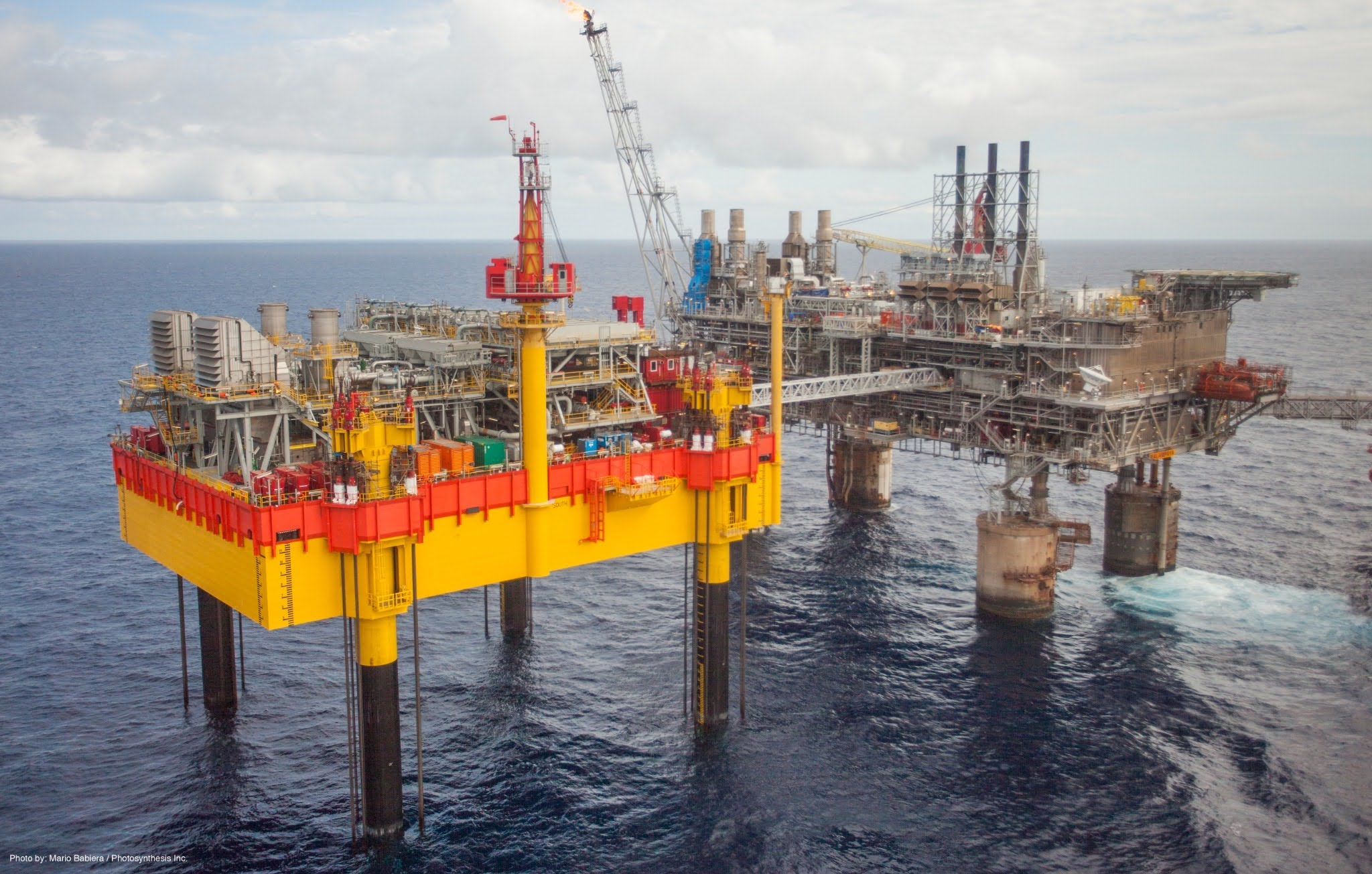
Offshore Temporary Access Bridges
Beyond conventional ship-to-shore gangways, MAADI engineers custom aluminum temporary access bridges for offshore applications, including connections between fixed offshore structures where weight, installation, lifting and marine environmental conditions govern the design.
For the Malampaya Phase 3 offshore project, MAADI supplied a temporary aluminum bridge connecting the Depletion Compression Platform to the existing Shallow Water Platform. The system was engineered for the project-specific structural, fabrication, lifting, installation and offshore operating requirements.
These applications are engineered as project-specific offshore structures rather than ISO 7061 shore gangways, with the applicable design codes, loads, interfaces and installation requirements established for each project.
When standard shore-access geometry ends, the access structure becomes a project-specific engineering solution.
Get Your Shore Gangway Engineered to Your Berth
Send us your berth geometry, vessel access points, freeboard range and operating conditions. MAADI will develop a shore gangway configuration tailored to the vessel-to-berth interface, including the required gangway length, working-angle range and access arrangement.
Each completed gangway is supplied with a Professional Engineer (P.Eng.) certificate.
Request a QuoteShore Gangway Specifications and Load Design
Each shore gangway is engineered to the vessel-to-berth interface and its intended operating envelope. The following parameters define the basis of design:
Standards
Engineered in accordance with ISO 7061 and BS MA 78, as applicable, including requirements governing gangway geometry, clear width, decking or steps, handrails, stanchions and safety features.
Working angle
Type A — up to 30° from horizontal. Type B — up to 55° from horizontal, using an integrated stepped configuration for steeper access conditions.
Nominal length
Engineered to suit the berth geometry, vessel access point, freeboard range and required operating angles, from compact pilot access to long-span terminal applications.
Design load
Gangway structure designed for a uniformly distributed load of 4.0 kN/m² (approximately 84 psf). For Type B gangways, ISO 7061 additionally specifies a 735 N load on each step.
Structural safety factor
A minimum factor of safety of 2, based on the 0.2% proof stress of the aluminum alloy, in accordance with ISO 7061.
Proof-load testing
Each MAADI gangway is proof-load tested to 1.25 times its specified design live load prior to delivery.
Certification
Each completed gangway is supplied with a Professional Engineer (P.Eng.) certificate.
Custom configurations
Engineered access systems can incorporate mobile platforms, traveling trolleys, tripods and turntable assemblies to accommodate vessel, berth and operational requirements.
Expertise You Can Count On for Shore Gangways
Speedy turnaround
In-house engineering, detailing and fabrication reduce the handoffs that can extend marine access projects. Design decisions can move directly from structural analysis and drawings to fabrication, welding and final inspection within the same organization.
Experienced engineers
MAADI has engineered aluminum structures since 2005, with projects delivered in more than 30 countries. Each shore gangway is engineered for its specific vessel-to-berth interface and supplied with a Professional Engineer (P.Eng.) certificate.
Built to code
Shore gangways are engineered in accordance with ISO 7061 and BS MA 78, as applicable, while structural design, fabrication and aluminum welding follow the applicable CSA, ADM, AWS and Eurocode requirements.
Guaranteed quality
Backed by 15-year limited warranty on aluminum against material failure, defects, and corrosion
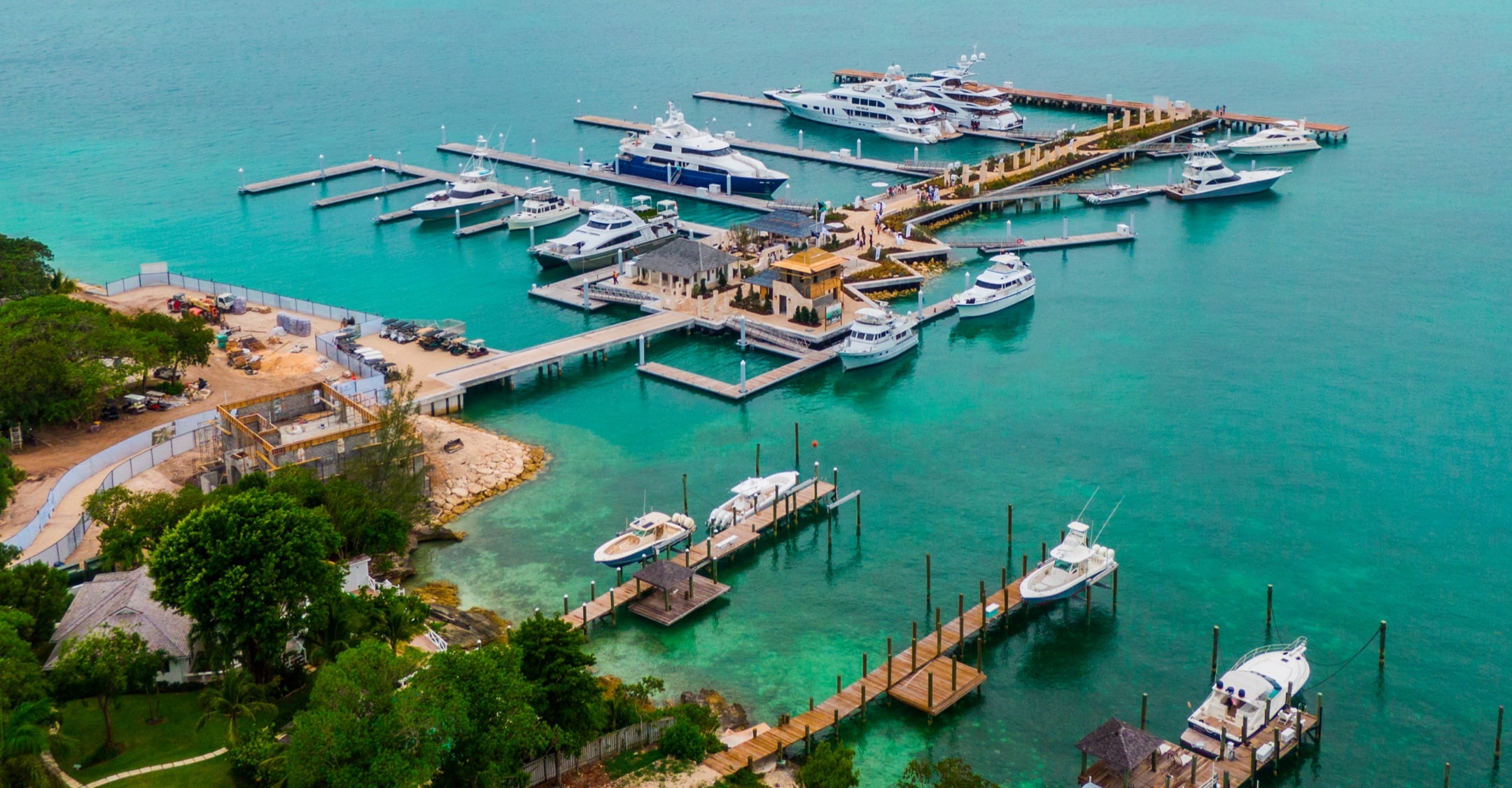
Marine Constructions
We’re your partner for a job well done, no matter how much (or how little) of our expertise you need. Our services include full engineering, technical support and manufacturing, planning, and installation.
See our Services
Documentation
Want more details? Download our technical information about our products. And feel free to contact us with any questions!





Other Products
See all

Where a Shore Gangway Fits Among Our Other Access Structures
MAADI engineers several types of aluminum waterfront access structures, each designed for a different interface, operating condition and code environment.
Shore Gangway vs. Marine Gangway
A shore gangway provides access between the shore and a seagoing vessel and is engineered in accordance with ISO 7061 and BS MA 78, as applicable.
A marine aluminum gangway typically provides access to a floating or fixed dock, marina, pier or waterfront structure. Depending on the application, it can be engineered to applicable structural, pedestrian and accessibility requirements.
The distinction is fundamental: different interfaces, different operating conditions and different design requirements.
When an Aluminum Gangway Kit Is the Right Solution
Aluminum gangway kits are assembled from MakeABridge® modular components without field welding, providing an efficient solution for waterfront access where a standardized modular configuration meets the project requirements.
A shore gangway serves a different purpose. It is engineered around the vessel-to-berth interface, including vessel freeboard, berth geometry, tidal range, working angles and the intended boarding conditions.
Frequently Asked Questions About Aluminum Shore Gangways
What Does ISO 7061 Cover?
ISO 7061 specifies requirements for aluminum shore gangways for seagoing vessels, primarily for safe ship-to-shore access. It addresses gangway types, dimensions, materials, design loading, safety factors, decking and steps, stanchions, handrails, securing arrangements, acceptance testing and marking.
What Is the Difference Between Type A and Type B?
Type A uses a continuous decking surface with anti-slip steps and is designed for working angles up to 30° from horizontal. Type B uses an integrated stepped configuration and can accommodate working angles up to 55° from horizontal, making it suitable for steeper vessel-to-berth access conditions.
How Is the Gangway Load Tested?
ISO 7061 specifies a 4.0 kN/m² uniformly distributed design load and a structural safety factor of 2 based on the 0.2% proof stress of the aluminum alloy. MAADI additionally proof-load tests each gangway to 1.25 times its specified design live load before delivery and supplies a Professional Engineer (P.Eng.) certificate.
Can One Gangway Serve Vessels with Different Freeboards?
Yes. Mobile platforms, traveling trolley systems and other custom access arrangements can be engineered to accommodate a defined range of vessel freeboards and landing elevations. The appropriate solution depends on the berth geometry, tidal range, vessel types and required operating envelope.
Why Aluminum Rather Than Steel?
Marine-grade aluminum combines low structural weight with inherent corrosion resistance, eliminating the need for galvanizing and generally avoiding the protective coating systems required for carbon steel. Its lower weight can also simplify handling, repositioning and support requirements—important advantages for marine access structures.
Do You Engineer the Gangway to a Specific Berth?
Yes. MAADI evaluates the quay elevation, tidal range, vessel freeboard, access point, berth geometry, operating angles and traffic requirements to establish the gangway configuration and operating envelope. Where required, the system can incorporate a mobile platform, traveling trolley, turntable or other custom interface.
Start Your Shore Gangway Project
Send us your quay elevation, tidal range, vessel freeboard and access requirements. MAADI will develop a shore gangway configuration engineered to your vessel-to-berth interface.
Each completed gangway is supplied with a Professional Engineer (P.Eng.) certificate.
Request a Quote

