


Integrated engineering, design, fabrication, and installation support for marine structures and waterfront access systems.
MAADI Group specializes in engineering marinas, floating docks, aluminum gangways, wave attenuators, and ferry landing systems. Our integrated approach combines structural analysis, professional engineering, precision fabrication, and technical support throughout installation.
Engineering drawings are reviewed and sealed by qualified Professional Engineers in accordance with applicable project and jurisdictional requirements.
Get a Quote for Your Waterfront Project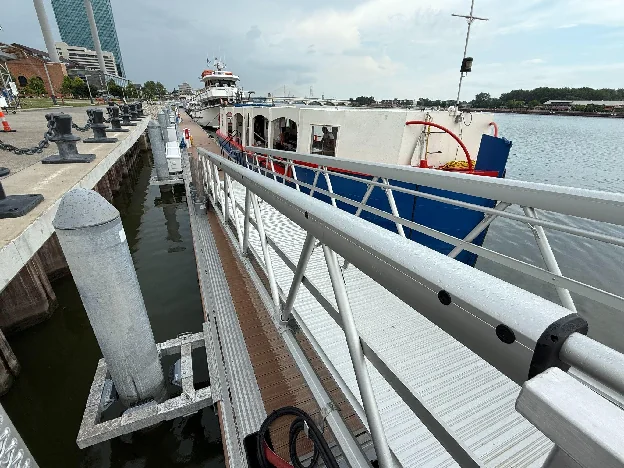
Our Waterfront Engineering Services
Since 2005, MAADI Group has specialized in the engineering, design, and fabrication of high-performance aluminum marine structures and waterfront access systems. Our integrated team of Professional Engineers, designers, and fabrication specialists addresses structural loads, vessel operations, environmental exposure, corrosion resistance, and long-term serviceability, from initial concept development through fabrication and installation support.
Our expertise encompasses marina infrastructure, floating docks, marine gangways, wave attenuators, ferry landings, and pedestrian bridges. Explore our aluminum dock engineering and solutions or discover our specialized waterfront engineering services below.
Marina Engineering and Layout Design
MAADI Group develops marina layouts based on basin geometry, vessel dimensions and berthing requirements, water depths, tidal fluctuations, prevailing winds, waves, and operational constraints.
Our engineering team integrates floating docks, gangways, wave attenuators, mooring systems, fenders, and vessel access infrastructure into coordinated marina designs. Engineering considerations include berthing loads, vessel maneuverability, structural stability, anchoring requirements, and long-term maintenance, with technical support for permitting and regulatory coordination as required.
Explore our custom aluminum marina systems.
Floating Dock Engineering, Design, and Sizing
Our engineers design floating dock systems to meet project-specific requirements for buoyancy, stability, freeboard, structural capacity, and environmental loading. Engineering evaluations consider dead and live loads, vessel mooring forces, wind, waves, water-level variations, and anchoring conditions.
MAADI Group offers three engineered floating dock systems: Lakeshore™ for smaller recreational applications, Great Lakes™ for yacht marinas, and Tri-Ocean™ for superyacht facilities and heavy-duty commercial berths.
Each system can be configured with appropriate flotation, structural connections, pile guides, and mooring hardware to accommodate the site's operational and environmental conditions.
Discover our engineered aluminum floating docks.
Marine Gangway Engineering and Waterfront Access
MAADI Group engineers and fabricates marine aluminum gangways for safe, reliable access between fixed shore structures, floating docks, and vessels.
Our gangway designs account for span, pedestrian live loads, operating slope, tidal range, water-level fluctuations, structural deflection, and connection movements. Where accessible routes are required, gangway configurations are evaluated against applicable accessibility standards, including ADA requirements and relevant exceptions.
For commercial vessels, cruise terminals, and shipyards, our aluminum shore gangways are engineered for project-specific vessel interfaces, operating angles, load capacities, and applicable marine standards. Proof-load testing and professional engineering certification are provided where specified or required.
Floating Wave Attenuator Engineering
MAADI Group engineers floating wave attenuators to reduce wave transmission within marinas and sheltered waterfront facilities while accommodating site-specific environmental and operational requirements.
Our engineering approach evaluates incident wave conditions, significant wave height, wave period, fetch, water depth, structural loading, and anchoring forces. Attenuator geometry, flotation, and structural connections are selected to achieve the required wave attenuation performance.
Depending on the configuration, floating wave attenuators can also incorporate vessel berthing facilities, mooring hardware, and pile-guided anchoring systems, providing a multifunctional waterfront infrastructure solution.
Ferry Landing Engineering and Passenger Transfer Systems
MAADI Group designs and fabricates aluminum ferry landing systems that accommodate vessel movements, passenger boarding requirements, and changing water levels.
Each project begins with an evaluation of vessel geometry, berth configuration, passenger flow, tidal range, operating elevations, and accessibility requirements. Our engineers develop the vessel-to-shore interface, including gangways, landing platforms, structural connections, and transition details.
Engineering and fabrication are coordinated with installation requirements, with technical supervision and final inspection support provided according to the project scope.
Waterfront Pedestrian Bridges and Walkways
MAADI Group engineers custom aluminum pedestrian bridges for waterfront promenades, marina access, shoreline trails, and pedestrian crossings over waterways.
Our bridge engineering considers span requirements, pedestrian and maintenance loads, structural deflection, vibration, wind exposure, corrosion resistance, and site-specific foundation interfaces.
Available in seven structural configurations, our aluminum pedestrian bridges can accommodate spans up to 160 ft (48.8 m), subject to project-specific engineering requirements. Guardrails, deck surfaces, and structural components are designed in accordance with applicable Canadian and U.S. bridge design standards and accessibility requirements.
Marine Structural Engineering: Our 5-Step Process
MAADI Group provides an integrated approach to waterfront engineering, from initial site assessment and structural load analysis to detailed design, Canadian fabrication, and installation support. Our engineers, designers, and fabrication specialists work together to develop marine structures tailored to site conditions, vessel operations, and applicable engineering standards.
Explore our engineering, design, and fabrication services to learn more about our technical capabilities.
1. Waterfront Site Assessment and Project Requirements
2. Environmental, Berthing, and Mooring Load Analysis
3. Structural Design, Engineering Drawings, and Professional Certification
4. Precision Aluminum Fabrication in Canada
5. Installation Support, Technical Supervision, and Final Inspection
Every project begins with a review of the waterfront site, intended operations, and performance requirements. We evaluate available information, including bathymetric surveys, water depths, tidal and seasonal water-level variations, vessel dimensions, berthing configurations, environmental exposure, and project schedules.
This initial assessment establishes the design basis, identifies technical constraints, and supports feasibility evaluation, preliminary engineering, and project quotation.
Our engineers evaluate project-specific environmental and operational loads, including wind, waves, currents, ice where applicable, vessel berthing forces, and mooring loads.
For pile-supported and pile-guided floating structures, engineering assessments may include pile reactions, lateral resistance, soil-structure interaction, and load transfer through pile guides and structural connections. Appropriate analytical methods, including the Broms method for preliminary lateral pile capacity assessment where applicable, are selected based on site conditions and available geotechnical information.
These evaluations establish the structural design loads and performance criteria for the proposed marine infrastructure.
Our engineering team develops structural calculations, 2D and 3D models, floating dock configurations, marina layouts, connection details, and fabrication drawings.
Design verification addresses structural strength, stability, serviceability, buoyancy, deflection, fatigue where applicable, and compliance with relevant Canadian, U.S., or international engineering standards.
Engineering documents requiring professional authentication are reviewed and sealed by qualified Professional Engineers authorized in the applicable jurisdiction. Welding procedures and fabrication requirements are established in accordance with relevant aluminum welding standards.
MAADI Group fabricates engineered aluminum marine structures in two Canadian facilities totaling approximately 44,000 sq. ft. (4,090 m²).
Our fabrication processes incorporate material traceability, dimensional inspections, controlled manufacturing procedures, and quality assurance measures appropriate to project specifications.
Aluminum welding is performed using qualified procedures and personnel in accordance with applicable welding standards, supporting consistent fabrication quality and structural performance.
MAADI Group coordinates installation requirements with owners, general contractors, and specialized marine installation teams.
Depending on the project scope, our involvement may include installation drawings, assembly instructions, technical assistance, construction coordination, and on-site supervision.
Engineering inspections and verification of critical structural interfaces can also be provided where required to confirm conformity with approved drawings and project specifications.
From waterfront site assessment to fabrication and installation, MAADI Group delivers engineered marine infrastructure designed for site-specific performance, durability, and long-term serviceability.
Plan Your Waterfront Project with Our Engineers
Share your project requirements, site conditions, vessel specifications, and available waterfront data. Our engineering team will assess your needs, identify suitable marine infrastructure solutions, and prepare a project-specific quotation.
Request a Quote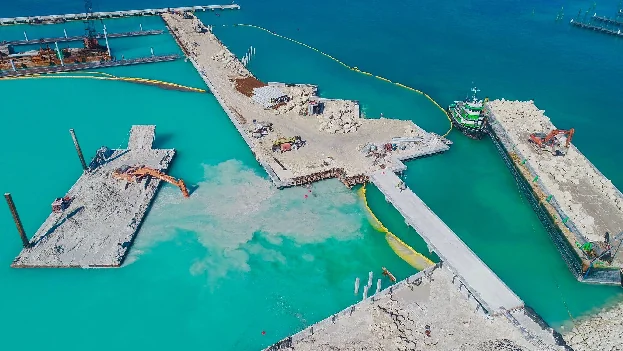
Featured Project: Briland Club Marina – Harbour Island, Bahamas. MAADI Group's Tri Ocean aluminum floating dock system, engineered for a luxury marina accommodating vessels up to 200 ft (61 m).
Codes and Standards for Waterfront Engineering
MAADI Group engineers waterfront and marine structures in accordance with applicable Canadian, U.S., and international standards. Depending on project requirements, our engineering may incorporate ASCE/SEI 7-22 for structural and environmental loads; AS 3962:2020 and ASCE Manual of Practice No. 50 for marina and floating dock design; CSA S157, the Aluminum Design Manual (ADM), and AS/NZS 1664.1 for aluminum structures; and CSA S6:2025 and AASHTO LRFD (2024) for pedestrian bridges.
Marine gangways and vessel access systems are engineered with reference to ISO 7061:2024 and IMO MSC.1/Circ.1331/Rev.1 (2025), with applicable ADA accessibility requirements considered for pedestrian access. Aluminum welding and fabrication follow applicable CSA W47.2 and CSA W59.2:2024 standards.
Our engineering assessments address site-specific wind, hurricane, wave, ice, berthing and mooring loads, tidal variations, corrosion resistance, and structural durability. Applicable codes and editions are determined by project jurisdiction and requirements, with engineering documents sealed by appropriately licensed Professional Engineers where required.
Waterfront Engineering for Developers, Municipalities, and Ports
MAADI Group provides engineered aluminum marine infrastructure for marina developers, yacht clubs, municipalities, port authorities, harbor operators, and ferry terminals. Approximately 65% of our clients are engineering firms, reflecting our expertise in collaborating with civil, coastal, and structural engineers on complex waterfront projects.
Our integrated engineering and fabrication team develops aluminum structures that interface with broader marine and civil infrastructure, providing structural design, precision fabrication, and installation support—from supply-only contracts to turnkey solutions, depending on project scope.
Waterfront Engineering Projects by MAADI Group
MAADI Group's engineered aluminum marine structures support waterfront infrastructure projects in more than 30 countries, from luxury marinas and passenger terminals to commercial ports and offshore facilities. Designed for site-specific loading conditions, durability, and long-term performance in freshwater and marine environments, our projects include:
- Old Port Cove Marina, Florida: Floating wave attenuators and finger docks providing 60 berths for vessels ranging from 60 to 200 ft (18.3–61 m), with steel pile anchoring.
- Briland Club Marina, Bahamas: Tri Ocean™ floating dock marina featuring 41 berths for yachts up to 200 ft (61 m), steel pile and H-beam anchoring, and a 40 ft (12.2 m) Glacier™ aluminum gangway.
- Port of Québec, Canada: 72 ft 2 in (22 m) aluminum cruise ship gangway engineered for passenger transfer between cruise vessels and shore facilities.
- Glass City Riverwalk, Ohio: Great Lakes™ and Tri Ocean™ floating dock systems accommodating two 64 ft (19.5 m) passenger vessels and emergency response boats under variable water-level conditions.
- Shell Malampaya Offshore Gas Project, Philippines: 152 ft (46.3 m) custom aluminum box-truss bridge engineered and fabricated by MAADI Group to connect offshore accommodation and production platforms in a demanding marine environment.
These international projects demonstrate MAADI Group's integrated engineering expertise, Canadian manufacturing capabilities, and ability to deliver high-performance aluminum marine structures across diverse environmental conditions and demanding operational requirements.
FAQ: Waterfront Engineering
What Does Waterfront Engineering Include?
Waterfront engineering encompasses the design and assessment of marine infrastructure, including marinas, floating docks, piers, wharves, gangways, ferry landings, and shoreline structures. It involves environmental load analysis, structural engineering, material selection, fabrication, and installation coordination. MAADI Group specializes in engineered aluminum floating docks, marine gangways, wave attenuators, ferry landing systems, and pedestrian bridges.
What Is the Difference Between Waterfront Engineering and Coastal Engineering?
Waterfront engineering focuses on marine structures and access infrastructure, while coastal engineering addresses shoreline processes, wave dynamics, erosion, sediment transport, and coastal protection. The disciplines often overlap, particularly in marina development and floating wave attenuator design, where hydrodynamic performance and structural engineering must be considered together.
Does MAADI Group Collaborate with Other Engineering Firms?
Yes. Approximately 65% of our clients are engineering firms. MAADI Group collaborates with civil, coastal, structural, and marine engineering teams, providing specialized aluminum structural engineering, detailed design, fabrication, and installation support. Our Professional Engineers and welding engineering specialists coordinate with project consultants to integrate marine structures into larger waterfront developments.
Can MAADI Group Retrofit or Expand an Existing Marina?
Yes. MAADI Group engineers modular aluminum floating dock systems for marina expansions, dock replacements, additional berths, and infrastructure rehabilitation. We also design wave attenuators, gangways, and structural connections for integration with existing waterfront facilities.
MAADI Group supplies replacement parts and engineered aluminum structures worldwide for existing Technomarine marina dock systems, helping operators maintain, modernize, and extend the service life of their infrastructure. Each retrofit includes an assessment of structural compatibility, site conditions, and operational requirements.
How Much Does Waterfront Engineering Cost?
Waterfront engineering costs depend on the type and size of the marine structure, site conditions, vessel requirements, environmental loads, applicable design standards, and project scope. MAADI Group provides project-specific quotations covering engineering, structural design, fabrication, and installation support as required. Our engineered aluminum marine structures can also reduce life-cycle maintenance costs compared with materials requiring frequent protective coatings, repairs, or replacement.
How Long Do Aluminum Marine Structures Last?
Properly designed and maintained marine-grade aluminum structures can achieve service lives of several decades, with 30–50 years being a potential design-life range depending on exposure conditions, structural loading, and maintenance.
Aluminum naturally develops a protective oxide layer that improves corrosion resistance, including in marine environments. However, appropriate alloy selection, drainage, and electrical isolation from dissimilar metals remain essential to mitigate localized and galvanic corrosion. MAADI Group engineers aluminum docks, gangways, and wave attenuators for long-term durability and reduced maintenance requirements.
What Codes and Standards Apply to Waterfront Engineering Projects?
Applicable standards depend on the structure, location, and operating conditions. MAADI Group designs marine infrastructure using relevant Canadian, U.S., and international references, including ASCE 7 for environmental loads, CSA S157 and the Aluminum Design Manual for aluminum structures, AS 3962 for marina design, and ISO 7061 for vessel access gangways. Engineering requirements are established according to project specifications and local regulations.
What Information Is Needed to Start a Waterfront Engineering Project?
An initial project assessment typically requires the site location, proposed structure dimensions, vessel sizes, intended use, and available drawings or surveys. Water depths, tidal ranges, wave exposure, mooring requirements, and geotechnical information are also valuable. MAADI Group can review the available information, identify missing design inputs, and define the engineering and fabrication scope.
Can Aluminum Waterfront Structures Withstand Hurricanes and Extreme Marine Conditions?
Yes. Aluminum floating docks, gangways, and marine structures can be engineered for demanding coastal environments, including hurricane-prone regions. Structural performance depends on site-specific wind and wave loads, vessel mooring forces, anchoring systems, connection design, and applicable engineering standards.
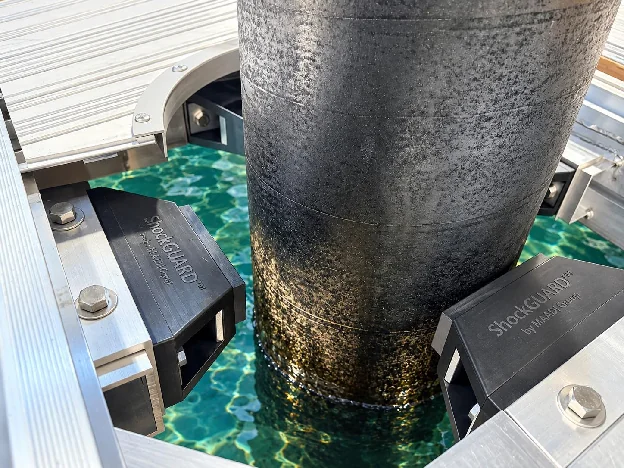
MAADI Group specializes in evaluating these conditions and developing site-specific solutions incorporating innovative components such as ShockGUARD™ energy-dissipating pile guide dampers, reinforced flexible connectors, and other engineered structural components designed to accommodate movement, absorb impact energy, and reduce peak loads transmitted through floating dock and mooring systems.
Start Your Waterfront Engineering Project
From initial engineering and structural design to precision aluminum fabrication and installation support, MAADI Group provides integrated expertise to bring your marina, floating dock, or marine gangway project to life.
Get a Quote

